Key Takeaways
- A few high-end carmakers are likely to use thrusters, but mainly for grip, braking and stability on track-focused halo cars. Mass-market cars with airborne abilities are not on any public roadmap.
- Tesla’s next-generation Roadster, unveiled on October 15, 2026, uses SpaceX-developed cold-gas thrusters with 10 nozzles fed by two pressure tanks holding about 250 kg of air. At the launch it completed short flights and a flip.
- Production is planned for 2028, and flying on public roads will not be allowed.
- Ferrari already holds patents for a “gas pusher” system that fires compressed air to improve cornering and braking, and its CEO confirmed awareness of the technology on October 18.
- China’s Dreame showed a rocket-boosted supercar in April 2026 but cancelled all its car programs in August.
- BYD’s Yangwang U9 can jump over obstacles, but it does so with hydraulic suspension, not thrusters.
- Short thrust duration, refilling energy, safety rules, noise and cost make airborne cars impractical for everyday driving.
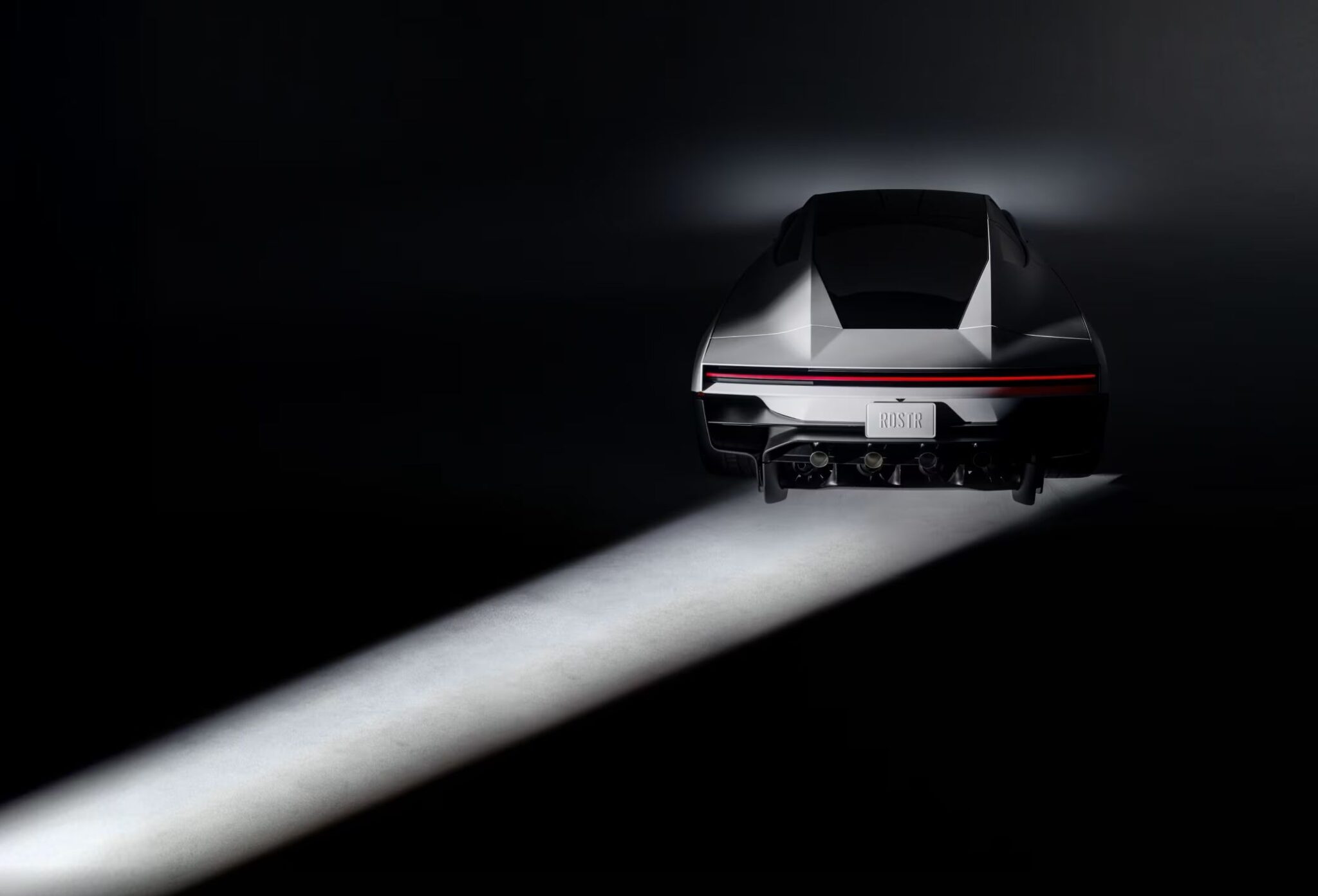
The new Tesla Roadster. Image source: Tesla
More automotive manufacturers will probably experiment with thrusters, but almost certainly not to make ordinary cars fly. The near-term use is performance: short bursts of gas that push a car into the road for more grip, help it stop faster, or keep it stable at extreme speeds.
Ferrari has patented exactly that idea, and Tesla’s new Roadster now offers it as an option. True airborne driving, even for a few seconds, faces physics, safety and certification limits that no mainstream brand has shown any intention of tackling.
Tesla’s demonstration in Texas made the idea feel real. Elon Musk declared “Flying cars are real” after the Roadster hopped and flipped in front of an invited crowd. Yet the details behind the show, from tank capacity to road legality, explain why most carmakers will watch rather than copy.
What Tesla’s Thruster Roadster Can Do
Tesla unveiled the next-generation Roadster on October 15, 2026, at SpaceX’s rocket test site in McGregor, Texas. The car carries cold-gas thrusters developed by SpaceX: 10 nozzles fed by two carbon-overwrapped pressure vessels with a combined volume of about 600 liters, holding roughly 250 kg of compressed air. Onboard compressors refill the tanks. Separate suction fans pull the car toward the road, and Tesla says they allow cornering forces above 2 g, well beyond the roughly 1.26 g that tyres alone usually manage.
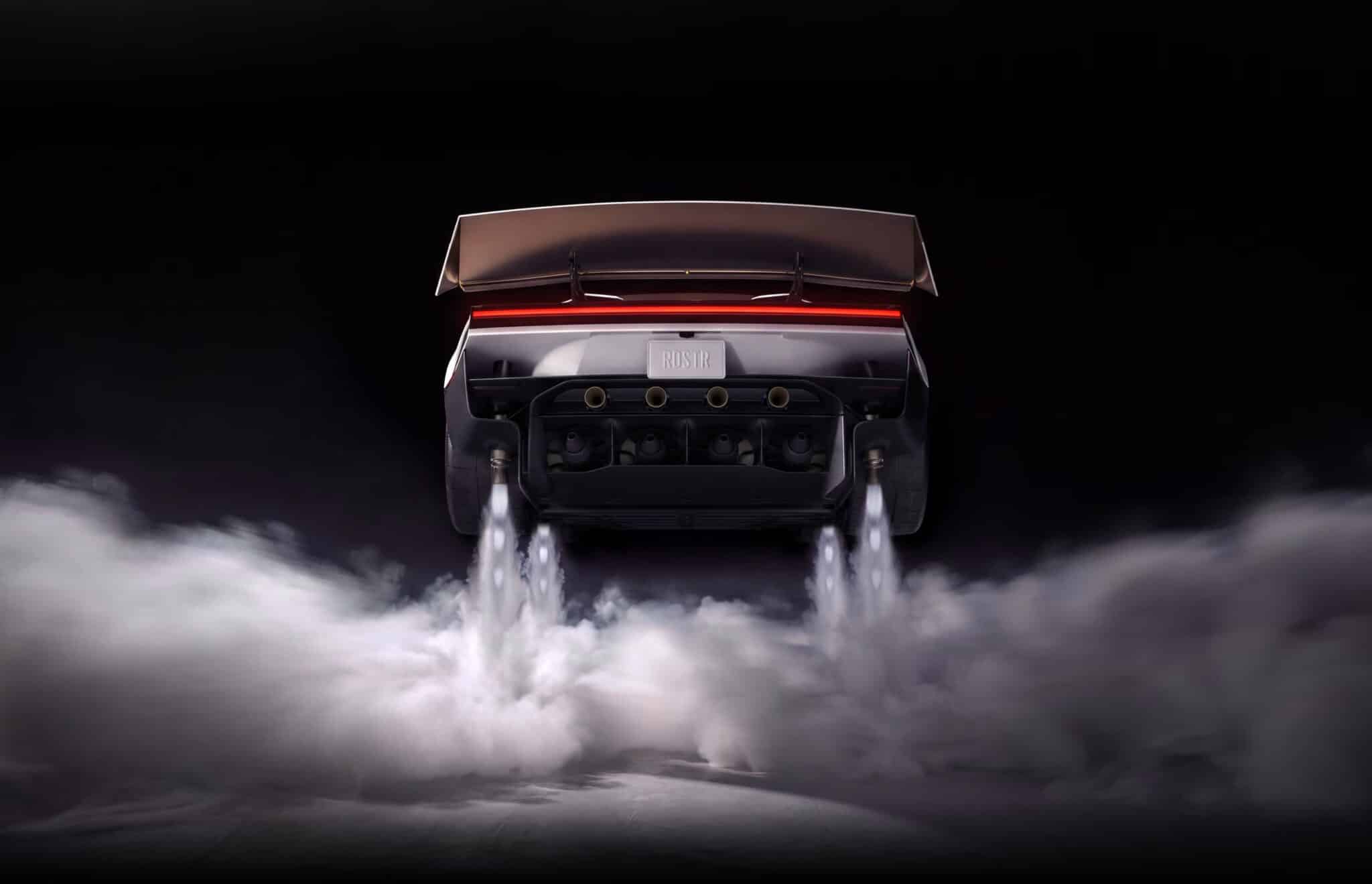
The new Tesla Roadster. Image source: Tesla
The headline numbers are extreme. In a live run, the Roadster reached 60 mph in 0.81 seconds. Tesla claims a top speed above 230 mph and a peak output of one megawatt.
The stunts went further: the car drove upside down through a curved ramp before launching into a short flight and flip, then performed a kickflip-style jump over a Model 3, Model Y, Cybertruck, Cybercab and Semi lined up side by side. It drove itself throughout. Spectators were reportedly kept hundreds of yards back because of the noise.
| Roadster version | 0–60 mph (claimed) | Hardware | Availability |
|---|---|---|---|
| Performance | Under 1.6 seconds | Suction fans, no thrusters | $50,000 refundable deposit |
| Thrust | Under 0.9 seconds | Rear thrusters | Reported at $250,000 |
| Rocket | Under 0.59 seconds | Full flight system, single seat | Invite only; not offered in every region |
Production is scheduled for 2028. Flying on public roads will not be permitted, and Musk said he was not sure the flight-capable version would be legal everywhere. The partnership draws on the same engineering base behind SpaceX’s rocket programs, which gives Tesla access to thruster know-how few carmakers could build in-house.
Ferrari’s gas pusher patent
Ferrari arrived at the idea years before Tesla’s launch. The company filed an Italian application in December 2018, according to Tech Insider, and filed in the United States in December 2019, where Motor Authority found at least two related patents titled around a high-performance car with gas pushers.
The design stores air at 700 to 900 bar, or roughly 10,000 to 13,000 psi, according to The Drive. Each pusher has five nozzles that can fire in different directions to help the car corner, brake or accelerate, or to push it down for extra grip similar to ground-effect aerodynamics.
Energy recovered during braking would run a compressor to refill the tank. The patent also describes pulsejets running on fuel as an alternative to compressed air.
After Tesla’s demonstration, Ferrari chief executive Benedetto Vigna was asked about the patent and replied, “I know it very well.” He did not announce a production plan. Patents protect ideas, and many never reach a showroom, but Ferrari’s filing shows that at least one established supercar brand sees thrusters as a performance tool rather than a flight system.
Other carmakers testing airborne tricks
Dreame’s rocket car: unveiled, then cancelled
Chinese robot vacuum maker Dreame showed the Nebula NEXT 01 Jet Edition in San Francisco on April 27, 2026. It carried two solid-fuel rocket boosters producing a combined 100 kN of thrust, with a claimed response time of 150 milliseconds and a 0–100 km/h time of 0.9 seconds.
Dreame targeted production in 2027. By August 25, Electrek reported that the company had cancelled all of its car programs. Insiders quoted by Chinese automotive media described the project as more of a marketing and fundraising exercise, with the boosters largely for show.
BYD’s jumping Yangwang U9 uses suspension, not thrusters
BYD’s luxury brand Yangwang released a video in January 2025 of its U9 supercar leaping over a 2.5-meter water-filled pit and a strip of road spikes while driving itself. The car does not use thrusters at all.
Its DiSus-X active hydraulic suspension pushes the body upward hard enough to lift more than a ton off the ground. The U9 has been delivered to customers since August 2024 at about $233,400. The stunt shows another route to brief airborne moments that avoids pressure tanks and exhaust jets entirely.
Fan cars: suction without thrust
Several companies chase extreme grip with fans rather than thrusters. McMurtry’s Spéirling set a record at the Goodwood Festival of Speed by using fans to suck itself onto the road, and Tesla adopted a similar approach for the base Roadster. Fans deliver steady downforce without running out of gas, which makes them easier to engineer than thrusters for repeated laps.
| Company | Technology | Purpose | Status |
|---|---|---|---|
| Tesla | SpaceX cold-gas thrusters plus suction fans | Acceleration, grip, brief flight | Production planned for 2028 |
| Ferrari | Compressed-air or pulsejet gas pushers | Cornering, braking, downforce | Patented; no product announced |
| Dreame | Solid-fuel rocket boosters | Acceleration | Cancelled in August 2026 |
| BYD (Yangwang U9) | Active hydraulic suspension | Jumping obstacles | On sale since 2024 |
| McMurtry | Downforce fans | Grip | Record-setting prototype |
Why airborne cars remain hard to build
The first barrier is energy. A tank of compressed air provides thrust for seconds, not minutes, and refilling it with an onboard compressor drains the battery that also powers the motors. A car that flies or boosts often will lose range quickly, and one that empties its tanks at the wrong moment loses its performance advantage just as suddenly.
Safety is the second. Jets of gas at thousands of psi can injure pedestrians, throw debris and damage other vehicles. High-pressure tanks need regular inspection, and a car that leaves the ground, even briefly, behaves very differently in a crash. Traffic law and vehicle safety standards assume four wheels stay on the road.
Certification is the third. A car that flies falls between road and aviation rules. In the United States, road vehicles answer to the NHTSA while anything airborne raises questions for the FAA, and no clear framework exists for a car that hops. That gap is one reason Tesla limits flight to private tracks.
Noise and cost complete the list. Thrusters are loud enough to require large safety zones, and the hardware adds weight, complexity and expense. These are acceptable trade-offs on a six-figure collector car, not on a family hatchback.
What comes next for thrusters in cars
The likely path follows the history of other motorsport technologies. Supercar makers such as Ferrari, which already holds the relevant patents, may add gas pushers as a braking and stability aid on limited-run models.
Chinese brands with a taste for viral stunts may keep experimenting, though Dreame’s collapse shows how hard it is to turn a spectacle into a business. Racing series could also test controlled thrust, much as Formula E has become a lab for electric drivetrains and software.
Most carmakers, though, are spending their engineering budgets elsewhere: on autonomy, batteries and the AI used in car manufacturing.
Systems that control thrusters in milliseconds share much with physical AI, the field that lets machines sense and act in the real world, and that work may pay off more broadly in robotics and self-driving taxis than in flying sports cars.
For now, thrusters look set to stay what Tesla’s launch made them: a spectacular feature for a very small number of very expensive cars.
If you are interested in this topic, we suggest you check our articles:
- How SpaceX Uses AI in Space Exploration
- How Is AI Used in Car Manufacturing?
- AI Use in Formula E
- What Is Physical AI?
- When Will Self-Driving Taxis Be in London?
Sources: Dezeen, Daily Tribune (AFP), Tech Insider, Motor Authority, The Drive, Electrek
Written by Alius Noreika