Key Takeaways
- Meta Superintelligence Labs (MSL) is the division that has run all of Meta’s AI work since June 30, 2025. It is led by Chief AI Officer Alexandr Wang, who joined after Meta invested $14.3 billion for a 49% stake in Scale AI.
- MSL has four parts: TBD Lab, which builds frontier models; FAIR, Meta’s long-running research group; Products and Applied Research, led by Nat Friedman; and MSL Infra, led by Aparna Ramani.
- TBD Lab is a small, elite team of about 200 engineers, many on pay packages worth nine figures, according to the Wall Street Journal.
- The lab cut about 600 AI jobs in October 2025, and longtime chief AI scientist Yann LeCun left the following month to found his own startup.
- In 2026, MSL shipped the Muse family: Muse Spark in April, Muse Code in August, the Muse agent app in September and Muse Wonder on October 12.
- Its models train on Meta’s gigawatt-scale Prometheus cluster in Ohio, with the Hyperion data center in Louisiana under construction.
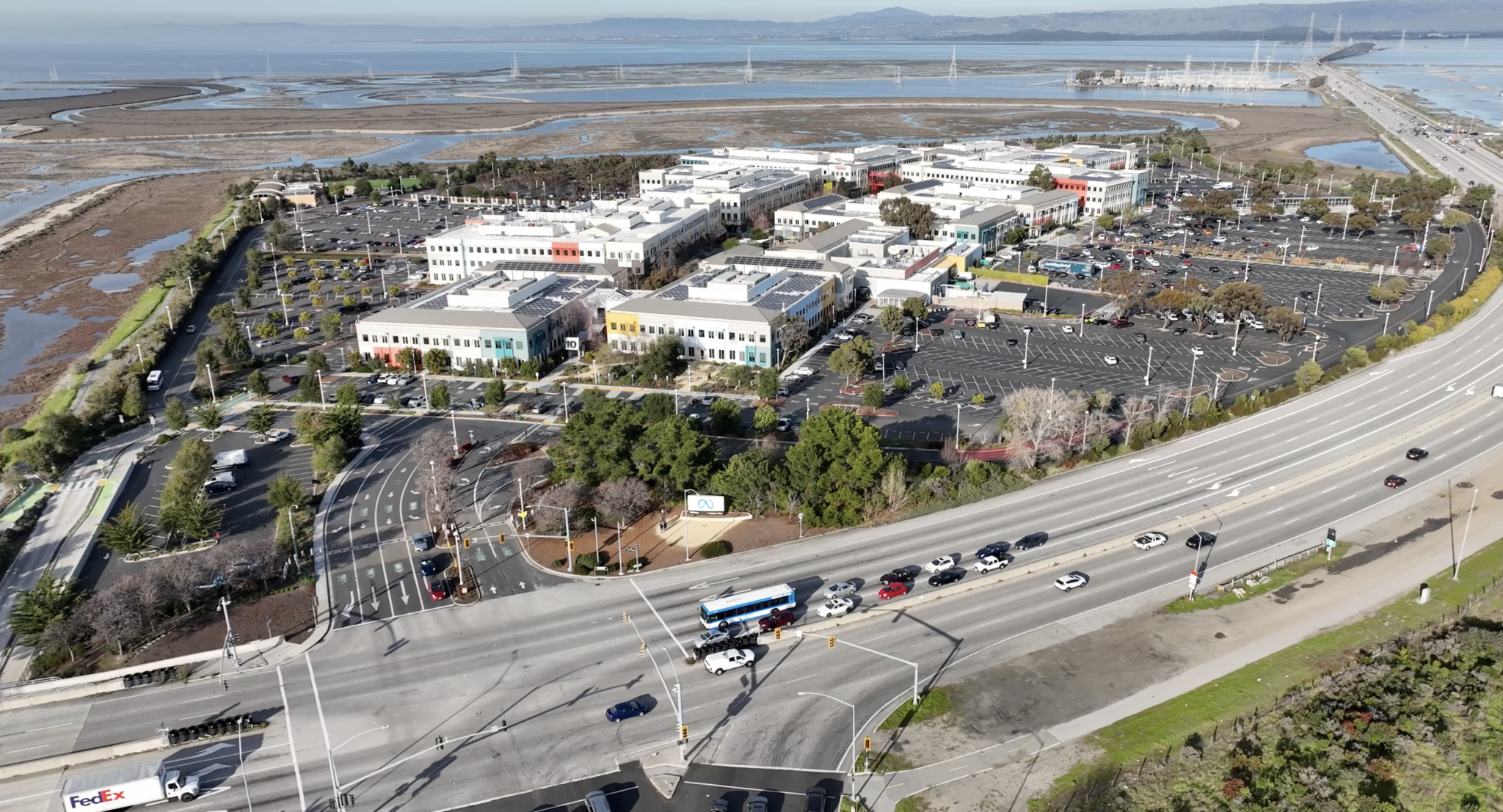
Meta’s headquarters in Menlo Park, California. Image source: InvadingInvader via Wikimedia, CC BY-SA 4.0 license
Inside Meta Superintelligence Labs, a small team of highly paid researchers builds the frontier models while larger groups handle research, products and infrastructure.
The structure is built for speed. TBD Lab, the core model team of roughly 200 engineers, sits close to Mark Zuckerberg’s office and answers to Chief AI Officer Alexandr Wang. In just over a year, the lab went from a reorganization memo to shipping Muse Wonder, a model that competes with the best from OpenAI, Anthropic and Google.
The path there was expensive and, at times, turbulent. Meta spent billions on talent and data, cut hundreds of jobs in its older AI groups, lost its most famous scientist, and bet on a strategy that sets it apart from rivals: personal agents that act across everyday apps, rather than tools built mainly for programmers.
How Meta Superintelligence Labs began
Zuckerberg announced MSL in an internal memo on June 30, 2025. The new division pulled together every AI team at Meta, including the FAIR research lab, the product AI groups and a new lab focused on next-generation models.
The move followed Meta’s $14.3 billion investment in Scale AI for a 49% stake, a deal that brought Scale’s chief executive, Alexandr Wang, to Meta as Chief AI Officer. Our earlier coverage of Meta’s multibillion-dollar bet on Scale AI explains why training data drove that deal.
Wang became Meta’s first Gen Z senior executive, according to the Wall Street Journal. Former GitHub chief executive Nat Friedman joined to lead products and applied research, and investor Daniel Gross also came aboard. On July 25, 2025, Meta named Shengjia Zhao, a co-creator of ChatGPT, as MSL’s chief scientist.
Who runs Meta Superintelligence Labs?
| Person | Role |
|---|---|
| Alexandr Wang | Chief AI Officer; leads MSL and TBD Lab |
| Nat Friedman | Head of Products and Applied Research |
| Shengjia Zhao | Chief Scientist |
| Aparna Ramani | Head of MSL Infra |
| Dawn Song | Leads a new AI research division, according to 36Kr |
The four groups inside MSL
In August 2025, MSL split into four groups. TBD Lab trains Meta’s frontier language models and is led directly by Wang. FAIR, the Fundamental AI Research lab Meta founded more than a decade earlier, continues longer-term science, including world-model work such as V-JEPA 2 for physical intelligence.
Products and Applied Research turns models into features across Instagram, WhatsApp, Facebook and Meta’s hardware. MSL Infra builds and runs the compute that everything depends on.
The groups are not equal in status. TBD Lab is the center of gravity, and the Wall Street Journal reported that its roughly 200 engineers work near Zuckerberg’s own office. Many joined on pay packages worth nine figures, part of a hiring spree in which reported offers ranged from about $1 million to more than $100 million.
The gap in pay and access irritated staff elsewhere in the company, according to the same report. MSL as a whole had around 3,000 employees in 2025.
Layoffs and the departure of Yann LeCun
On October 22, 2025, Meta cut about 600 jobs across FAIR, product AI and infrastructure teams. TBD Lab was spared. The cuts made clear that Meta was concentrating resources on frontier model building rather than broad research.
A month later, on November 20, 2025, Yann LeCun left Meta. The Turing Award winner had led FAIR’s scientific direction for years and had long argued that large language models alone will not reach human-level intelligence.
He went on to found Advanced Machine Intelligence Labs, a startup focused on the world-model approach he favors. His exit marked the end of an era for Meta’s research culture and confirmed the shift toward Wang’s product-driven model race.
What MSL shipped in 2026
| Date | Release |
|---|---|
| April 8 | Muse Spark, MSL’s first frontier model (codename Avocado) |
| July 7 | Muse Image |
| July 9 | Muse Spark 1.1 |
| August 5 | Muse Spark 1.2 and the Muse Code coding agent |
| August | Muse Glimmer, a 30-billion-parameter open-weight model under the Apache 2.0 license that runs on a 24 GB GPU |
| September 2 | Muse Spark 1.3, which reached third place on the Artificial Analysis index |
| September 8 | The Muse agent app (codename Hatch) |
| October 2 | Muse Gadgets, with a Linux SDK and 5,000 free Muse Home Link USB-C dongles for developers |
| October 12 | Muse Wonder and Muse Wonder Full |
eesel AI also reported an 816-billion-parameter open-weight model called Muse Spark Open around October 18, though Meta’s own launch materials for it were less widely covered. Nine major releases in about six months show how fast the lab moves once a training pipeline is in place.
The Muse App and Meta’s personal agent strategy
The Muse app is where MSL’s strategy becomes visible. Instead of a chatbot, it is an agent that can fill in forms, make purchases, book travel and work across apps on a user’s behalf. Zuckerberg stressed user control at launch: “You choose which apps and services Muse has access to.” Friedman acknowledged that the app took heavy inspiration from OpenClaw, the open-source personal agent that became popular among developers.
Early demand was strong. Download figures vary by source and platform. Apptopia counted 1.8 million iOS downloads in the US and Canada in the first 12 days, while another report put the combined figure for those countries at 2.8 million.
The Wall Street Journal later reported 5 million US downloads in 22 days. Investors responded too: Meta’s shares rose nearly 20% in the period after the app launched, and the company added about $234 billion in market value over five days.
Wang has argued that rivals are focused mainly on coding agents, while Meta wants agents for everyone. That plan plays to Meta’s strengths, since billions of people already use its apps daily. Our comparison of Meta Superintelligence Labs versus the AI giants examines how that strategy differs from OpenAI’s and Google’s.
The Compute behind MSL
MSL’s models train on Prometheus, a cluster in Ohio designed to reach about one gigawatt of capacity in 2026. Muse Wonder was trained there. A larger site, Hyperion in Louisiana, is under construction and secured $27 billion in financing through a deal with Blue Owl in October 2025.
These facilities put Meta among the largest buyers of AI compute anywhere, and they are the reason MSL could train a model like Muse Wonder about 14 months after the reorganization.
What comes next for Meta’s AI lab
MSL’s name sets its goal: what Meta calls personal superintelligence, an AI that understands each user and acts for them. Muse Wonder is the closest step so far, and Meta plans to bring it into the Muse consumer app, which currently runs on Muse Spark 1.3.
Open-weight releases such as Glimmer suggest Meta still wants a foothold with developers who run models themselves.
The open questions are about cost and culture. Nine-figure pay packages, gigawatt data centers and a small team carrying the company’s biggest bet make MSL one of the most expensive research operations in technology.
Whether that spending produces a lasting lead, and whether the lab can keep its talent as rivals bid for the same people, will define its next year. For background on the concept Meta is chasing, see our guide to artificial superintelligence, and for a look at Meta’s product plans, our preview of what to expect from Meta AI in 2026.
If you are interested in this topic, we suggest you check our articles:
- Meta Superintelligence Labs vs the AI Giants
- Meta’s $15B Bet on Scale AI: Data Is the New Gold
- What Can We Expect From Meta AI in 2026?
- Meta V-JEPA 2: Light, Fast Physical Intelligence
- Artificial Superintelligence: The Ultimate Guide
Sources: Wikipedia – Meta Superintelligence Labs, Layer3 Labs, 36Kr, Meta – Muse Wonder, YourStory, eesel AI
Written by Alius Noreika