If you’ve noticed that fewer people are clicking through ten blue links and more people are asking tools like ChatGPT or Perplexity for direct answers, you’re not imagining things. Search behavior is changing quickly. Instead of typing “best payroll software for startups” into Google and browsing five blog posts, someone might ask, “What’s the best payroll software for a 20-person SaaS company?” and trust the AI’s summary.
So the real question becomes: who can help your brand show up inside those AI-generated answers?
The short answer is: it’s not just one type of expert. It’s usually a combination of strategic SEO professionals, content teams, digital PR specialists, and technical SEOs who understand how large language models (LLMs) gather and prioritize information. Let’s break it down in a practical, no-hype way.
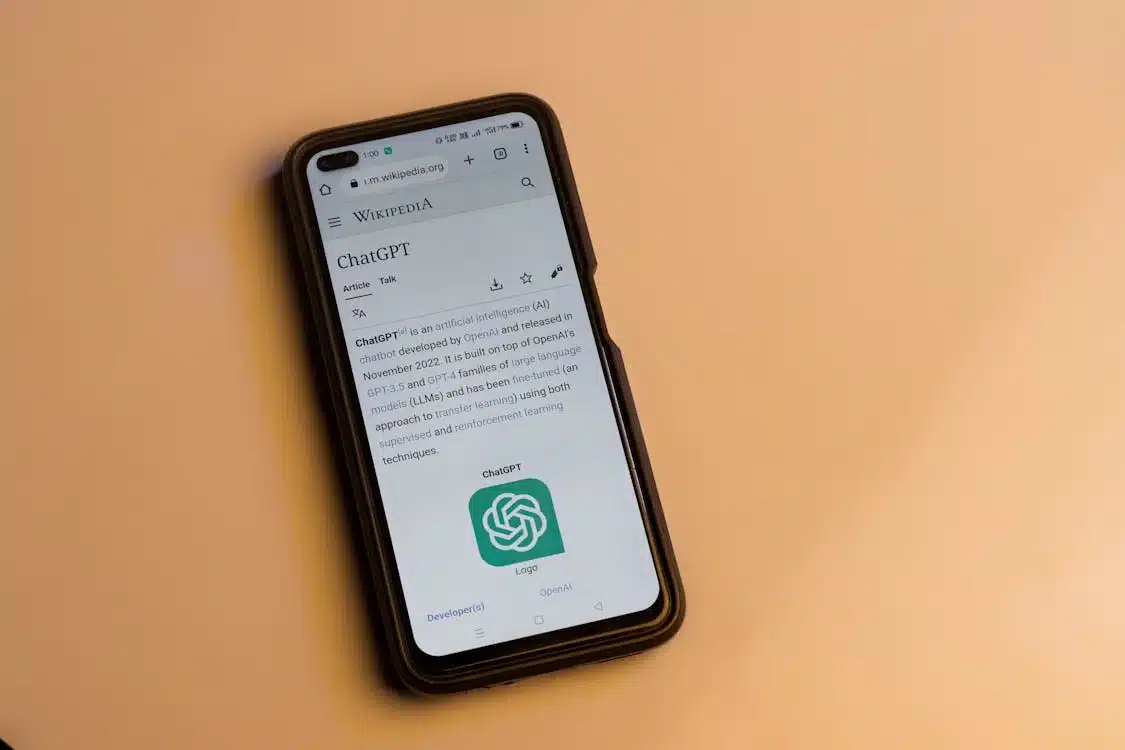
Image credit: Sanket Mishra via Pexels, free license
First, Understand What You’re Actually Trying to Influence
Before hiring anyone, it helps to understand what you’re aiming for.
Tools like ChatGPT and Perplexity don’t rank pages the way traditional search engines do. They synthesize information from a mix of:
- High-authority websites
- Well-structured educational content
- Frequently cited industry sources
- Trusted brand mentions
- Clear, entity-based information about companies and products
You’re not just optimizing for “position #1” anymore. You’re optimizing to be:
- Cited
- Referenced
- Summarized
- Recommended
That requires a slightly different mindset than classic keyword-first SEO.
1. SEO Agencies That Specialize in Generative Search
If you want a direct answer to “who can help,” the most obvious place to start is with agencies that focus specifically on AI search visibility.
These teams typically combine:
- Traditional SEO (technical + content)
- Entity optimization (how your brand is understood contextually)
- Digital PR and authority building
- Structured data and knowledge graph alignment
- AI citation tracking
Some position themselves as GEO (Generative Engine Optimization) specialists. When researching options, you’ll often find blog roundups comparing the top generative engine optimization companies in ai, outlining who focuses on SaaS, who works with enterprise brands, and who emphasizes AI citation tracking versus technical depth.
What matters most isn’t the label — it’s whether the agency can clearly explain:
- How AI systems source information
- How they measure AI visibility
- What specific actions they’ll take to increase mentions and citations
- How they connect that visibility to pipeline or revenue
If they can’t explain that clearly, keep looking.
2. Strong Technical SEO Teams
AI tools still rely heavily on structured, crawlable, well-organized content. That means technical SEO is far from dead — it’s foundational.
A good technical SEO specialist can help with:
- Clean site architecture
- Logical internal linking
- Schema markup
- Entity clarity (making your brand, product, and categories unambiguous)
- Indexation improvements
If your website is hard to crawl, poorly structured, or thin on authoritative signals, AI tools are less likely to confidently surface your brand.
Technical SEO alone won’t get you cited in AI answers — but without it, everything else becomes harder.
3. Content Strategists Who Understand Authority (Not Just Keywords)
There’s a big difference between content written to rank for keywords and content written to become a reference.
AI systems favor content that:
- Clearly answers specific questions
- Demonstrates expertise
- Uses structured formatting (definitions, comparisons, step-by-step guides)
- Cites credible sources
- Is frequently referenced elsewhere
A strong content strategist will shift your focus from “How do we rank for this keyword?” to “How do we become the obvious source for this topic?”
That might mean:
- Publishing in-depth comparison pages
- Creating definitive guides
- Building out topic clusters around your niche
- Answering high-intent, decision-stage questions
If your brand becomes the cleanest, clearest explanation of a topic, you dramatically improve your odds of being referenced by AI systems.
4. Digital PR and Authority Builders
One of the most overlooked pieces of AI visibility is off-site authority.
AI tools tend to trust brands that are:
- Mentioned in reputable publications
- Linked from high-authority sites
- Cited in industry roundups
- Referenced in expert interviews
Digital PR professionals can help you:
- Secure media mentions
- Contribute expert commentary
- Land guest features
- Build a stronger brand footprint across the web
If your company shows up repeatedly in credible places, it increases the likelihood that AI systems view you as a legitimate, reference-worthy entity.
This is especially important for B2B and SaaS brands that compete in crowded spaces.
5. In-House Teams (If You Have the Right Skill Mix)
Not every company needs an external agency.
If you already have:
- A strong SEO lead
- Skilled writers
- A technical web team
- Access to PR resources
You may be able to build an internal generative search strategy.
The key is alignment. Your team needs to understand:
- How AI-generated answers differ from SERPs
- How to create “citation-friendly” content
- How to monitor visibility in tools like ChatGPT and Perplexity
- How to connect visibility improvements to measurable outcomes
This approach can be slower to ramp up, but it often leads to deeper institutional knowledge.
6. Consultants Focused on AI Search Strategy
Some businesses don’t need full-service execution. They need a roadmap.
An experienced consultant can:
- Audit your current AI visibility
- Identify gaps in authority and content coverage
- Recommend structural and strategic fixes
- Train your team on best practices
If you already have capable marketers in-house, this can be a cost-effective way to get pointed in the right direction.
What to Ask Before Hiring Anyone
Whether you’re speaking to an agency, consultant, or potential hire, ask questions like:
- How do you measure visibility in AI tools?
- What signals influence AI-generated recommendations?
- Can you show examples of brands increasing AI citations?
- How do you tie AI visibility to revenue impact?
- What’s your approach to entity optimization?
You want someone who gives specific, thoughtful answers — not vague promises about “AI magic.”
A Reality Check: This Isn’t Instant
Appearing in ChatGPT or Perplexity answers is rarely the result of one quick tweak.
It’s usually the outcome of:
- Strong domain authority
- Clear topical expertise
- Consistent publishing
- Widespread brand mentions
- Technically sound infrastructure
Think of it as building a reputation across the web — not gaming an algorithm.
So, Who Can Help Your Brand Appear in AI Results?
The honest answer is: the right combination of strategic SEO, authoritative content, technical excellence, and digital PR.
You’re looking for professionals who understand that generative search is less about chasing keywords and more about becoming a trusted source. Whether that’s a specialized GEO agency, a seasoned SEO team, a consultant, or your own internal experts depends on your budget, timeline, and current capabilities.
But the brands that win in AI search aren’t the loudest. They’re the clearest, the most cited, and the most trusted.
If your goal is to show up in AI answers, focus less on tricks: and more on building something genuinely worth referencing.