Key Takeaways
- Microsoft Copilot transitions from an AI assistant to an autonomous agent platform with specialized digital teammates managing complex workflows
- Work IQ layer provides persistent memory across M365 apps, understanding job roles, company context, and project history
- Agent Mode launches in Word, Excel, and PowerPoint for iterative content creation and data analysis
- Enterprise voice integration enables hands-free email management, scheduling, and information access
- Security Copilot agents automate threat detection and response across Microsoft Defender, Entra, and Purview
- Copilot Studio expands low-code tools for custom agent development
- AI and security features become standard in M365 subscriptions starting July 1, 2026
- Global price increases reflect the integration of AI capabilities into baseline offerings

A stylized Microsoft Copilot logo. Image credit: Rubaitul Azad via Unsplash, free license
Autonomous Agents Replace Single-Prompt Assistance
Microsoft Copilot is expected to undergo a major architectural shift in 2026, moving away from responding to individual commands toward operating as specialized autonomous agents. These digital teammates handle multi-step processes independently, from sales development to expense management and SharePoint administration.
The transformation centers on agentic AI that plans, executes, and manages complex tasks across different applications without constant human oversight. A three-person team can now launch global campaigns within days, with AI managing data analysis, content generation, and personalization while humans focus on strategy and creative direction.
Work IQ Creates Persistent Organizational Memory
The new Work IQ layer functions as Copilot’s long-term memory, maintaining continuous awareness of user roles, company structure, and project histories across the entire M365 ecosystem. This contextual understanding extends beyond isolated email threads or calendar entries to encompass complete communication patterns and scheduling behaviors.
Copilot already analyzes relationships between documents, meetings, and conversations to deliver proactive recommendations based on organizational workflow patterns. The system learns individual preferences over time, adapting its assistance to match how each user works within their specific business environment. We predict these capabilities will strongly evolve throughout 2026.
Agent Mode Transforms Office Application Workflows
Word, Excel, and PowerPoint are gradually gaining Agent Mode functionality that enables iterative collaboration on documents, spreadsheets, and presentations. The AI draws from both web resources and internal company files to support content development, pulling relevant data and formatting suggestions as users work. This trend will continue, undoubtedly.
In Excel, Copilot converts raw datasets into actionable insights through natural language queries. Users describe what they need in plain terms, and the system cleans data, identifies trends, and generates visualizations without requiring formula expertise or pivot table knowledge.
Teams introduces a Facilitator agent that manages meeting operations from start to finish. The agent sets agendas, monitors discussion progress, captures notes in real-time, and distributes task assignments through Planner integration, reducing administrative overhead for meeting organizers.
Voice Integration Enables Hands-Free Productivity

Voice commerce – artistic impression. Image credit: Alius Noreika / AI
Enterprise-grade voice interaction becomes a core Copilot feature, allowing professionals to manage communication and scheduling through spoken commands. Users compose emails, arrange meetings, and retrieve information without touching keyboards or screens.
The voice system maintains context across conversations, understanding follow-up requests and maintaining thread continuity. This hands-free operation proves particularly valuable for mobile workers and situations where manual input proves impractical or unsafe.
Security Agents Automate Threat Response
Security Copilot continues its path towards embedding specialized agents directly into Microsoft Defender, Entra, and Purview workflows, automating the detection, investigation, and mitigation of security threats. These agents operate as active members of security teams rather than passive monitoring tools.
Agent 365 governance platform treats AI agents as first-class identities within organizational systems, assigning them specific access controls and audit trails. Security teams gain centralized oversight of all agent activities, ensuring compliance while maintaining operational efficiency.
Vasu Jakkal, corporate vice president of Microsoft Security, stresses that agents require security protections equivalent to human employees to prevent them from becoming vectors for unauthorized access or data exposure.
Copilot Studio Expands Custom Agent Development
Copilot Studio will likely provide expanded low-code tools for building organization-specific agents tailored to finance operations, customer service workflows, or specialized industry functions. Agent Builder offers a simplified interface included with standard M365 licenses, enabling non-developers to create basic agents grounded in company data.
The full Copilot Studio version supports more sophisticated agent development, combining public knowledge bases with internal M365 information. Development requires no programming background, making AI customization accessible to business analysts and department managers.
Microsoft schedules hands-on training sessions throughout January and February 2026, walking users through practical agent creation and deployment scenarios. These workshops demonstrate real-world applications across different business functions and skill levels.
Infrastructure Investment Supports AI Scaling
At the present time, Microsoft commits substantial resources to global data center expansion and specialized hardware deployment, building the foundation required for widespread agent adoption. The company develops next-generation “superfactories” that distribute AI workloads dynamically across global networks, maximizing computational efficiency.
Mark Russinovich, CTO of Microsoft Azure, describes the Copilot infrastructure evolution as shifting from raw processing power to intelligent resource allocation. Computing capacity routes automatically to where demand exists, ensuring continuous utilization without idle resources consuming energy unnecessarily.
Pricing Reflects Standard AI Integration
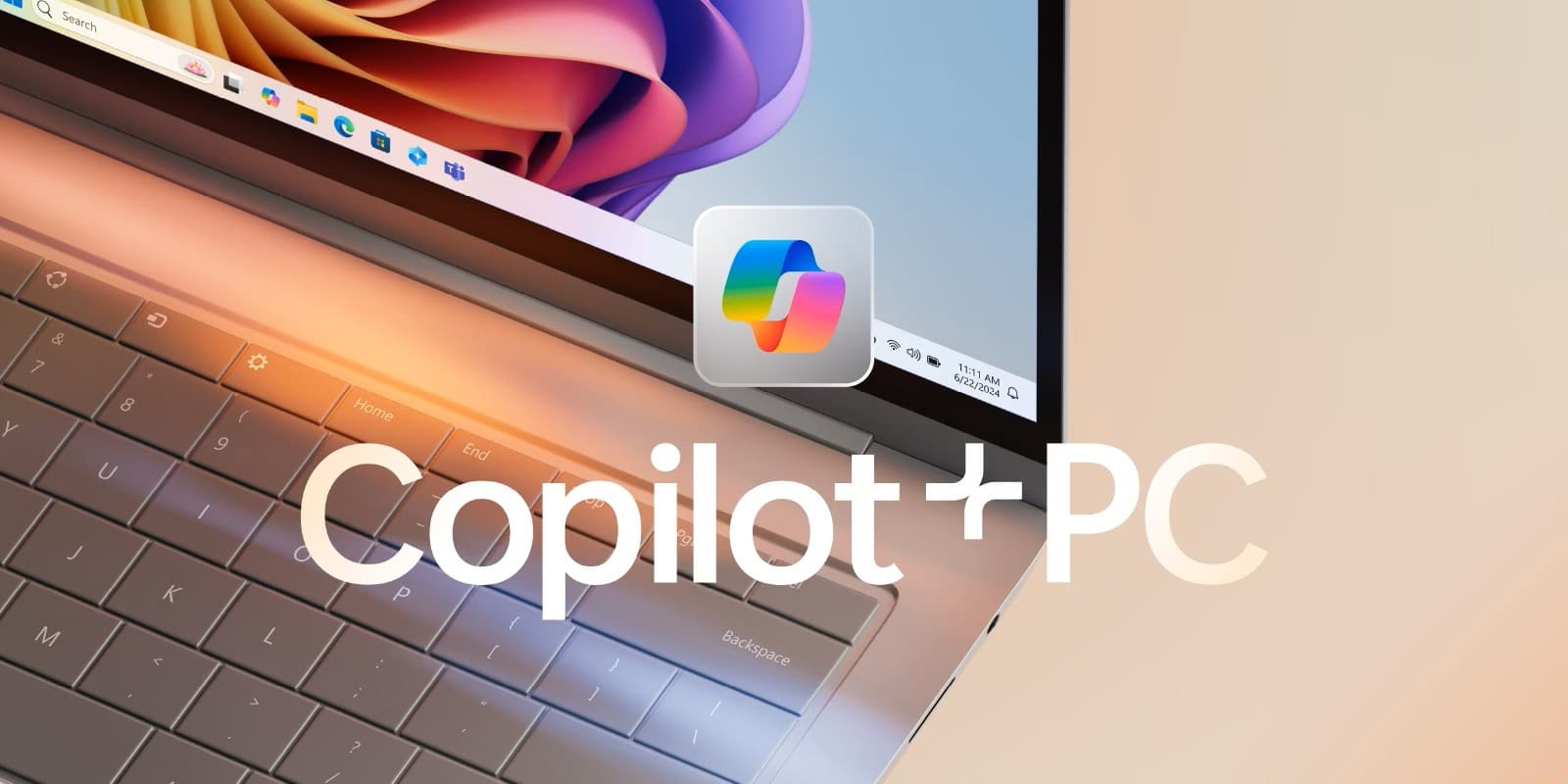
The AI PC. Image credit: Microsoft
Microsoft already announced global price increases for commercial and government M365 subscriptions effective July 1, 2026. The adjustments reflect AI and security features transitioning from optional add-ons to baseline subscription components.
Organizations gain access to agent capabilities, enhanced security automation, and voice integration without purchasing separate licenses. This bundling strategy makes advanced AI functionality available across entire workforces rather than limiting access to specific departments or role types.
Repository Intelligence Advances Developer Tools
Recently, GitHub introduced repository intelligence that understands code relationships and development history beyond individual file contents. The system analyzes patterns across entire codebases to provide contextually relevant suggestions, identify potential errors before they reach production, and automate routine maintenance tasks.
GitHub activity reached unprecedented levels in 2025, with developers merging 43 million pull requests monthly—a 23% increase year-over-year. Annual code commits jumped 25% to 1 billion, demonstrating how AI assistance accelerates software development cycles.
Mario Rodriguez, GitHub’s chief product officer, views repository intelligence as providing competitive advantages through smarter code analysis and more reliable AI recommendations grounded in project-specific context.
Healthcare AI Extends Beyond Diagnostics
Medical AI applications will continue to expand from diagnostic support into symptom triage and treatment planning during 2026. Microsoft AI’s Diagnostic Orchestrator demonstrated 85.5% accuracy solving complex medical cases in 2025, far exceeding the 20% success rate of experienced physicians facing similar challenges.
Dr. Dominic King, vice president of health at Microsoft AI, expects generative AI healthcare products to reach millions of consumers and patients as research applications transition into real-world clinical settings. With Copilot and Bing already answering more than 50 million daily health questions, the technology provides broader population access to medical guidance.
The World Health Organization projects an 11 million healthcare worker shortage by 2030, leaving 4.5 billion people without essential services. AI assistance helps close this gap by extending the reach of available medical professionals.
Scientific Research Gains AI Laboratory Partners
AI rapidly transitions from answering research questions to actively participating in scientific discovery processes. Peter Lee, president of Microsoft Research, expects AI systems to generate hypotheses, control experimental equipment, and collaborate with both human researchers and other AI colleagues throughout 2026.
This evolution builds on existing AI applications in climate modeling, molecular dynamics, and materials design, where automated systems already accelerate breakthrough timelines. The next phase involves AI suggesting novel experiments and executing portions of research protocols independently.
Every research scientist gains access to AI lab assistants capable of managing routine experimental work while proposing creative approaches to unsolved problems. This arrangement mirrors pair programming in software development, where AI and humans work together on shared objectives.
Quantum Computing Approaches Practical Application
Quantum computing is about to move from theoretical promise toward solving problems classical computers cannot address in 2026, entering what Jason Zander, executive vice president of Microsoft Discovery and Quantum, describes as a “years, not decades” timeline for practical quantum advantage.
Hybrid computing combines quantum processing with AI pattern recognition and supercomputer simulation capabilities. AI identifies data patterns, supercomputers run large-scale models, and quantum systems add precision to molecular and materials modeling that exceeds conventional computational limits.
Microsoft’s Majorana 1 represents the first quantum chip built using topological qubits, an architecture that stabilizes inherently fragile quantum states while providing error detection and correction. This design enables millions of qubits on single chips, delivering processing capacity for complex scientific and industrial applications.
The Year Copilot Becomes a Digital Colleague
Microsoft Copilot’s 2026 upgrades mark a shift in the overall development trend, going from reactive AI tools toward proactive digital teammates embedded throughout organizational workflows. The agent-based architecture means AI is becoming a collaborative force that amplifies human capabilities instead of attempting to replace professional expertise.
The infrastructure investments, security frameworks, and governance systems Microsoft deploys throughout 2026 address fundamental concerns about AI reliability and trustworthiness in enterprise environments. As AI capabilities become standard features rather than premium add-ons, widespread adoption becomes inevitable across industries and organization sizes.
If you are interested in this topic, we suggest you check our articles:
- Microsoft’s Upcoming Copilot Event: Shaping the Next 50 Years of Innovation
- Microsoft Dragon Copilot: A Step Towards a Modern Healthcare System
- What is AI Copilot Fatigue? And 4 Ways to Integrate AI Without Overwhelming Your Team
- Microsoft Expands Copilot with Researcher and Analyst
Sources: Microsoft Public Sector Blog, Microsoft Source, Microsoft Azure, Lalit Blogs, Cisilion, CNBC
Written by Alius Noreika