Key Takeaways
- Tokens are small units of data — words, sub-words, characters, or pixel patches — that AI models process during training and inference.
- Roughly 1,000 tokens equal about 750 English words; for Gemini models, one token equals about four characters.
- Tokenization converts raw inputs (text, images, audio, video) into numerical sequences a model can learn from.
- AI providers bill per token, with output tokens costing 3–5× more than input tokens across most APIs.
- Context windows — measured in tokens — set how much data a model can handle at once, from a few thousand to over one million tokens.
- Reasoning models generate internal “thinking tokens” that multiply compute costs by 100× or more per prompt.
- Token prices are falling fast: median costs dropped roughly 200× per year between 2024 and 2026.
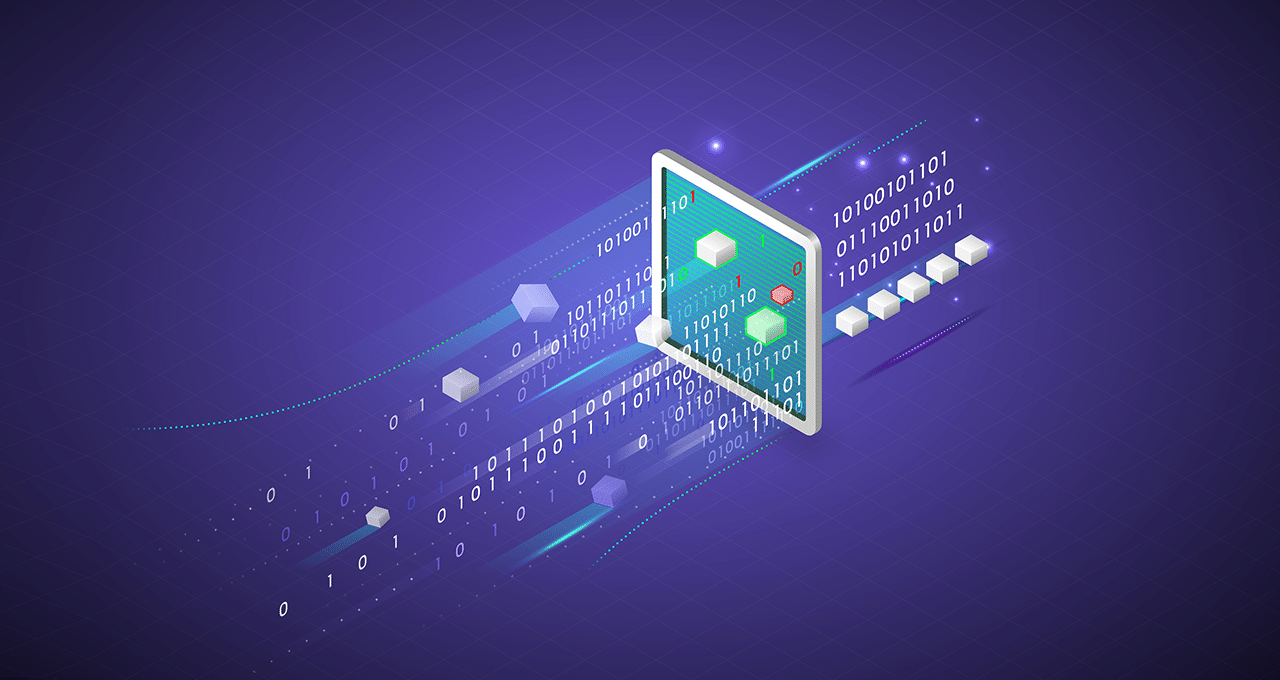
Tokens, LLM, generative AI – artistic impression. Image credit: Nvidia
Tokens are the atomic units of every generative AI system. Every prompt a user sends, every answer a model returns, and every image or audio clip it processes gets broken into these small, numbered fragments before the AI does any actual work. A token might be a full word like “cat,” a sub-word like “ness,” a single character, or a patch of pixels — depending on the data type and the tokenizer the model uses. Without tokenization, models would have no way to find statistical patterns across language, images, or sound.
This makes tokens both the operating language and the billing unit of generative AI. Providers like OpenAI, Google, and Anthropic charge developers for every input and output token their APIs process. As of early 2026, lightweight models like Gemini Flash handle input at $0.08 per million tokens, while premium reasoning models like GPT-5.2 charge $14 per million output tokens. The gap between those two figures explains why understanding tokens is no longer optional for anyone building, buying, or scaling AI products.
What Is Tokenization and Why Does It Matter?
Tokenization is the process of converting raw data — text, images, audio, video — into a sequence of discrete, numbered tokens that a model can process. AI models do not read sentences or view images the way humans do. They operate on numerical representations, and tokenization is the bridge between human-readable content and machine computation.
For text, a tokenizer splits sentences into pieces. Short words often map to a single token. Longer or less common words get divided. The word “fantastic,” for example, might become three tokens: “fan,” “tas,” and “tic.” Each token receives a numerical ID. When two words share a common fragment — like “darkness” and “brightness” both ending in “ness” — the tokenizer assigns the same ID to that shared piece, helping the model detect morphological patterns.
Context matters too. The word “lie” could mean resting flat or speaking falsely. During training, a model learns these distinctions and assigns different token IDs to the same word depending on surrounding context.
Tokenization is not limited to text. Visual models break images and video into patches of pixels or voxels, each mapped to a discrete token. Audio models sometimes convert sound clips into spectrograms — visual representations of frequency over time — which are then tokenized like images. Other audio systems skip that step and extract semantic tokens that capture the meaning of spoken language rather than raw acoustic data.
Efficient tokenizers reduce the total number of tokens a model must process, which directly lowers computing costs. Specialized tokenizers designed for particular data types or languages can shrink the vocabulary size, meaning fewer numerical IDs for the model to track.
How Models Use Tokens During Training
Training an AI model begins with tokenizing the full training dataset. For large language models, that dataset can contain billions or trillions of tokens. A well-established pretraining scaling law holds that larger token counts during training lead to higher-quality models.
The core training loop works through prediction. The model sees a sequence of tokens and tries to guess the next one. When it guesses wrong, internal parameters update to improve accuracy on the next attempt. This cycle repeats across the entire dataset until the model reaches a target accuracy threshold — a state called model convergence.
After pretraining, a second phase called post-training narrows the model’s focus. Here, the model continues learning on a curated subset of tokens relevant to a specific domain or task — legal documents, medical records, business data, or conversational formats. The objective is to fine-tune the model so it produces accurate, useful responses when deployed.
Tokens at Work: Inference and Reasoning
Inference is where tokens meet the end user. A person submits a prompt — text, an image, an audio clip, a video, even a gene sequence — and the model translates that input into tokens. It processes those input tokens, generates output tokens as its response, then converts the result into the user’s expected format. The input and output can even be in different modalities, such as an English text prompt that produces a Japanese translation, or a written description that generates an image.
Context Windows Define Model Capacity
Every model has a context window: the maximum number of tokens it can process in a single interaction. A model with a few thousand tokens of context can handle a high-resolution image or a couple of pages of text. Models with context windows of tens of thousands of tokens can summarize a full novel or an hourlong podcast. Some models now offer context windows exceeding one million tokens, allowing users to feed in massive datasets for analysis in a single pass.
For Gemini models specifically, one token equals about four characters, and 100 tokens translate to roughly 60–80 English words. Developers can check context limits programmatically — Google’s API exposes input and output token limits through its models endpoint, and a count_tokens function lets developers preview how many tokens a request will consume before sending it.
Reasoning Tokens Multiply Compute Demands
Reasoning AI models — the latest generation of large language models — handle complex queries differently. In addition to input and output tokens, these models generate a large volume of internal “thinking tokens” as they work through multi-step problems. These reasoning tokens never appear in the user-facing response, but they occupy context-window space, consume compute, and get billed as output tokens.
The impact on cost is significant. A single reasoning prompt can require 100× or more compute compared to a standard inference pass. This is sometimes called test-time scaling or long thinking — the model trades speed for quality, much like a human who takes longer to think through a harder question.
Multimodal Tokenization: Images, Video, and Audio
Generative AI is no longer text-only, and tokenization has adapted accordingly. Visual, audio, and video data all get converted into tokens at predictable rates.
| Data Type | Tokenization Rate | Notes |
|---|---|---|
| Text | ~1,000 tokens ≈ 750 English words | Varies by tokenizer and language |
| Small image (≤384px both sides) | 258 tokens per image | Gemini API; fixed count |
| Large image (>384px) | 258 tokens per 768×768 tile | Cropped and scaled into tiles |
| Video | 263 tokens per second | Fixed rate; Gemini API |
| Audio | 32 tokens per second | Fixed rate; Gemini API |
Newer models like Google’s Gemini 3 series also introduce a media_resolution parameter, giving developers control over how many tokens are allocated per image or video frame. Higher resolution improves fine-text reading and detail detection but increases token usage and latency.
How Tokens Drive AI Economics
Tokens are not just a technical abstraction — they are the billing meter for the entire generative AI industry. Every API call consumes input tokens (the prompt) and output tokens (the response), each charged at per-million-token rates set by the provider.
| Model | Input (per 1M tokens) | Output (per 1M tokens) |
|---|---|---|
| Gemini 2.0 Flash Lite | $0.08 | $0.30 |
| GPT-4o Mini | $0.15 | $0.60 |
| GPT-4o | $2.50 | $10.00 |
| Claude 3.5 Sonnet | $3.00 | $15.00 |
| Claude Opus 4.6 | $5.00 | $25.00 |
| GPT-5 (reasoning) | $15.00 | $75.00 |
A consistent pattern across all providers: output tokens cost 3–5× more than input tokens because generating new text requires more computation than processing existing input. For a chatbot serving 10,000 daily users, even small differences in per-token pricing compound fast. One estimate puts the monthly cost for a mid-tier model at around $3,300 for 10 million tokens per day — a number that climbs steeply with reasoning models.
The pricing trajectory has been sharply downward. Between 2024 and 2026, median per-token costs dropped at a rate of roughly 200× per year, driven by cheaper training runs, more efficient model architectures, and better inference hardware. Prompt caching — where repeated context like system instructions gets processed at a reduced rate — adds another layer of savings. Anthropic’s Claude Opus 4.6, for instance, charges $5 per million input tokens at standard rates but only $0.50 for cached reads, a 90% discount.
Token Limits and User Experience
Beyond cost, tokens shape how AI services feel to use. Two performance metrics matter most. Time to first token measures the delay between a user submitting a prompt and the model beginning its response. Inter-token latency measures how fast subsequent tokens stream out after that. For chatbots, low time-to-first-token keeps conversations feeling natural. For text generation, optimized inter-token latency lets output match a person’s reading speed. For video models, it determines frame rate.
Some providers set per-minute token ceilings for individual users to manage server load during high-demand periods. Others offer tiered plans where customers buy a fixed token budget shared between input and output. A user might spend most of their tokens on a long document upload and receive a short summary in return — or submit a brief prompt and get a lengthy generated response.
Why Token Literacy Matters Now
Tokens sit at the intersection of AI capability and AI cost. Running out of tokens mid-response produces incomplete answers. Overusing tokens on poorly optimized prompts inflates budgets. Choosing a 100,000-token context window when 4,000 would suffice wastes money on every single call.
A growing number of enterprises now run dedicated “AI FinOps” teams to track token spend. One common strategy: route 70% of routine tasks to a cheap, fast model and reserve the expensive reasoning model for the remaining 30% that actually demands it. This hybrid approach — matching model selection to task complexity — delivers better returns than defaulting to the most powerful option across the board.
For developers, the practical tools exist to manage this. Google’s Gemini API lets users call count_tokens before sending a request, preview exactly how many tokens a prompt will consume, and check model-specific context limits through a single endpoint. Similar tooling exists across other major providers.
As generative AI moves from experimental to operational, tokens are the unit that connects model performance, user experience, and financial planning. Anyone building, deploying, or paying for AI products needs to understand what tokens are, how they are counted, and what they cost — because every generated word, processed image, and seconds of analyzed video starts and ends as a token.
If you are interested in this topic, we suggest you check our articles:
- Explaining Claude Compressed Tokens: Everything You Need to Know
- What is Possible with Gemini’s 1 Million Token Context Window?
Sources: Nvidia, Gemini API, Digiday
Written by Alius Noreika