Here’s the thing nobody tells you about AI music generators: most of them are either magic tricks or money pits. They wow you for five minutes, spit out something vaguely impressive, then fall apart the moment you actually listen like a musician. The grooves feel stiff, vocals sound uncanny. If you care about feel, tone, or anything resembling musical intention, a lot of these tools are basically unusable after the novelty wears off.
Still, AI instrumental and vocal generators aren’t going anywhere. Used right, they’re genuinely powerful. Used wrong, they can turn your songs into algorithmic wallpaper – technically correct, emotionally empty, and instantly forgettable.
So let’s talk about the five best AI instrumental generators right now, what they’re actually good at, and how LANDR Layers quietly solves a lot of problems the louder tools still haven’t figured out.
1. Suno: The Viral Song Machine
If you’ve been on the internet in the last year, you’ve heard a Suno track whether you wanted to or not. Suno excels at full-song generation, vocals included, from a single text prompt. It’s fast, catchy, and borderline addictive.
The upside is instant gratification. You type a vibe, press enter, and suddenly you’ve got verses, choruses, melodies, and vocals. The downside is control. You don’t really produce with Suno. You accept what it gives you, tweak around the edges, and move on.
It’s great for demos, memes, and creative sparks. It’s less great if you care deeply about arrangement, sound design, or owning something that feels unmistakably yours.
2. Udio: More Detail, Same Tradeoffs
Udio is often positioned as Suno’s more “musician-friendly” cousin. The vocals are cleaner, the structure feels more intentional, and you can push styles a bit further without everything collapsing into mush.
But it still lives in the same universe: full-track generation first, deep customization second. You’re steering a ship that mostly sails itself. That’s powerful, but also limiting if you want AI to support your process instead of replacing it.
Udio shines when you want to sketch songs fast or explore genre ideas without committing hours in a DAW.
3. Boomy: Speed Over Soul
Boomy has been around longer than most, and it shows. It’s incredibly fast at generating complete instrumentals and vocals, especially for pop, hip-hop, and lo-fi adjacent styles. It’s also tightly integrated with distribution, which makes it appealing to creators who want output over perfection.
The catch is consistency. Tracks can feel interchangeable, and customization hits a wall quickly. Boomy is efficient, not expressive. Think quantity, not nuance.
If your goal is volume and experimentation, it does the job. If you’re chasing a specific sound, it may start feeling boxed-in.
4. Kits AI: Vocal Models, Not Songs
Kits AI takes a different angle. Instead of generating full songs, it focuses on AI vocals. You can transform vocals, apply artist-style models, or generate performances that sit on top of your existing tracks.
This makes it useful for producers who already have instrumentals and just want vocal texture or placeholders. But it also raises obvious questions around ethics, consent, and long-term sustainability, depending on which models you’re using.
Kits is a tool, not a workflow. Powerful in the right hands, incomplete on its own.
5. LANDR Layers: AI That Actually Plays With You
This is where things get interesting.
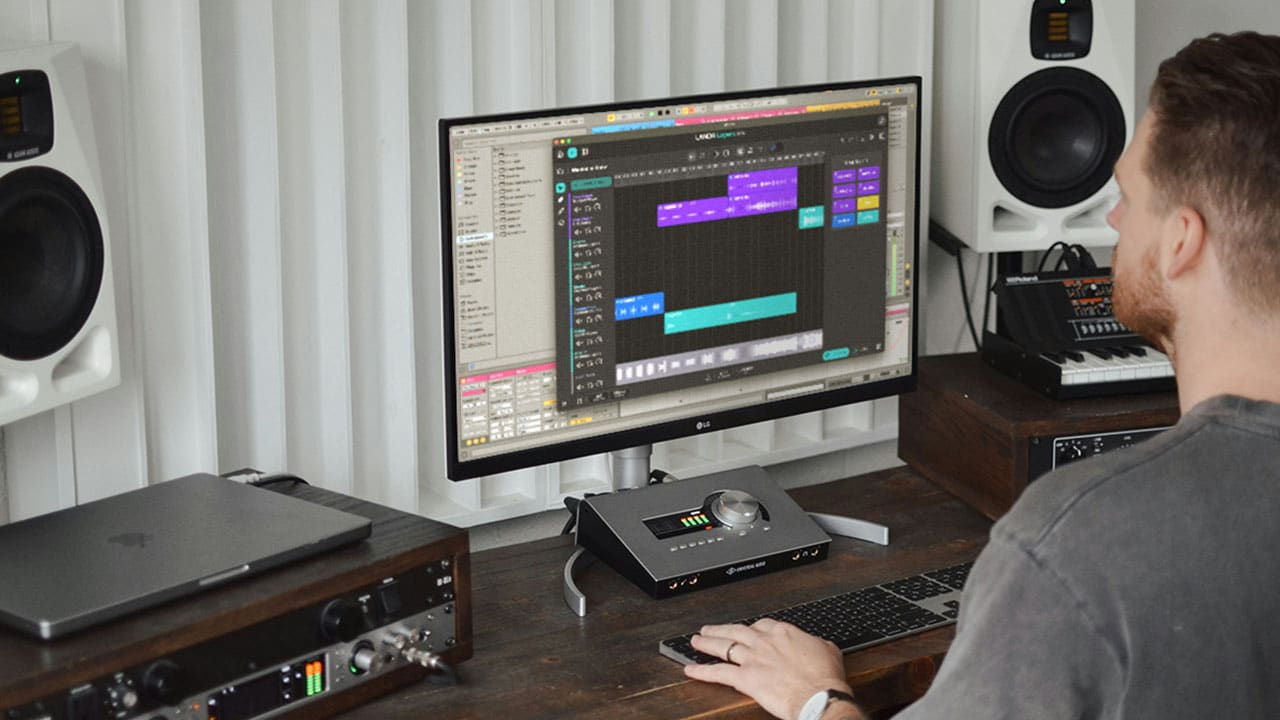
LANDR Layers isn’t trying to replace you. It listens to your track and acts like a virtual session musician or co-producer, generating realistic instrumental layers that lock to your song’s harmony, rhythm, and structure.
Instead of prompting “make me a song,” you import what you already have. Layers responds with basslines, guitars, keys, drums, or multi-instrument performances played in context, not pasted on top.
What sets it apart is control. You can adjust complexity, feel, performance style, and even regenerate specific sections without blowing up the entire part. Bring in your own samples or one-shots, flip them into full stems, and shape them until they actually fit your track.
Then there’s the ethics piece. LANDR Layers is powered by the Fair Trade AI program, meaning the models are trained on recordings from consenting musicians who are compensated through a transparent revenue-share system. No scraping. No gray areas. No “we’ll deal with it later” vibes.
From a value standpoint, it’s wild. You’re not paying for disposable songs. You’re paying for flexible, DAW-ready stems that work inside real production workflows. It scales from idea sketching to release-ready tracks without forcing you to abandon your creative identity.
So Which One’s “Best”?
If you want instant songs, Suno and Udio win. If you want speed and volume, Boomy delivers. If you want vocal manipulation, Kits AI has a lane.
But if you want AI that respects your process, your sound, and the people who make music in the first place, LANDR Layers stands out. It’s not chasing attention. It’s built to earn a permanent place in a real production workflow.
And in 2026, that’s what matters.