Key Takeaways
- Nvidia closed up 31.5% at $165.05 on Monday, 23 November 2026, after its board reinstated Jensen Huang as CEO.
- The session added roughly $950 billion in market value (Kiplinger put it at $954 billion), the largest one-day gain any company has ever recorded.
- That is more than double the previous record, Microsoft’s gain of about $450 billion in July 2026.
- It was Nvidia’s best day since May 2003. Its market value rose to roughly $3.98 trillion.
- Nvidia had lost about $1.2 trillion while Huang was out (11 to 20 November). Monday won back more than three-quarters of that.
- Ten Nvidia-linked companies added about $500 billion between them, and TSMC gained $158 billion in Taipei the next day.
- Short sellers lost about $11 billion on paper, and a 3x leveraged short Nvidia product in London fell 92%.
- The euphoria faded quickly: Nvidia fell about 5.9% on Tuesday and slipped again before Wednesday’s open.
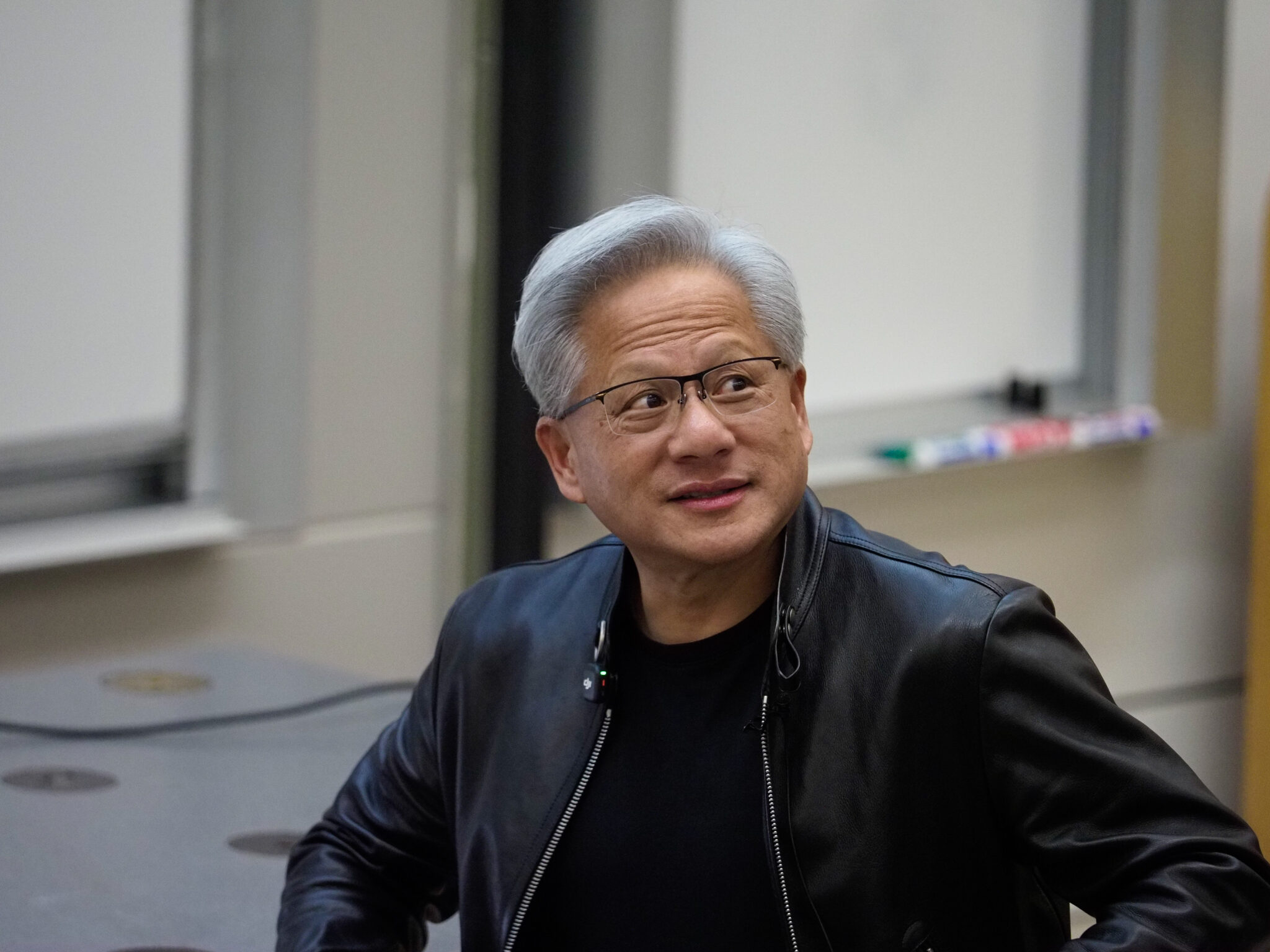
Jensen Huang, co-founder and CEO of Nvidia, during a fireside chat in Stanford University’s CS 153 course on April 30, 2026. Image source: Anders Eidesvik via Wikimedia, Creative Commons Attribution 4.0 International license.
The market reaction to Jensen Huang’s return to Nvidia comes down to one figure: about $950 billion of new market value in a single trading session. Nvidia’s shares rose 31.5% to close at $165.05 on 23 November 2026, hours after the board announced that Huang was back as president, CEO and director. No listed company had ever gained that much value in one day.
The size of the jump matched the size of the fall that came before it. Nvidia’s stock dropped sharply after Huang resigned on 12 November over revelations about his private relationships, including one with a former Megaspeed executive whom US officials suspect of links to Chinese intelligence. Monday’s rally won back most of those losses, but not all of them, and the figures below show both sides of that story.
The $950 Billion Session in Numbers
Friday’s close of $125.53 valued Nvidia at about $3.03 trillion. Monday’s 31.5% jump took it to about $3.98 trillion. MarketWatch and Yahoo Finance both put the one-day gain near $950 billion, while Kiplinger calculated $954 billion. Either way, the gain more than doubled Microsoft’s record of roughly $450 billion set in July.
NBC News gave the scale some context: the value Nvidia added on Monday was more than twice the size of Coca-Cola, close to the whole of Walmart, five times Walt Disney and three times Bank of America. In percentage terms, it was the chipmaker’s best session since 2003 and its third-best day on record.
| Metric | Figure |
|---|---|
| Friday close (20 November) | $125.53 |
| Monday close (23 November) | $165.05 (+31.5%) |
| One-day market value added | About $950 billion (Kiplinger: $954 billion) |
| Market value after the close | About $3.98 trillion |
| Previous one-day record | Microsoft, about $450 billion (July 2026) |
| Previous record one-day loss | Nvidia, $593 billion (January 2025) |
| Best day since | May 2003 |
| Short sellers’ paper losses | About $11.2 billion (ORTEX); Reuters cited $12.2 billion |
The gain also beat the biggest one-day wipeout in market history, which belongs to Nvidia itself. During the DeepSeek shock of January 2025, the company lost about $593 billion in a single session.
How Deep the Hole Was Before the Rebound
The rebound looks smaller once you see the losses before it. Nvidia was near $5.8 trillion in early October 2026 and close to becoming the first $6 trillion company. Investors had just watched the $5 trillion valuation milestone become routine for the chipmaker.
Then the scandal hit. The New York Times reported the spy allegation on 29 October. By 9 November, Nvidia was about $1.5 trillion below its peak. Huang resigned on 12 November, and the stock fell nearly 14% on 20 November alone, its worst day since January 2025, after Reuters reported that the SEC was examining Nvidia’s accounting. That week was the stock’s worst since October 2008, and it was the seventh weekly loss in a row.
| Date (2026) | Approximate market value | What happened |
|---|---|---|
| Early October | About $5.8 trillion | Record highs, $6 trillion in sight |
| 11 November close | About $4.2 trillion | Board accepts Huang’s resignation |
| 20 November close | About $3.0 trillion | Near-14% one-day drop; worst week since 2008 |
| 23 November close | About $3.98 trillion | Huang reinstated; record $950 billion gain |
From the Nov. 11 close to the following Friday, Nvidia lost about $1.2 trillion. Monday restored more than three-quarters of that. From the October peak, however, the shares were still down by roughly a third even after the rally. In other words, the reinstatement fixed the leadership loss but not the earlier slide in confidence around AI spending.
The Ripple Across Wall Street
Because Nvidia is the largest AI stock in the S&P 500, its move dragged entire indexes with it. Stocks had their best day since April 2025. The Nasdaq Composite rose about 6.5%, the S&P 500 gained close to 5% and the Dow added about 3%. The Philadelphia Semiconductor Index jumped between 12% and 14%, depending on the snapshot.
The rally pulled the S&P 500 out of a slide that had pushed it into correction territory the previous Friday. Reuters described the day as one of the most extraordinary in US market history.
24/7 Wall St tracked ten companies that make Nvidia’s chips, build its servers or count it as an investor. Together they added about $500 billion on Monday, roughly half of Nvidia’s own gain. Taiwan Semiconductor’s US shares rose about 15%, Micron about 18% and Dell about 21%. Rivals got far less: Broadcom rose about 2% and AMD about 7%.
Winners and Losers Beyond the Share Price
The day redistributed wealth fast. Euronews estimated that Huang became about $34 billion richer in one session, and Forbes put his fortune near $143.7 billion. Nvidia employees with stock grants gained heavily too, as did President Trump’s personal investments, Euronews reported.
Bearish traders took the other side of the move. ORTEX co-founder Peter Hillerberg estimated paper losses for short sellers at about $11.2 billion, though short interest was only just over 1% of tradable shares. Leveraged products magnified the pain: a GraniteShares 3x short Nvidia product listed in London fell 92%, and the US-listed GraniteShares 2x Short NVDA Daily ETF closed down 63.1%. Its mirror-image long fund rose 61.7%.
Prediction markets were caught off guard as well. Minutes before the announcement, Polymarket bettors gave Huang about a 3% chance of returning as CEO that month. Five minutes later, the odds were about 99%.
Asia’s Turn on Tuesday
Asian markets had closed before the news broke, so they reacted a day later. On Tuesday, TSMC rose 9.9%, its daily limit in Taipei, and added NT$5.2 trillion, or about $158 billion, according to Fortune. Foxconn and Wistron, which assemble AI servers, rose almost 10%. South Korea’s Kospi climbed about 6.3%, with SK Hynix and Samsung Electronics each up roughly 6% to 10% depending on the time of the quote.
| Market or stock (24 November) | Move |
|---|---|
| TSMC (Taipei) | +9.9% (daily limit), about +$158 billion |
| Taiex | About +9% |
| Kospi | About +6.3% |
| SK Hynix / Samsung Electronics | Roughly +6.7% to +10% / +6.6% to +8% |
| Nikkei 225 | About +3.9% |
| Hang Seng | About -0.8% |
How Quickly the Euphoria Faded
The record day did not start a new run. Nvidia closed about 5.9% lower on Tuesday and fell another 5% in premarket trading on Wednesday. AI infrastructure names that had surged on Monday, including Nebius, CoreWeave and IREN, lost about 12% on Tuesday and roughly 7% more before Wednesday’s open.
Analysts had warned of this. James St. Aubin of Ocean Park Asset Management told Reuters he expected more selling once the relief rally ran its course. The leadership question was settled, but the doubts about AI funding, profitability and data-centre spending that had hurt the sector since October remained.
Putting the Move in Historical Context
Yahoo Finance compared the moment with other famous CEO comebacks. Sam Altman returned to OpenAI in under five days in 2023. Steve Jobs needed 12 years to get back to Apple. Among seven well-known returns it charted, the biggest first-day stock gain was Starbucks’ 8% in 2008. Nvidia’s jump was almost four times that.
History also offers a caution. MIT Sloan research on 167 returning S&P 500 CEOs between 1992 and 2017 found their companies’ stocks performed about 10% worse per year than those led by first-time CEOs. Founders made up 4% of all CEOs studied but 44% of returning ones.
Nvidia’s business itself did not change over the weekend. Demand for its Blackwell servers and the guidance in Nvidia’s recent earnings were the same on Monday as on Friday. What changed was the market’s view of who would run the company.
What the Numbers Do Not Settle
The investigations that followed the scandal are still open. Nvidia’s internal probe continues, California’s attorney general has served an investigative subpoena, the SEC is reported to be examining the company, and Huang is scheduled for a transcribed interview with House committees on 1 December. Moody’s had already cut its outlook on Nvidia’s Aa1 rating to stable before the reinstatement.
Counterpoint Research analyst Yang Wang summed it up for Reuters: “The CEO question has been resolved, but the governance and geopolitical questions have not.” The record $950 billion shows how much value investors attach to Huang personally. The days after it show that the doubts about AI spending had not gone away.
This article is for information only and is not investment advice. Market figures come from the cited reports and can differ slightly between data providers.
If you are interested in this topic, we suggest you check our articles:
- How Much Did AI Stocks Plummet Due to the DeepSeek Shock?
- When AI Market Valuation Reaches $5 Trillion
- Which AI Stock Is the Biggest in the S&P 500?
- Nvidia Blackwell Server Capabilities
- Nvidia Earnings: Encouraging Signs for the AI Industry
Sources: StockAnalysis, NBC News, Reuters analysis via Investing.com, Euronews via Yahoo Finance, The Motley Fool, 24/7 Wall St, Fortune
Written by Alius Noreika