Key Takeaways
- Yes, for most of the market. Nvidia’s board said on 17 November that it “does not intend” to reinstate Jensen Huang, and prediction markets gave him about a 3% chance minutes before the announcement.
- The board reversed itself on 23 November 2026, 11 days after Huang resigned, and voted unanimously to bring him back as president, CEO and director.
- There were clues: Huang said publicly on 17 November that he would be “honored” to return, President Trump repeatedly backed a comeback, and a “Stand With Jensen” petition passed 178,000 signatures.
- The deciding factor came over the weekend: senior US officials, led by Vice President JD Vance, pressed the board, and Trump spoke to directors himself.
- The board said input from senior levels of the US government left it confident the reinstatement “poses no national security risk.”
- Nvidia had lost about $1.2 trillion in market value while Huang was out, which added pressure for a reversal.
- Investigations by Nvidia, California and Congress are still open, so the reinstatement settles the leadership question but not the governance one.
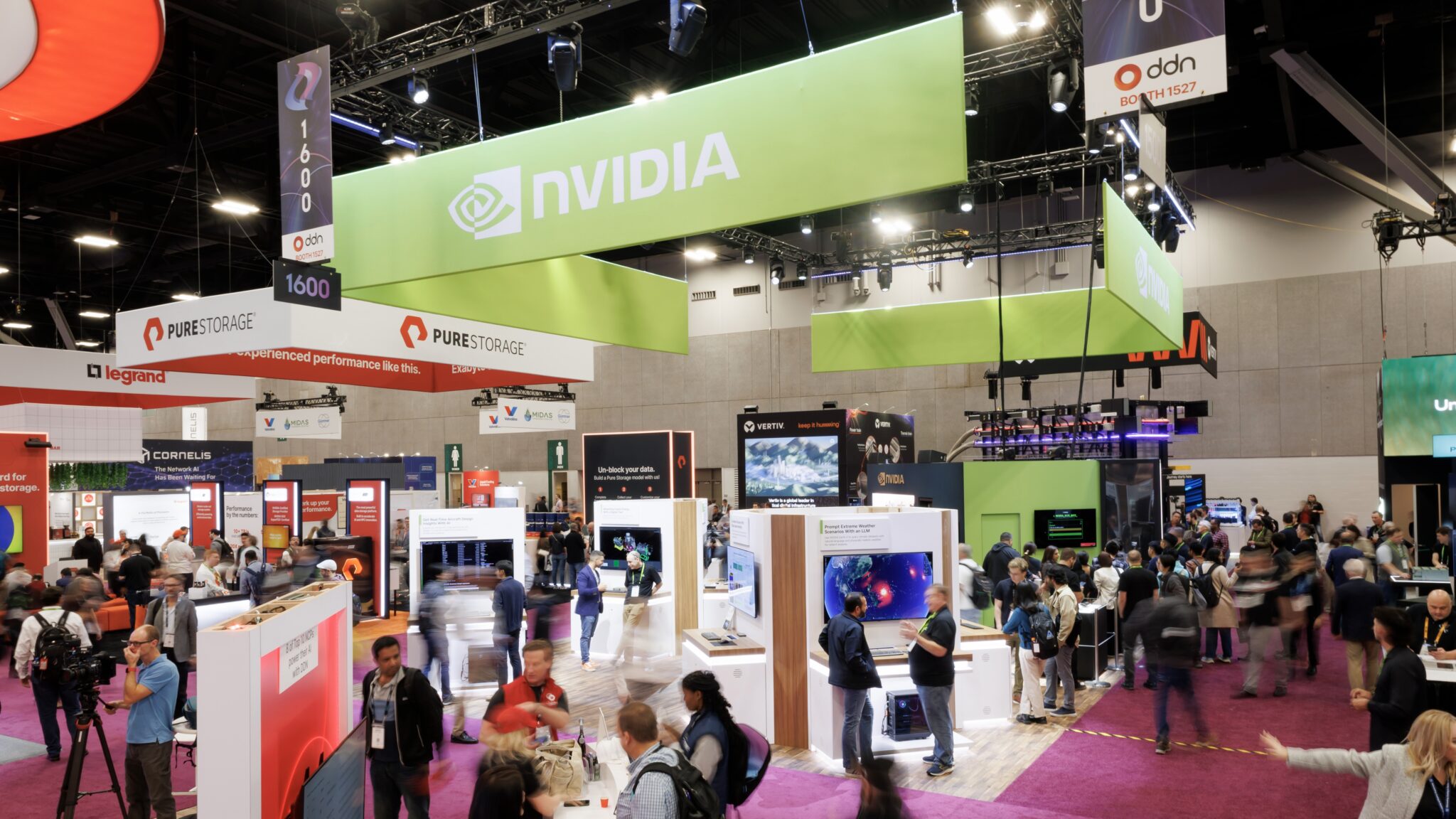
Nvidia booth at the Supercomputing conference in Chicago, Nov. 15-20. Image source: Nvidia
Jensen Huang’s reinstatement as Nvidia CEO was a genuine surprise for most investors, because only six days earlier the board had publicly ruled it out. When the company announced on Monday, 23 November 2026, that Huang was back “effective immediately,” prediction-market odds jumped from about 3% to about 99% within five minutes, and Nvidia’s stock rose 31.5% by the close.
For people watching closely, though, the reversal was less shocking than it looked. Huang had shown no reluctance to return, the White House was openly in favour, employees were petitioning for him, and the company’s market value had dropped by more than a trillion dollars. The surprise was mostly about timing and about how directly Washington got involved.
A Timeline of 15 Days
The whole episode, from Huang admitting to an affair to his return, took about two weeks. The key dates show how quickly the board’s position moved.
| Date (2026) | Event |
|---|---|
| 29 October | The New York Times reports US intelligence concerns about Huang’s ties to former Megaspeed executive Alice Huang |
| 8 November | Huang apologises to employees for infidelity; Nvidia opens an internal investigation |
| 11 November | Reports of a relationship with a subordinate; board accepts his resignation at an emergency meeting |
| 12 November | Nvidia announces the resignation; CFO Colette Kress becomes interim CEO; Harvey Jones becomes board chair |
| 15 November | Financial Times reports Huang is considering a comeback |
| 16 November | Trump says he would not mind Huang returning |
| 17 November | Huang says he would be “honored” to return; Jones says the board “does not intend to reinstate” him |
| 18 November | Jones cites Huang’s “lack of candor” at an all-hands meeting |
| 20 November | Nvidia falls nearly 14%; Trump says he would like Huang to get a second chance |
| 21-22 November | Vance-led calls with the board; Trump speaks to directors |
| 23 November | Board unanimously reinstates Huang |
Why a Comeback Looked Ruled Out
The board had done a lot to signal that it was moving on. It named its first-ever independent chair, Harvey Jones, put Kress in charge on an interim basis and hired the search firm Heidrick & Struggles to find a permanent CEO from inside or outside the company. It also set up a National Security and Export Control Oversight Committee.
Jones was blunt in public. During the third-quarter earnings call on 17 November he said the board did not intend to bring Huang back, and the next day he pointed to Huang’s lack of candor. Treasury Secretary Scott Bessent added to the sense of finality, saying Nvidia needed a dramatic shakeup and should look outside for its next leader. Moody’s lowered its outlook on Nvidia’s credit rating the same week.
With the founder gone, a new chair in place and a headhunter hired, few observers expected a U-turn. That is why Polymarket odds stayed below 10% from 12 November until the morning of the announcement.
The Clues That a Return Was Possible
Several signals pointed the other way. On 15 November, the Financial Times reported that Huang was weighing a comeback and that a “war room” was forming. Two days later, Huang posted on X that he had made serious mistakes and would be honoured to return if the board thought it best.
Political support was open and repeated. Trump called Huang an honourable man after the first revelations, said on 16 November that he would not mind his return and cast doubt on the claim that Alice Huang was a spy. On 20 November, he said he would love to see Huang given a second chance. Elon Musk offered to hire Huang after the resignation, which added to the sense that the industry still wanted him.
Inside Nvidia, the petition backing Huang passed 100,000 signatures within days, including more than 5,000 from people who said they worked at the company, and later exceeded 178,000. And the market made its own case. Nvidia fell from about $4.2 trillion at the 11 November close to about $3.0 trillion on 20 November, its worst week since 2008.
What Changed Over the Weekend
According to CNN, Trump asked Vance to lead a pressure campaign, partly because of his ties to Silicon Valley. Over roughly 72 hours, Vance and other senior officials spoke with Huang, directors and their lawyers. Trump called the board himself to vouch for Huang, whom he had come to see as critical to the wider economy. By Sunday night, the board told officials it would reverse course.
CBS News reported that Huang told the White House he believed the board wanted him back but needed assurance that the US government did not see him as a national security risk. That assurance arrived. The board’s statement said it had received input from senior levels of the government and was “confident that Mr. Huang’s reinstatement poses no national security risk.” Trump later told CNBC, “Basically, I was represented at the board.”
The board also said it was satisfied with Huang’s candor and ability to lead after a series of meetings with him. Jones stays as chair, and Kress returns to her job as CFO.
How It Compares With Other CEO Comebacks
Fast reversals have happened before. The closest comparison is OpenAI in 2023, when the board fired Sam Altman on a Friday and had him back within five days after about 700 of roughly 770 employees threatened to leave. You can read more about Sam Altman’s rise at OpenAI and how far Altman is willing to go to shape the company.
| Founder or CEO | Company | Time away | What forced the return |
|---|---|---|---|
| Jensen Huang | Nvidia | About 11-12 days | Market losses, employee petition, government assurances |
| Sam Altman | OpenAI | Under five days | Employee revolt and investor pressure |
| Steve Jobs | Apple | 12 years | Apple’s decline and the NeXT acquisition |
What sets Nvidia’s case apart is the government’s role. In Altman’s case, employees and investors drove the reversal. In Huang’s case, the White House openly took credit, which is very unusual for a public company worth trillions.
Why Some Still See the Decision as Risky
Supporters of the move argue that Huang is hard to replace, that his roadmap matters to the whole AI supply chain and that the market’s verdict was clear. Plumb Balanced Fund’s Tom Plumb told Reuters that trying to replace Huang was something nobody could feel comfortable with.
Critics see a governance problem. A CNBC op-ed argued that the intervention put market concerns ahead of national security and counter-intelligence work. Columbia Business School’s Shiva Rajgopal told Al Jazeera it was extraordinary to blacklist Megaspeed while pushing for Huang’s return on the same day. The debate also touches on why boards need AI expertise and the independence to use it.
The open questions are concrete. Nvidia’s independent investigation, run with Wachtell Lipton, continues. California’s attorney general served an investigative subpoena on 19 November. Huang is due for a transcribed interview with House committees on 1 December, and senators want him before the Senate Banking Committee. History offers a caution too: MIT Sloan research on 167 returning S&P 500 CEOs found their stocks did about 10% worse per year than those led by first-time CEOs.
The Verdict: A Shock in Timing, Less So in Logic
Measured by what the board said and how markets priced it, the reinstatement was a major surprise. Measured by the pressures building around Nvidia, including more than $1 trillion in lost value, a mobilised workforce, a supportive White House and a founder who wanted his job back, it was a plausible outcome that arrived faster than almost anyone expected.
The episode also showed how closely Nvidia’s leadership is now tied to US policy. That link runs through Trump’s views on AI and chip exports, and through partnerships such as Nvidia’s open and secure AI alliance. Huang is back, but he now works under closer watch from his board, Congress and the government that helped return him.
If you are interested in this topic, we suggest you check our articles:
- Sam Altman: OpenAI CEO’s Background and Rise to the Top
- OpenAI: How Far Is Sam Altman Willing to Go?
- Why Every Board Needs an AI Expert
- Trump on AI: Latest Views and Comments
- Nvidia’s Open and Secure AI Alliance
Sources: Nvidia 8-K (SEC), Nvidia CEO transition 8-K (SEC), CNN, CBS News, CBS News timeline, NBC News, Yahoo Finance, Reuters via Investing.com
Written by Alius Noreika