The 2026 Winter Olympics are one of the most anticipated professional sports competitions, but did you know that during the Games organizers have deployed numerous artificial intelligence (AI) solutions that improve broadcast quality and fan experience. So, let’s take a look at them.
The Main Partner of the 2026 Winter Olympics
The International Olympic Committee has created the Olympic AI Agenda1, a strategy describing how the Olympics plan to use AI in sport, the Games, and their organization in recent years. The document was published in 2024.
In essence, AI usage is planned in four areas:
- Assistance for athletes. This includes training analysis, talent identification, and even combating online abuse.
- Ensuring fairness. This involves improving judging accuracy, analyzing doping and cheating, and event security (including cybersecurity).
- Focus on fans. AI solutions also engage audiences, including personalized content – commentary, summaries, and more.
- Improving event efficiency. This part relates to logistics and broadcast quality.
From 2017 to 2028, the technology company Alibaba Group is the main partner2 of the Olympic Movement, serving not a promotional role but officially providing cloud and AI infrastructure solutions.
The Milano-Cortina 2026 Winter Olympics became the first Games where broadcasts, archives, and fan information operate on an AI and cloud basis. In these competitions, Alibaba together with Olympic Broadcasting Services and the International Olympic Committee is essentially building infrastructure of the 2026 Winter Olympics aimed at:
- Automated content creation,
- Television broadcasting,
- The use of large language models for the first time in the Olympics.
What AI Solutions are used in the 2026 Winter Olympics
Real-Time 360° Replay
This solution can be clearly noticed by every Winter Olympics viewer. AI tools separate the athlete’s silhouette from snow or ice (any background that blends with them) and create an interactive 3D scene. The camera can then view the athlete from all angles during the broadcast and prepare a quick replay.
This is also related to the Spacetime Slices mode, where multiple phases of the athlete’s movement are visible in a single frame. AI graphics with data are also integrated – showing metrics such as jump height, landing speed, airtime, and more.
It is also important to mention FPV drones that film from a first-person perspective and fly at the athlete’s speed – viewers can observe the real speed and essentially the perspective the athlete sees on the course.
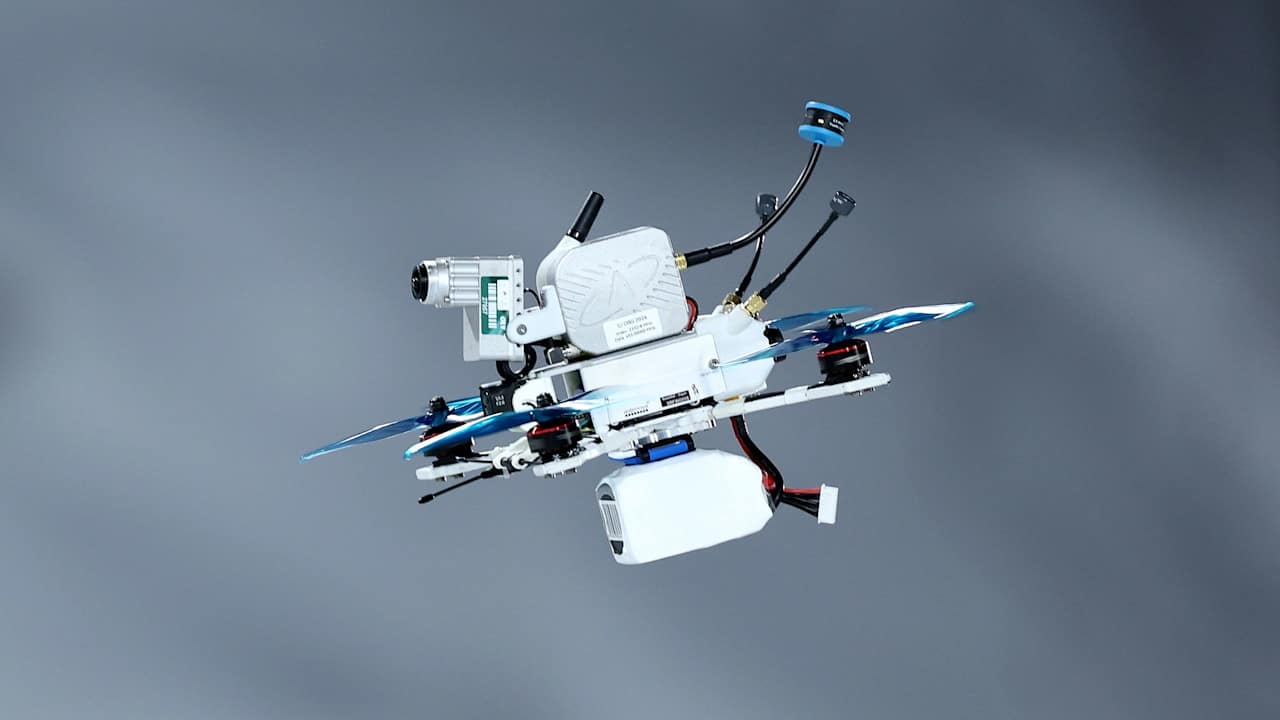
FPV drones filming an athlete. Image source: Getty Images / Olympics.com
Automatic Event Description
For the first time in the 2026 Winter Olympics, a ChatGPT-type model – known as Alibaba Qwen – is used. Algorithms recognize athletes, identify key moments, generate descriptions, athlete introductions, and more.
There is also another solution where AI tags video content and can instantly find required footage, for example when asked to locate a gold-medal performance in a specific sport.
Cloud-Based Broadcasting
The 2026 Winter Olympics move from satellites to cloud platforms. In total, the Milano-Cortina Games will have 39 broadcasters, 428 live video feeds, 26 UHD streams, and 72 audio channels.
In practice, this means video streams are processed, stored, and distributed in remote data centers, allowing TV networks to operate without being physically present and without expensive infrastructure.
Automatic Content Creation
AI enables the creation and generation of large amounts of content, and this year a record number is planned – more than 5000 prepared short videos that editorial teams can access, edit, and publish from anywhere in the world.
Olympic Chatbot
An official AI assistant operates during the Games, answering questions related to results, athletes, and rules. It is integrated into the official Olympic website and works in real time in multiple languages.
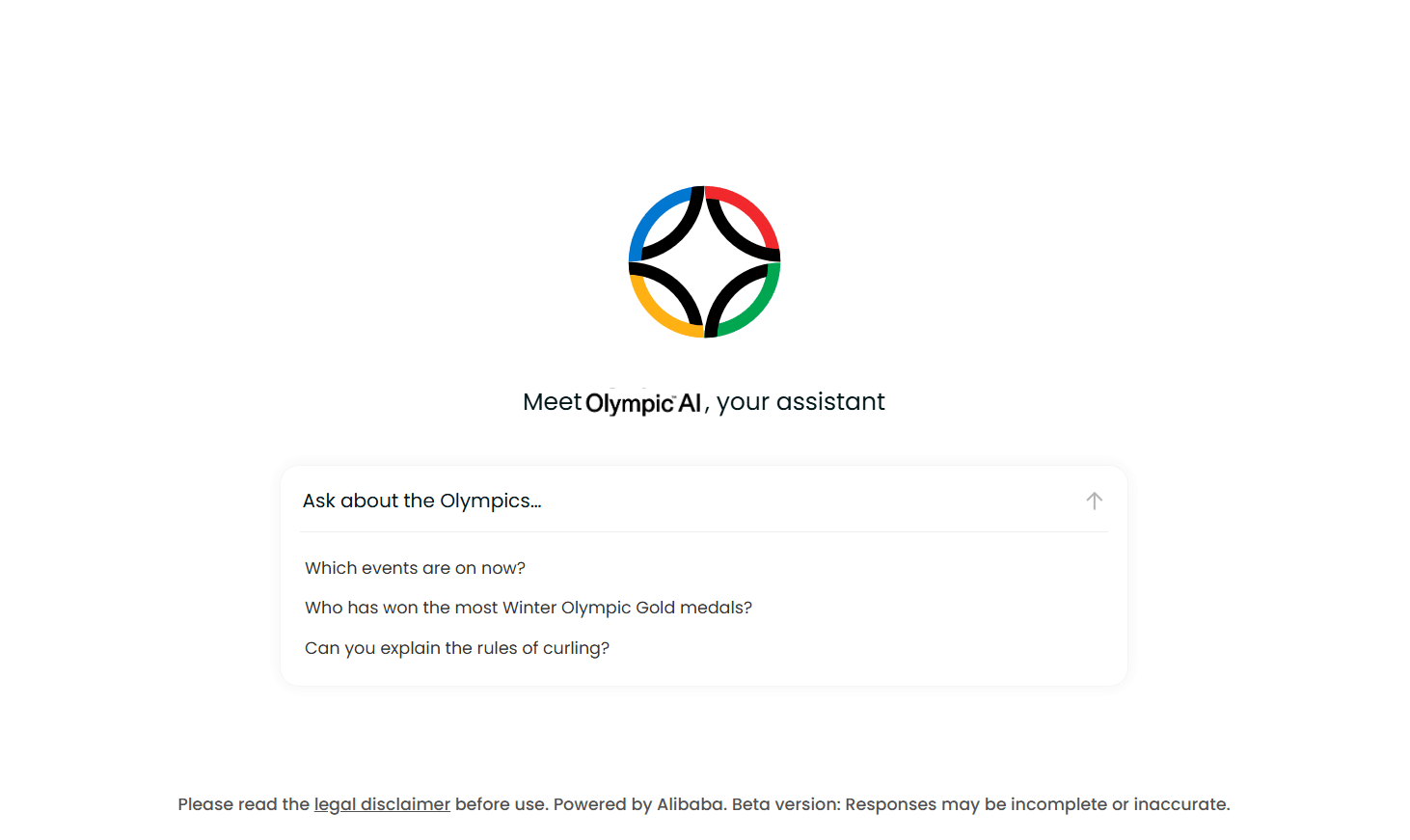
Olympic AI-powered assistant interface. Image source: Screenshot from Olympics.com
Archive with AI Search
This solution relates to AI tagging. Algorithms will index the entire history of the 2026 Winter Olympics and create a kind of search system.
Unlike before, instead of catalogs there will be natural language search – you can type a specific athlete, sport, finals, and the system will instantly provide them, eliminating manual searching.
Which 2026 Winter Olympics Sports are Most Involved
Real-Time 360° Replay is widely used across 17 disciplines of the 2026 Winter Olympics – especially those where motion analysis and complex actions are important. This includes figure skating, freestyle skiing, snowboarding, and ski jumping events. In these sports, the AI solution is useful because it is important not only to track time but also to analyze technical movement.
Meanwhile, in endurance-based sports such as biathlon, these solutions appear less frequently.
Curling is also worth mentioning separately, as for the first time AI technology has been successfully applied to the stone handle. Algorithms track the stone’s trajectory, speed, and release moment, providing significant assistance to judges in making decisions that traditionally cause many debates.
Final Thoughts
The 2026 Winter Olympics are the first Games where AI becomes not an additional technology but a core infrastructure. The Games are not only a sporting celebration but also proof of technological progress.
If you are interested in this topic, we suggest you check our articles:
- AI in Professional Sport: An Exciting Addition
- AI within Sports Medicine: Can Recovery Times Be Improved?
- How Many Sports are at the World Humanoid Robot Games in China?
- AI in the PGA Tour: Transforming How Fans Experience Golf
Sources: Alibaba Cloud, Euronews, International Olympic Committee1, International Olympic Committee2
Focus keyword: The 2026 Winter Olympics
Meta description: The 2026 Winter Olympics showcase how artificial intelligence is transforming broadcasts, judging accuracy and fan experience, marking a new era of technology-driven sporting events.