A photo sharing platform is used in weddings and large events by centralizing thousands of images. From multiple photographers into a single, cloud-based system, it enables fast upload, organization and instant distribution of pictures, without requiring manual sorting and sending of files, as event teams can upload pictures in real time where they can be automatically categorized and accessible through secure links or QR codes. The guests, clients and stakeholders can view, download and share photos immediately, without having to face any unnecessary delays and access issues.
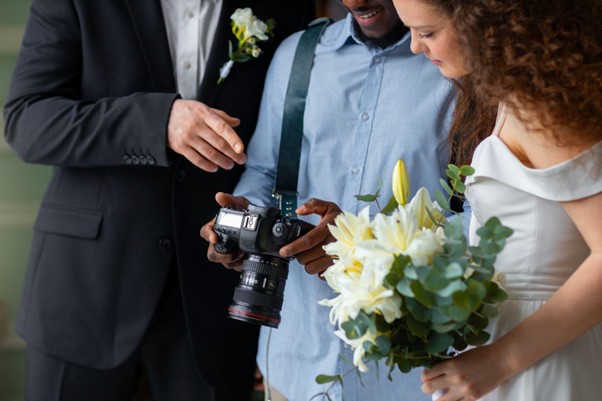
Wedding. Image credit: Freepik, free license
With this streamlined approach, large-scale events are allowed to deliver photos efficiently. Other than that, handling massive volumes and meeting modern expectations for speed and convenience becomes significantly easier.
Why Photo Delivery Becomes Complex at Weddings and Large Events
Photo delivery issues are not caused by image creation. They originate from distribution, access control and coordination across multiple stakeholders.
Thousands of Photos, Multiple Stakeholders
Large events involve several parties who need access to photos:
- Professional photographers and media teams
- Event planners and coordinators
- Couples, hosts or brand teams
- Guests, attendees, sponsors and partners
All groups need different levels of access to photos. Without having a central place to store, they can be misplaced. Manually sorting and sharing photographs is becoming increasingly difficult as the volume of images increases.
Time-Sensitive Expectations from Attendees
| Instant or Near-Real-Time Access | Long Delivery Cycles |
| Photos available during or shortly after the event | Photos delivered days or weeks later |
| Photos remain timely and shareable | Interest drops as time passes |
| Higher sharing and faster interaction | Limited sharing and reduced visibility |
| Fewer follow-ups from guests | Repeated requests and manual sharing |
| Feels efficient and well-managed | Feels slow and outdated |
Why Photo Sharing Matters for Weddings and Events
At large events, photo delivery is a process that starts during the event, not after it ends. It is part of the workflow in overall events. Without a more structured photo sharing system in place, teams are dependent on manual processes that are unscalable to volume and audience size.
A modern photo sharing platform manages the photo organization, its access control and distribution altogether. This helps to reduce fragmentation between tools and helps ensure consistent handling of photos from capture through delivery.
From an operational standpoint, centralized photo sharing reduces the complexity of making sure photographers, planners and stakeholders are all coordinated. Files are uploaded once, organized automatically and made available to different audiences through controlled access.
Centralized Uploading and Organisation
When all photographers and media teams upload to one platform, files remain organized from the beginning. There is no need to merge folders, rename files or resend links several times. Everything is available in one place, which makes it easier to coordinate and eliminates manual work in the days after the event.
Easy Access for Guests Without Technical Barriers
Guests should not need technical knowledge or software installations to access event photos. Modern platforms support:
- Browser-based viewing
- Secure links
- QR code access
- Mobile and desktop compatibility
This removes friction and ensures high participation rates regardless of device or location.
Key Features Weddings and Events Look for in a Photo Sharing Platform
Large-scale events require platforms designed specifically for high-volume use cases.
Scalable Galleries for High-Volume Photo Uploads
The platform must handle thousands of images without performance degradation. Upload speeds, processing and gallery loading times should remain stable regardless of volume.
Guest-Friendly Sharing Without App Downloads
Requiring app downloads creates drop-offs. Event organizers prioritize platforms that allow instant access through links or QR codes, enabling guests to view and download content immediately.
Smart Sorting, Tagging and Search Capabilities
Manual sorting does not scale. Automated tagging, date-based organization, face recognition or metadata-driven search reduces time spent locating specific photos.
This is especially important for multi-day events and large guest lists.
Controlled Access for Private and Public Moments
Not all photos should be public. Platforms must support permission controls, allowing organizers to manage private galleries, restricted access and public-facing collections within the same system.
Traditional Photo Delivery vs Modern Photo Sharing Platforms
Most traditional photo delivery methods were never meant for large events. They work when the audience is small and the photo count is limited. Once volume and guest numbers increase, these methods introduce delays, confusion and extra manual work. Modern photo sharing platforms are designed specifically to avoid those issues.
| Delivery Method | What Happens at Large Events | Why It Falls Short |
| USB drives | Photos are copied and handed over after the event | Not scalable, easy to misplace, no remote access and no way to add or update content later |
| Photos are shared across multiple group chats | Compression reduces quality, file limits apply and photos get lost in chat threads | |
| Links or attachments are sent manually | Attachment limits, repeated follow-ups and inconsistent access across recipients | |
| Google Drive | Photos are uploaded to shared folders | Permission issues, slow downloads for guests and not built for public or high-volume access |
| Photo sharing platforms | Photos are uploaded to a centralized, purpose-built system | Designed for scale, fast access, clear organization and controlled sharing |
Traditional tools focus on file transfer. Photo sharing platforms focus on distribution at scale. That difference becomes critical when hundreds or thousands of people need access to event photos quickly and without friction.
How Photo Sharing Platforms Enhance the Guest Experience
How guests receive photos shapes how they remember the event. When access is smooth and timely, the experience feels complete rather than cut short.
Faster Photo Access After the Event
Seeing photos soon after the event helps guests relive moments while they are still fresh. Instead of waiting days and slowly losing interest, guests can revisit highlights almost immediately. This quick access makes sharing feel natural and spontaneous, not forced or delayed.
Inclusive Sharing for Guests Across Locations
Not everyone experiences an event from the same place. Photo sharing platforms allow remote guests, international attendees and those who could not attend in person to feel included. Everyone sees the same moments at the same time, regardless of location or device.
By removing delays and barriers, photo sharing platforms turn event photos into a shared experience rather than a delayed follow-up. According to the Customer Market Insights report, it is predicted that the Indian Photography Services Market will have a compound annual growth rate (CAGR) of 8.1% from 2024 through 2033.
How Samaro.ai Fits Into Large-Scale Event Photo Sharing
Large events require photo sharing systems that can handle high volumes without adding complexity to post-event workflows. Platforms in this category are typically used when multiple contributors, large guest lists and tight delivery timelines are involved.
Platforms such as Samaro.ai reflect this approach by focusing on scale, speed and simplicity rather than functioning as general-purpose storage tools. They support centralized photo uploads, quick access for different audiences and structured control over who can view or download content.
By aligning with how modern events operate, platforms like Samaro.ai help streamline photo delivery after the event while maintaining consistent performance and access control as volume increases.
Conclusion: Why Scalable Photo Sharing Is Now Essential for Events
Large events need to have a photo sharing system that can handle high volumes without adding complexity to post-event workflows. Platforms in this category are usually utilized in instances in which more than one contributor, large lists of guests and short delivery points are involved.
Platforms like Samaro.ai usually focus on three things, i.e., speed, scale and ease of use for large events. They are in favor of centralized photo uploads, faster access for different audiences and organized control over who can view or download content.
By aligning with the way modern events operate, photo sharing platforms such as Samaro.ai provide assistance in streamlining photo delivery after the event, while achieving consistency in performance and access control as the volume grows.