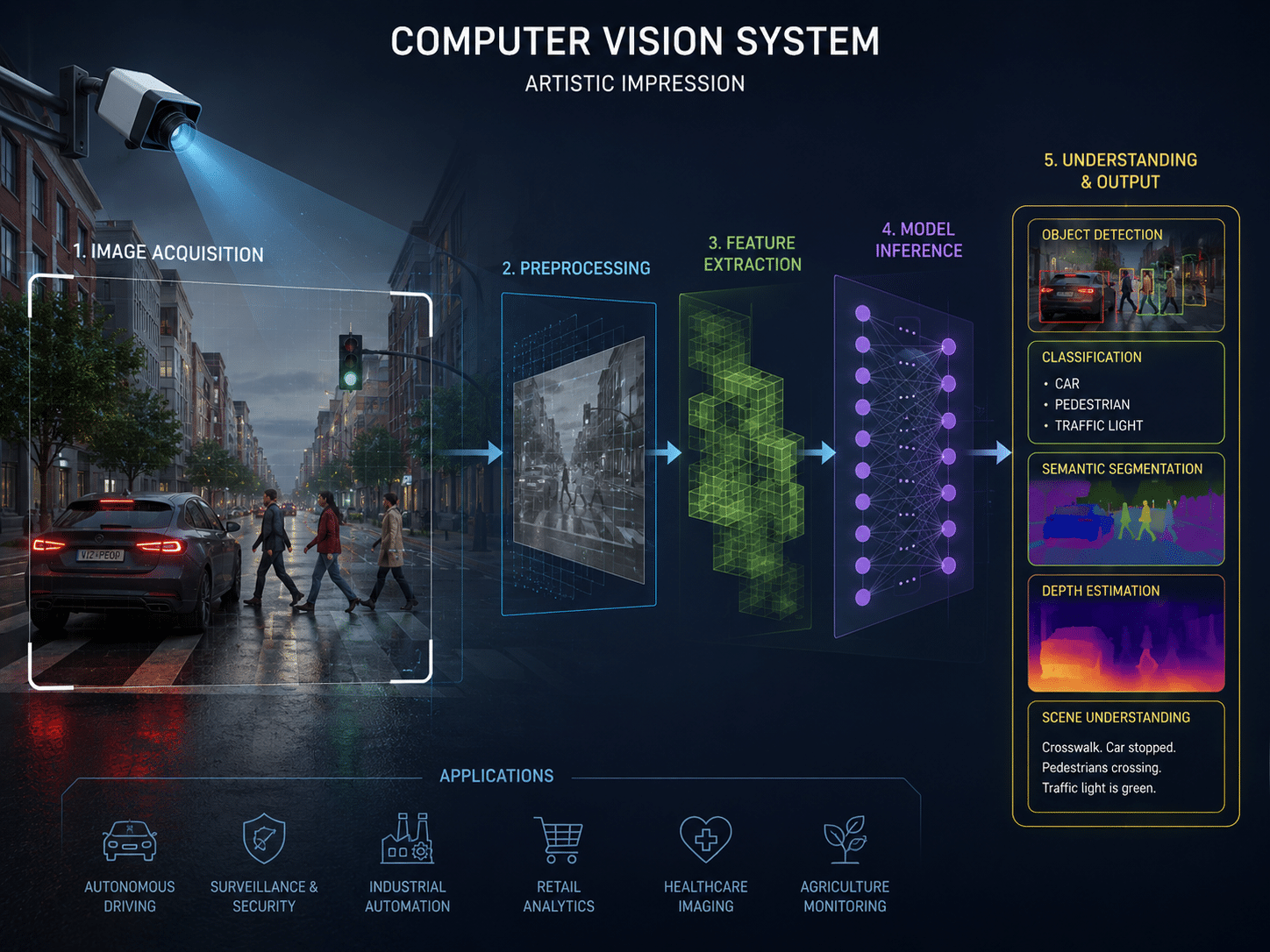
Structure of a computer vision system platform – artistic impression. Image credit: Alius Noreika / AI
Computer vision has evolved well past laboratory demos. Today, industries from manufacturing, health care, logistics, retail, agriculture, and security are using image recognition, object detection, and visual inspection tools. Often not a matter of demand for the product. The tricky part is identifying the right person at a big organization who can actually approve it.
You may also get a strong model, efficient and clean training workflow, some annotation tools and then finally be receiving real business value from a computer vision vendor. Outreach is not a breather when the message, however well-crafted, ends up in an empty inbox, a junior employee, or the wrong department. That is where smarter contact research matters. A tool like LI finder by Email can help teams connect contact details with professional profiles, which gives sales teams more context before starting a conversation.
Computer vision enterprise sales is an exercise in precision. Automation is not something that all functions care about, but plant manager, VP of operations, head of quality, chief data officer, and innovation lead could. However, they all approach the issue from a unique perspective. One wants fewer defects. One wants lower inspection costs. One wants better data. One is a wish for evidence that a destructive system will play nicely with current cameras and processes.
Why Generic Outreach Fails in Computer Vision Sales
Computer vision products usually intersect multiple teams at the same time. Involves Operations, IT, Compliance, Procurement and Finance. For instance, a medical imaging platform may include clinical teams, data teams, security officers, and executives. More often than not, sending one message to all of them does nothing.
Most poor outreach has the same problems:
- It talks about the product before the buyer’s problem.
- It uses broad claims instead of specific use cases.
- It reaches people who cannot approve a pilot.
- It ignores company context, location, industry, and current systems.
- It pushes for a demo before proving relevance.
Enterprise buyers have heard enough cold pitches on AI. They want to understand if the tool is able to solve an actual pain point their teams have in operations without building new work into their processes.
Map the Use Case Before You Find the Contact
Computer vision companies should create a contact list after clarifying the use case in simple business terms. For technical teams, the term “AI model for image classification” may sound cool; for an operations leader, it does not explain how they should care.
The business problem is the starting point of a better sales motion.
| Computer Vision Use Case | Likely Buyer | Message Angle |
| Defect detection | VP of quality, plant manager | Reduce manual inspection gaps and catch defects earlier |
| Shelf monitoring | Retail operations director | Improve stock visibility and reduce missed sales |
| Medical image analysis | Clinical innovation lead | Support faster review and improve workflow efficiency |
| Warehouse monitoring | Logistics operations lead | Track movement, safety risks, and process bottlenecks |
| Agriculture imaging | Head of operations, agritech lead | Monitor crop health and field conditions at scale |
This allows teams to steer clear of scattered prospecting. It also makes outreach smarter, as the message speaks to the role, not just the technology.
Build a Contact Discovery Workflow
Once the target buyer is obvious, the team requires a scalable method to discover the right folks. Manual research operates on ten accounts. Fifty is where it breaks, and five hundred it becomes madness.
A practical workflow looks like this:
- Segment target Accounts by industry, size and propensity to need.
- Find out which department is assigned for the problem.
- Look for decision makers and influencers from that department.
- Validate business emails and experience profiles.
- Organize leads by use case, job, and stage.
- Leap of faith until you hate the process to send out short, relevant outreach theoretically based on the likely order of importance of each buyer.
This process turns contact discovery into a system, not a guessing game. The same idea applies across enterprise sales, and this website gives a useful view of how automated contact discovery can support sales teams that work at scale.
What to Say in the First Message
The very first message should not be run through every single one of its functions. The recipient should feel that the sender understands their world.
A weak message, for example, sounds like:
“We provide advanced computer vision software powered by AI and machine learning. Can we schedule a demo?”
A stronger message says:
“You are responsible for multiple production lines, where lengthy inspection processes can inhibit the flow of productivity. We enable the testing of visual inspection models for manufacturers to be validated on existing image data before a larger scale goes into production. Would it help to share notes regarding where delays in inspection are most common?”
And the second one is far better, because it names a problem the reader probably has, it explains well the product in business meaning, it asks for a no-pressure chat.
Keep Outreach Short, Specific, and Useful
Departments of computer vision, in particular, wish to add some technical detail. That detail matters later.
Good outreach usually includes:
- One sentence about the buyer’s likely challenge.
- One sentence about the relevant use case.
- One proof point, example, or reason to care.
- One simple question.
Skip the long paragraphs on neural networks and model architecture, and how you train a data pipeline, unless the buyer has a tech role. A CTO might have some interest in deployment options. For a warehouse director: fewer missed scans, safer movement, better visibility.
Use Contact Data Responsibly
It is a team members duty to find the right contact, not to spam. Effective outreach is all about relevance and moderation. Contact people only when there is an actual business need for sales teams to do so, be forthright in messages, and make subscribing effortless.
It matters even more in AI sales. An improper outreach process can hamper credibility long before a product discussion has taken place.
Final Thoughts
Computer vision companies do not just make more random people calls to win enterprise deals. They succeed by getting the right message to the right people at the right time.
The product may be powered by sophisticated AI, but the sales motion is still reliant on sharp research, quality contact data, and human intuition. Outreach becomes less noise and more utility when teams map use cases to buyer roles, confirm contact details, and craft messages about the real operational challenges. That is where more meaningful conversations begin.