Key Takeaways
- AI-powered mastering services like LANDR and iZotope Ozone deliver professional-grade sound for a fraction of traditional studio costs, distributing to 150+ streaming platforms.
- Predictive analytics tools help independent artists identify playlist opportunities, optimize release timing, and target specific listener demographics — capabilities once reserved for label marketing teams.
- 60% of musicians now use AI tools in their workflow, and 36.8% of professional producers have fully integrated AI into their production process.
- The global AI-in-music market was valued at $2.9 billion in 2024, with independent musicians and small studios driving much of the adoption.
- Major labels are striking deals with AI platforms like Suno, Udio, and Klay — but independent artists can access many of the same underlying technologies directly.
- AI-driven distribution platforms automate metadata tagging, royalty tracking, and audience segmentation, letting solo artists manage what once required entire label departments.
- Artists like Taryn Southern and Holly Herndon have already built careers using AI as a creative and commercial partner, proving the model works.
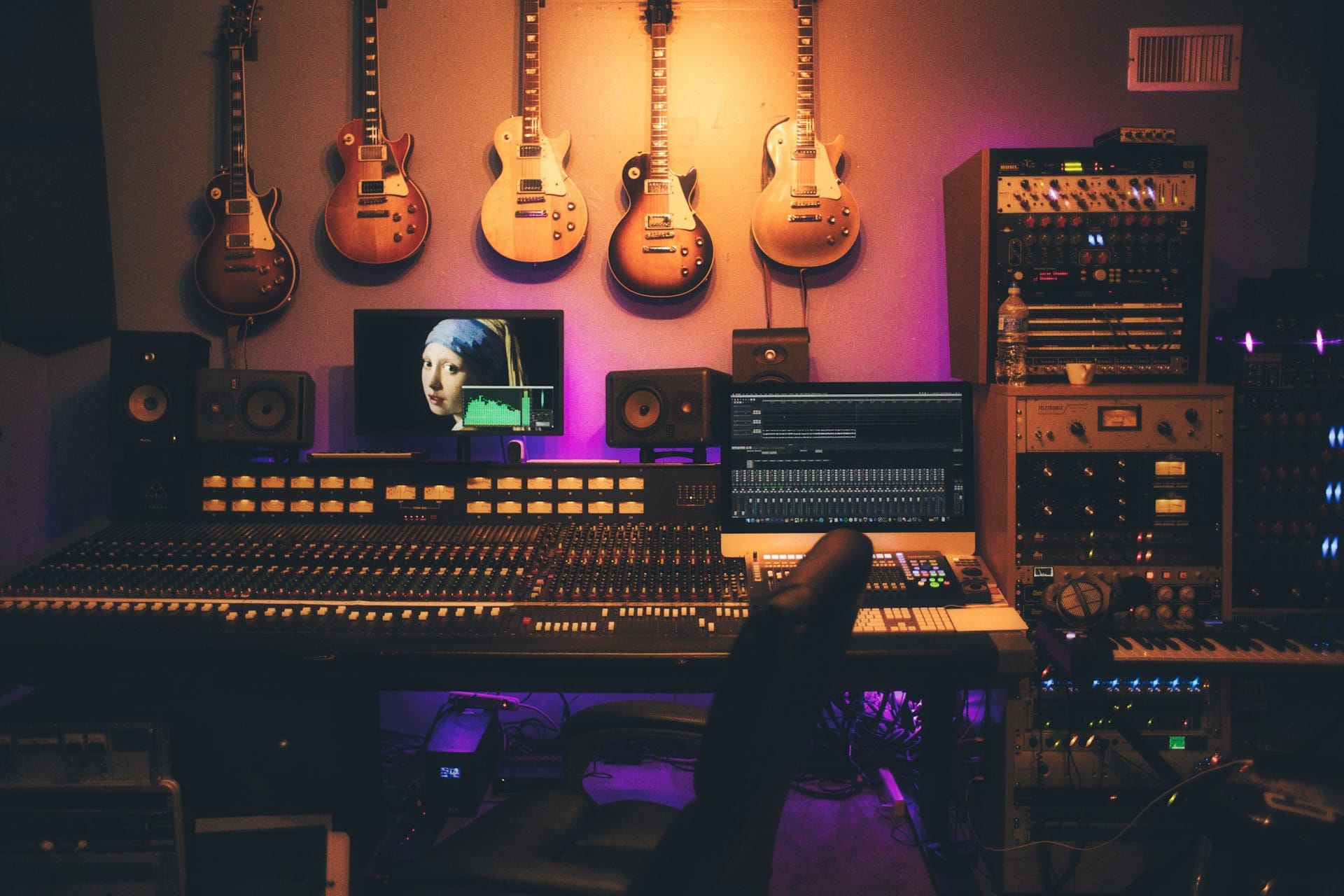
A music production studio. Image credit: Caught In Joy via Unsplash, free license
The gap between a bedroom producer and a major-label artist used to be defined by access: access to top-tier studios, professional mastering engineers, global distribution networks, and data-driven marketing teams. That gap is closing fast. AI tools now handle mixing, mastering, distribution analytics, and audience targeting at a level that matches — and sometimes exceeds — what traditional labels provide. For independent musicians willing to learn these tools, the playing field has never been more level.
This isn’t a theoretical promise. Deezer reported that over 20,000 AI-generated tracks were uploaded to its platform daily in 2025, representing 18% of all uploads. Suno, one of the leading AI music platforms, reached nearly 100 million users and secured $250 million in funding at a $2.45 billion valuation. The infrastructure is already here, and independent artists who move quickly stand to gain the most.
AI Mastering and Mixing: Studio Quality Without the Studio
Professional mastering once cost hundreds of dollars per track and required booking time with specialized engineers. AI mastering services have upended that model entirely.
LANDR uses machine learning algorithms to analyze a track’s frequency content, dynamics, and genre characteristics, then applies mastering effects automatically. The platform distributes to over 150 streaming platforms and includes collaboration tools — functioning as a near-complete release pipeline for a solo artist. iZotope Ozone takes a hybrid approach, using AI to suggest starting points for mastering chains that producers can then refine by ear. Professional studios still use this suite, which tells you something about the quality ceiling these tools can reach.
Beyond mastering, DAWs themselves are getting smarter. Ableton and Apple’s Logic Pro now integrate AI features directly: smart EQs that identify frequency clashes between instruments, AI-powered drum machines that generate beats matched to a song’s feel, and tools that convert a hummed melody into MIDI notes. Stem separation technology — pioneered by tools like Meta’s Demucs and its successor SAM Audio, released in December 2025 — can isolate individual instruments from a finished stereo mix. DJs, remix artists, and producers can now extract a vocal line, a bassline, or even a single violin part from a mixed recording.
| AI Tool | Primary Function | Best For |
|---|---|---|
| LANDR | AI mastering + distribution to 150+ platforms | End-to-end release pipeline |
| iZotope Ozone | AI-assisted mastering with manual control | Producers wanting fine-tuned results |
| Meta SAM Audio | Advanced stem separation by text prompt | DJs, remix artists, sample-based producers |
| Suno Studio | Generative audio workstation | Rapid prototyping and idea generation |
| AIVA | Orchestral and cinematic composition | Film scoring, game soundtracks |
| Amper Music | Original track generation (no pre-made loops) | Content creators needing unique compositions |
A music performer – artistic impression. Image credit: Austin Neill via Unsplash, free license
Distribution Analytics: Making Data-Driven Decisions Without a Label Team
A major label’s distribution team doesn’t just put music on Spotify. It analyzes listener demographics, identifies playlist curators likely to feature a track, optimizes release timing by market, and tracks royalties across dozens of revenue streams. Independent artists now have access to comparable capabilities through AI-powered platforms.
AI distribution services like DistroKid, TuneCore, and newer entrants automate metadata tagging, ensuring tracks are correctly categorized and routed to the most relevant platforms and playlists. Predictive analytics can forecast which songs have higher potential for streaming success by analyzing historical performance data and current listening trends. Spotify for Artists provides analytics and playlist pitching tools. Tools like Chartmetric go deeper, helping artists identify high-engagement, under-served playlists where competition for placement is lower.
Rights management — historically one of the most opaque parts of the music business — is also being automated. AI tools now track royalties across streaming, video content, and advertising placements, detect copyright infringements, and ensure accurate payouts. For an independent artist managing their own catalog, this replaces what used to require a dedicated royalties team.
As Marie Clausen, Managing Director for North America at Ninja Tune and Board Director at Merlin, put it: “Our independent business is built on authenticity, artist trust and cultural connectivity. None of these qualities can be replaced by AI.”
The point isn’t that AI replaces the human side of independent music. It handles the operational overhead so artists can focus on exactly those qualities.
Audience Targeting and Marketing: The Label Playbook, Democratized
Major labels spend heavily on audience analysis and targeted marketing. They know which demographics respond to which release strategies, which social platforms to prioritize, and when to push a track for maximum playlist impact. AI now makes much of this analysis available to anyone.
AI-driven marketing tools analyze listener behavior across streaming platforms and social media to segment audiences with precision. They can recommend the best times to post on social media, the most effective platforms to target, and the types of content that resonate with specific fan bases. Email campaigns, social ad targeting, and audience segmentation — once requiring a marketing coordinator or agency — can now be handled algorithmically.
Fan engagement tools powered by AI go further. Chatbots maintain direct communication with listeners. Personalized content recommendations keep fans active between releases. These aren’t marginal improvements; they represent the kind of sustained, data-informed fan relationship management that used to be a label’s core value proposition.
The numbers support the shift. According to industry data, the global recorded music market is projected to reach $33.6 billion by 2026, with independent artists capturing a growing share. More artists are choosing to stay independent because they can retain ownership of their masters, release music faster, and keep more of their earnings — all while competing on the same DSP playlists and charts as major-label acts.
The Creative Assist: AI as Writing Partner, Not Replacement
AI composition tools occupy a different space from mastering and marketing — they touch the creative act itself, and that raises legitimate questions about authorship and artistic integrity.
The practical reality, though, is that most artists use these tools the way a writer uses a thesaurus: for inspiration, for overcoming creative blocks, and for rapid prototyping of ideas. Tools like Amper Music generate original tracks from scratch, with no pre-made loops or licensed material. AIVA specializes in orchestral and cinematic compositions, popular among film and game developers. Suno builds complete songs from text descriptions — vocals, lyrics, and instrumentals — in seconds.
Artists who have built careers on this model prove it works. Taryn Southern used AI tools to co-create an entire album, demonstrating how technology can expand creative possibilities without a label. Holly Herndon integrates AI-generated vocals and sounds into her work while maintaining creative control and attracting a global audience. These aren’t novelty acts; they’re serious musicians using every available tool to produce distinctive work.
The key distinction, as multiple industry voices emphasize, is enhancement versus replacement. Catherine Anne Davies, who records as the Anchoress and sits on the board of the Featured Artists Coalition, captures the nuance: “I’m interested in the way that AI can be assistive in the creative process – if it can make us more efficient, if it can streamline our processes. But generative AI for me, in terms of creative output, is a big no-no at the moment. I’m yet to be convinced.”
The Major-Label AI Deals — and What They Mean for Independents
The major labels are not standing still. Universal Music Group partnered with Udio. Warner Music Group struck deals with both Udio and Suno. Klay became the first AI platform to sign all three majors — Universal, Warner, and Sony Music. These deals allow users to create music using existing artists’ voices and styles, remix existing songs with AI, and combine elements from multiple artists.
WMG chief executive Robert Kyncl framed the deals as ensuring “protection of the rights of our artists and songwriters” while enabling “new creative and commercial possibilities.” But not everyone in the industry is convinced. Irving Azoff, artist manager and founder of the Music Artists Coalition, responded to the Universal/Udio deal bluntly: “We’ve seen this before – everyone talks about ‘partnership,’ but artists end up on the sidelines with scraps.”
The terms of these deals remain undisclosed, though labels are likely seeking settlements for past use of their artists’ copyrights, advances on future use, and equity stakes in the platforms. Artists can reportedly opt out of having their work included, but they may not be consulted on whether the partnerships proceed at all.
For independent artists, this dynamic creates both a risk and an opportunity. The risk: AI-generated content floods streaming platforms, making it harder for any individual artist to stand out. Gregor Pryor, managing partner at legal firm Reed Smith, notes that background music for advertising, film, and games is “where the real damage will be done” first. The opportunity: as the market fills with synthetic content, music verified as human-created may carry greater value. Pryor argues that AI’s derivative nature means it “cannot create new music,” and some music catalog investors see this as a long-term positive for human artists.
Fair Compensation and the Labeling Question
Two policy issues sit at the center of the AI-music debate, and they matter enormously for independent artists.
First, compensation. If an AI platform trains on an artist’s catalog, that artist should be paid. Merlin, which represents the world’s leading independent labels and distributors, has taken a firm position: partnering only with AI companies committed to ethical, artist-first practices. As Clausen argues, independent artists’ “uniqueness, diversity and originality means that they have the most value to offer AI companies seeking to train on our artists’ content. They must be paid accordingly.”
Second, labeling. AI-generated music should be identified as such, so listeners can make informed choices. This matters commercially — if audiences develop a preference for human-made music, clear labeling protects that premium. It also matters culturally: as Clausen notes, “It’s real artists we fall in love with. It’s their pictures we put on our walls as kids, biographies we read, examples we follow.”
Imogen Heap has taken a structural approach to the problem, creating Auracles — an artist-led, non-profit platform designed to define rights and permissions around AI use. Her argument: it’s not enough to say you’re okay with AI using your music. What’s needed are “permissions that grow and evolve over time.”
What Independent Artists Should Do Now
The technology exists. The question is whether independent musicians adopt it strategically or get left behind. Here’s a practical starting framework:
Production: Explore AI mastering through LANDR or iZotope Ozone for professional-quality finishing. Use stem separation tools to repurpose existing recordings for remixes or alternate versions. Experiment with AI composition assistants to break through creative stalls — then apply your own voice and judgment to the output.
Distribution: Use AI-powered distribution platforms that handle metadata tagging, royalty tracking, and multi-platform delivery. Analyze which playlists and markets offer the best placement opportunities using tools like Chartmetric and Spotify for Artists analytics.
Marketing: Deploy AI audience segmentation to target listeners by demographic, listening habit, and engagement pattern. Automate release scheduling based on when your specific audience is most active. Use AI-driven insights to decide where to invest promotion budgets.
Rights management: Monitor how your music is used across platforms. Track royalties through automated systems. Stay informed about licensing developments and opt-in/opt-out options as AI training deals evolve.
Long-term positioning: Own your masters. Build direct-to-fan channels (email lists, community platforms) that don’t depend on algorithmic discovery. As the market fills with AI-generated content, your authenticity and human story become your most valuable differentiator.
The Independent Advantage Is Real — but It Requires Action
The independent sector has weathered every major disruption in the music industry’s recent history: the shift to digital, the rise of streaming, the collapse of touring during COVID, and the explosion of DIY distribution. AI is the next test, but it comes with a critical difference. Unlike previous disruptions that primarily benefited those with capital and scale, AI tools are accessible to anyone with a laptop and an internet connection.
Sixty percent of musicians already use AI in their workflow. The global AI-in-music market is growing at a 27.8% compound annual rate. Labels are signing deals that will shape the economics of AI music for years. Independent artists who treat AI as a strategic toolset — not a threat, not a gimmick — will find themselves equipped to compete at a level that was unimaginable five years ago.
The infrastructure is here. The tools are affordable. The data is available. The remaining variable is execution.
If you are interested in this topic, we suggest you check our articles:
- What Will 2026 Hold for AI Music Releases?
- AI Music Industry: Is It a Threat or Ally to Artistic Creativity?
- Music Industry: Can AI and Artists Coexist?
Sources: Music Business Worldwide, James A. Goins, The Guardian
Written by Alius Noreika