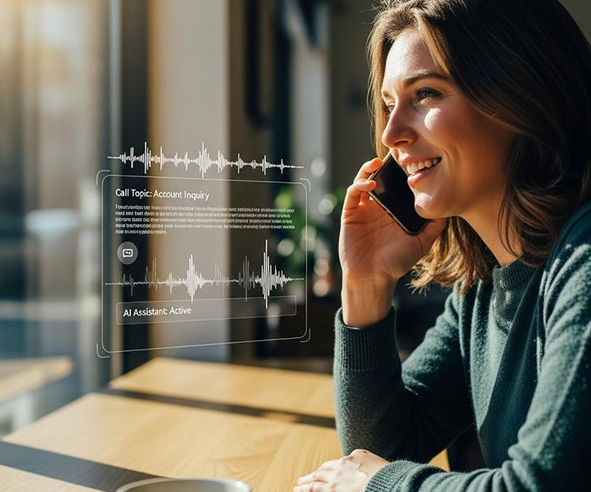
AI is moving into parts of business communication that used to require a person at a desk. Companies now use AI systems to answer calls, qualify leads, send messages, schedule appointments, and deal with routine support requests.
That brings mobile connectivity and virtual phone numbers into the picture. An AI agent can understand a customer’s request, but it needs a phone number, network connection, or messaging service to turn that understanding into an actual conversation.
eSIMs and virtual phone numbers are useful pieces of this setup. They give businesses more control over how devices, employees, software, and AI systems communicate across locations.
What Are eSIMs and Virtual Phone Numbers?
An eSIM is a digital SIM built into a compatible device. Instead of inserting a physical card, a user downloads and activates a mobile plan on the device.
A virtual phone number works differently. It is not tied to a physical SIM in the usual way. Calls and messages are handled through internet-based communication systems, making virtual numbers a natural fit for businesses that manage communication through software.
Services such as eSIM Plus provide digital mobile connectivity without physical SIM cards. For people travelling between countries, managing several business lines, or setting up connectivity for remote teams, that can make mobile access easier to manage.
The distinction is simple. An eSIM provides mobile network access to a device. A virtual phone number provides a phone identity that software can use for calls and messages.
Why AI Needs Communication Infrastructure
Many AI applications run through websites and apps, yet phone calls and text messages remain important business channels.
Take an AI customer service agent. It might receive a request through a website, check information in a company database, then call the customer to confirm an appointment. Another system might qualify a sales lead and send an SMS without requiring a salesperson to handle the first interaction.
These workflows need more than an AI model. They require phone numbers, authentication, call routing, messaging services, and dependable connectivity.
The AI handles the conversation or decision-making. Telecom infrastructure provides the channel through which that interaction reaches another person.
How eSIMs Fit Into AI-Powered Operations
eSIM technology is useful when a business needs mobile connectivity across several locations.
A company with employees travelling between countries can provision mobile plans without distributing physical SIM cards. Remote workers can use local mobile networks while company-managed devices remain easier to administer.
IoT devices increasingly use AI to analyse sensor readings, identify unusual activity, and trigger actions. Those devices may need cellular connectivity where Wi-Fi is unavailable or unreliable. An eSIM can provide that connection without requiring someone to replace a physical SIM when a device changes location.
AI does not replace the network. It relies on it.
How Virtual Phone Numbers Work With AI Agents
Virtual numbers have a more direct role in AI communication.
An AI voice agent can use a virtual number to receive or make calls. The number connects to a cloud telephony platform, where software can manage call routing, recordings, authentication, and transfers to human staff.
That setup supports several practical applications.
AI customer support
A virtual number can act as the entry point for an AI support agent. Customers call the business as usual, while the AI handles straightforward questions and transfers more complicated cases to a human representative.
Lead qualification
An AI sales agent can contact new leads, ask basic questions, identify what the prospect needs, and pass qualified contacts to a salesperson.
SMS automation
AI systems can create messages based on customer activity. A virtual number gives those messages a business identity instead of requiring employees to use personal phone numbers.
The division of work is straightforward. AI handles the conversation and decisions. The phone system provides the communication endpoint.
Where Businesses Can Combine AI, eSIMs, and Virtual Numbers
The combination makes particular sense for businesses operating internationally.
Imagine a support team spread across several countries. Employees can use eSIMs for local mobile connectivity, while the company’s AI system manages customer calls through virtual numbers. Customers can continue using the same business contact details even when the people handling those conversations work from different locations.
Travelling sales teams can use a similar arrangement. AI can qualify enquiries, schedule meetings, and send reminders, while sales representatives stay connected through mobile data without changing physical SIM cards every time they cross a border.
IoT creates another possibility. Connected equipment can transmit sensor data over cellular networks, while AI analyses those readings and flags unusual patterns. The system can then send an alert to an operations team through a virtual number or messaging platform.
In each case, the technologies have different jobs. Connectivity carries the data or call. AI processes information and decides what should happen next.
Security and Privacy Considerations
AI-based phone communication also creates security and privacy questions.
Businesses need to decide what information their systems collect and how long they keep it. Call recordings, transcripts, customer messages, and phone numbers can contain sensitive information.
Access controls matter too. An AI agent connected to a business phone system may be able to contact customers or retrieve internal information. Its permissions should match the tasks it needs to perform rather than giving it unrestricted access.
Customers should also know when they are interacting with an AI system rather than a human employee. Clear disclosure can prevent confusion and give customers a straightforward way to request human assistance.
The Role of Connectivity in AI Communication
AI agents are starting to handle complete communication workflows rather than answering isolated questions.
A customer might call a business, speak with an AI agent, receive an SMS confirmation, and later get another automated message when an appointment changes. Behind that interaction are several systems: AI software, phone infrastructure, identity management, and network connectivity.
eSIMs and virtual numbers fit into that architecture in different ways. An eSIM connects a device to a mobile network. A virtual number gives software a communication identity. AI sits above those systems and handles tasks that once required manual work.
For businesses, AI adoption is not only about chatbots or text generation. Phone networks, mobile connectivity, virtual numbers, and communication APIs are becoming part of the infrastructure behind automated customer interactions.
Conclusion
AI needs reliable channels for communicating with people. eSIMs provide flexible mobile connectivity, while virtual phone numbers give software-based systems a way to make and receive calls and messages.
Used together, these technologies can support AI customer service, sales automation, connected devices, international teams, and other communication-heavy workflows.
The main change is the growing connection between telecom infrastructure and AI software.
FAQs
Can AI agents use virtual phone numbers?
Yes. AI voice agents can connect to virtual phone numbers through cloud telephony and communication platforms. They can handle incoming or outgoing calls according to the rules configured by a business.
Can an AI system use an eSIM?
An AI application running on a compatible smartphone or connected device can use an eSIM for cellular connectivity. The eSIM provides network access; it does not provide the AI capabilities itself.
Are eSIMs and virtual phone numbers the same thing?
No. An eSIM connects a device to a mobile network, while a virtual phone number provides a phone identity for calls and messages handled through software.
Why are virtual numbers useful for AI customer support?
They give an AI system a dedicated communication endpoint. Calls and messages can be routed through software, routine interactions can be automated, and complex conversations can be transferred to human agents.