Key Takeaways
- AI-driven demand forecasting now reaches 90% accuracy, allowing grid operators to match renewable supply with consumer demand in near real-time.
- Predictive maintenance powered by machine learning reduces unplanned equipment downtime by up to 40%, saving utilities billions in emergency repairs.
- In Texas, Google DeepMind’s algorithms forecast wind power output 36 hours ahead, increasing the economic value of wind energy by 20%.
- Germany’s AI-managed storage systems have improved grid reliability by 18%, handling surplus solar and wind energy across 243+ TWh of annual renewable production.
- The UK’s National Grid, working with the Alan Turing Institute, improved solar power predictions by 33% using 80 input variables fed into machine learning models.
- AI-optimized battery storage could cut renewable energy curtailment in the EU by 45 TWh by 2040, preventing roughly 30 million tonnes of CO₂ emissions.
- Smart AI energy management systems reduce operational costs by up to 30% through automated resource allocation and predictive scheduling.
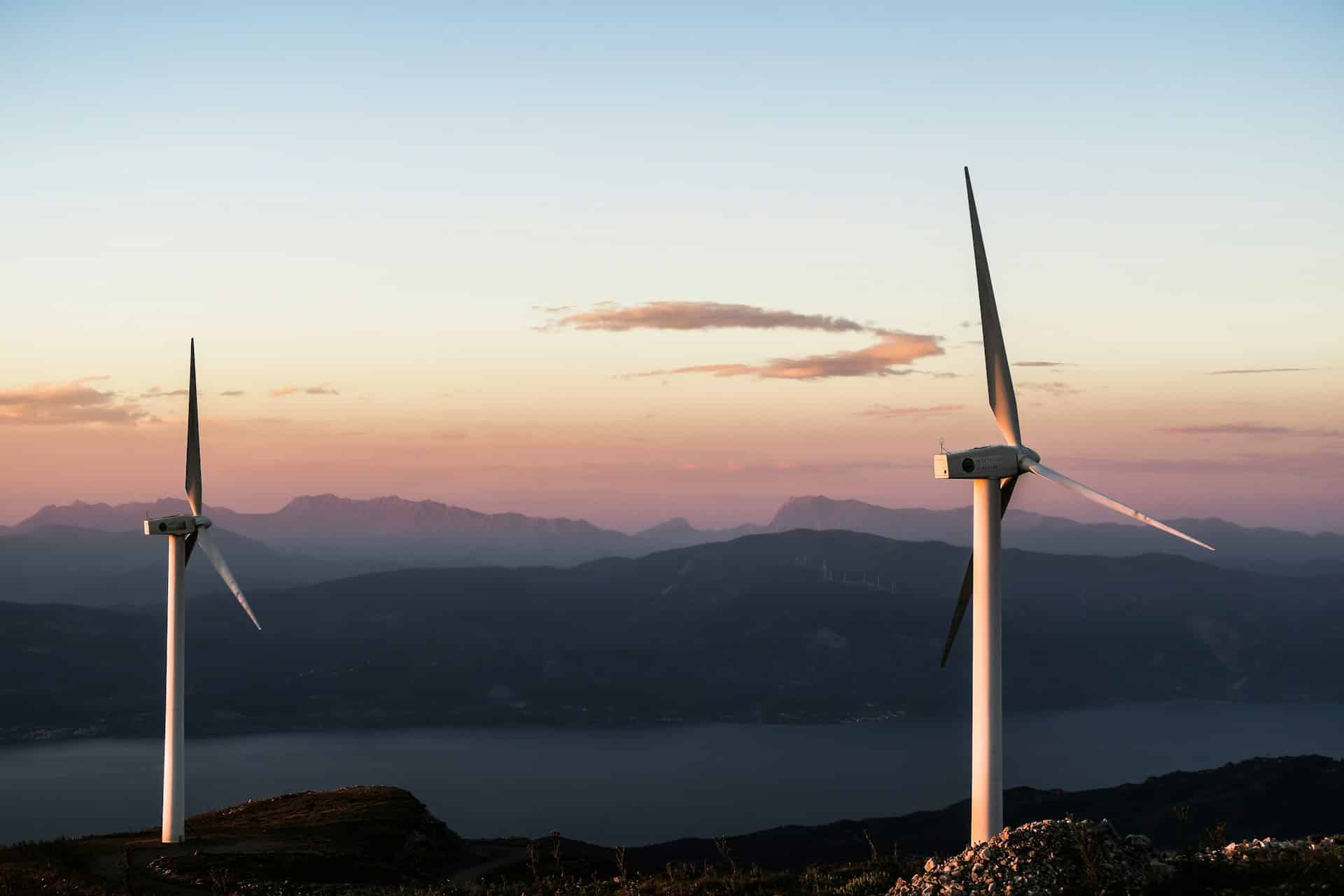
Wind power, renewable energy – artistic impression. Image credit: Jason Mavrommatis via Unsplash, free license
How AI Keeps Renewable Grids Stable When the Sun Sets and Wind Drops
Solar panels produce nothing at night. Wind turbines sit idle on calm days. These basic physical facts make renewable energy inherently unpredictable — and they explain why grid operators have spent decades struggling with supply-and-demand mismatches that can range from 20% to 30% of total energy demand. Artificial intelligence is now solving this problem by processing weather data, historical generation patterns, sensor readings, and real-time consumption figures simultaneously, then adjusting energy flows across solar farms, wind installations, and battery storage systems within seconds.
The results are measurable and already operational. AI-based forecasting has reached 90% accuracy in predicting energy demand, according to research published in the Open Journal of Applied Sciences (Ajao, 2024). Predictive maintenance algorithms have cut unplanned outages by 40%. Countries and states that have invested heavily in AI grid management — including Germany, the United Kingdom, and Texas — are now running renewable-heavy grids with greater stability than many fossil-fuel-dependent systems achieved a decade ago.
The Supply-Demand Balancing Act: What AI Actually Does Inside a Grid
Traditional energy grids were built for one-directional power flow: a centralized plant generates electricity, transmission lines carry it to consumers. Renewable energy breaks this model. A rooftop solar installation in suburban London feeds power back into the grid on sunny afternoons. A wind farm in West Texas generates peak output at 2 AM when demand is minimal. Battery storage facilities in Bavaria must decide, minute by minute, whether to charge or discharge.
AI manages this complexity through three connected stages: data collection, predictive analytics, and real-time decision-making.
Data collection starts with IoT sensors embedded throughout the grid — on transformers, transmission lines, solar inverters, wind turbine nacelles, and battery management systems. These sensors continuously stream information about voltage levels, current flow, temperature, and equipment health. AI systems process this data alongside external inputs: satellite imagery, weather radar, electricity market prices, and consumer usage patterns from smart meters.
Predictive analytics turns raw data into actionable forecasts. Machine learning models trained on years of historical weather and generation data can predict tomorrow’s solar output for a specific region, estimate wind speeds at turbine hub height 36 hours out, and anticipate demand spikes triggered by heat waves or cold snaps. Deep learning neural networks handle the nonlinear relationships that simpler statistical models miss — for instance, the way cloud cover, humidity, and aerosol density interact to affect solar irradiance.
Real-time decision-making is where AI earns its keep. When a sudden cloud bank reduces solar output across southern England, AI algorithms instantly ramp up battery discharge, redirect power from wind farms in Scotland, and signal demand-response programs to temporarily reduce consumption at participating commercial buildings. All of this happens in seconds, without human intervention.
Texas: DeepMind and the 92-TWh Wind Machine
Texas generates more wind power than any other US state — over 92 TWh annually, representing approximately 28% of total electricity output as of 2022. Managing this volume of variable generation is an enormous logistical challenge, particularly since the state’s grid (operated by ERCOT) is largely isolated from the rest of the US.
Google’s DeepMind applied deep learning models to 700 MW of wind power capacity across US wind farms, including Texas installations. The system ingests weather forecasts and historical turbine performance data, then predicts wind power output 36 hours before actual generation. Based on these predictions, the AI recommends optimal hourly delivery commitments to the grid.
The outcome: a 20% increase in the economic value of wind energy through better-scheduled deliveries. Rather than dumping excess wind power onto the market at low prices during off-peak hours or scrambling to find backup generation when wind drops unexpectedly, operators can plan ahead. Grid fluctuations decreased by 10%–15%, and energy waste from overproduction fell by 15% across AI-optimized solar utilities in the US.
The Federal Energy Regulatory Commission (FERC) and the National Institute of Standards and Technology (NIST) Cybersecurity Framework provide the regulatory and security guardrails for these AI-powered systems, ensuring that increased automation does not introduce unacceptable cyber risk to critical infrastructure.
Germany: AI-Managed Storage for Europe’s Renewable Powerhouse
Germany produced more than 243 TWh of renewable energy in 2022. Managing the surplus — and the gaps — requires sophisticated energy storage, and this is where AI has made its deepest impact.
The “AI Made in Germany” program, launched in 2020 with €500 million from the Federal Ministry for Economic Affairs and Climate Action, funded collaboration between government agencies and research institutions like Fraunhofer ISE. The resulting AI algorithms optimize when surplus renewable energy is stored, in which storage medium (lithium-ion batteries, pumped hydro, or emerging hydrogen systems), and when stored energy is released back to the grid.
| Metric | Before AI Optimization | After AI Optimization |
|---|---|---|
| Grid reliability improvement | Baseline | +18% |
| Load imbalance reduction | Baseline | Up to 12% |
| Renewable energy efficiently managed via AI storage | — | 18% of total renewable output |
| Operational cost reduction target (by 2030) | — | 20% |
Germany’s Federal Network Agency enforces compliance with the Renewable Energy Act (EEG), ensuring AI-managed storage systems meet grid stability and efficiency standards. The country plans to expand AI into predictive maintenance by 2030, targeting a 20% cut in operational costs and improved resilience against sudden demand shifts.
The broader German Energy Efficiency Fund invested over €6 billion in AI-powered energy projects between 2016 and 2020, producing an 8% reduction in energy consumption over the following decade. These numbers demonstrate that AI integration, while expensive upfront, delivers compounding returns.
The United Kingdom: Smarter Forecasts, Stronger Grids
The UK’s National Grid Electricity System Operator partnered with the Alan Turing Institute to build a machine learning system that improved solar power predictions by 33%. The model uses 80 input variables — ranging from cloud cover and atmospheric pressure to historical generation data and seasonal patterns — to generate forecasts that allow grid operators to balance supply and demand with far greater precision.
Beyond forecasting, the UK has invested in AI-driven cybersecurity for its energy infrastructure. The National Grid deployed AI-powered monitoring systems that watch grid activity continuously, detecting anomalous data patterns that might indicate a cyberattack. This is not theoretical: the 2015 cyberattack on Ukraine’s power grid left 230,000 people without electricity, and the 2020 attack on India’s grid caused widespread outages. The UK’s proactive approach — combining AI threat detection with the National Grid Data Explorer platform for real-time operational data sharing — positions its grid among the most cyber-resilient in Europe.
The National Grid Data Explorer also serves as a model for data standardization. By aggregating live operational data and making it accessible to multiple stakeholders, the platform enables better predictions and more efficient energy allocation. Research from the European Union suggests that increasing data transparency alone could boost AI predictive accuracy by 25%.
How AI Handles Battery Storage Economics
Battery storage is the linchpin of renewable grid reliability. When the sun shines and the wind blows, excess energy must go somewhere useful. When generation drops, stored energy must be released at the right time and the right price.
AI algorithms optimize this process by analyzing electricity market prices, weather forecasts, grid demand curves, and battery degradation data simultaneously. The goal is not just to store and release energy, but to do so in a way that maximizes economic value while maintaining grid stability.
| AI Storage Application | How It Works | Measured Impact |
|---|---|---|
| Charge/discharge scheduling | Algorithms predict optimal times to charge (low demand/high generation) and discharge (high demand/low generation) | Reduces energy curtailment by up to 45 TWh in EU by 2040 (IEA projection) |
| Battery degradation management | ML models predict cycle life based on usage patterns, temperature, and charge rates | 9.1% improvement in cycle life prediction using first 100 cycles (Severson et al.) |
| Market arbitrage | AI buys stored energy at low prices and sells during peak pricing windows | Advanced Microgrid Solutions reports AI trading systems are 5x more effective than human traders |
| Grid frequency regulation | Real-time algorithms adjust battery output to maintain grid frequency within safe bands | Tesla’s Hornsdale Power Reserve (129 MWh) stabilized South Australia’s grid |
The Hornsdale Power Reserve in South Australia — constructed by Tesla in 2017 with 129 MWh of lithium-ion storage — runs on Tesla’s auto-bidder system, an AI that participates in energy markets autonomously. The system has made a substantial contribution to grid stability in a region with high renewable penetration.
Looking further ahead, electric vehicles represent an untapped storage network. Vehicle-to-grid (V2G) technology, managed by AI, allows EVs to feed stored energy back into the grid during peak demand. In the Netherlands, AI-managed V2G systems in Utrecht have integrated electric buses and vehicles into the grid, cutting overall energy consumption by 10% during peak hours. The IEA projects that smart EV charging managed by AI could save between $100 billion and $280 billion in new power infrastructure investment between 2016 and 2040.
The Cost Question: Is AI Worth the Investment?
AI integration is expensive. Hardware, software, and skilled personnel can represent 15%–25% of total infrastructure costs, according to industry estimates. For developing countries with limited budgets, this is a serious barrier.
But the long-term economics are compelling. AI has the potential to reduce global energy consumption by 10%, translating to approximately $1.6 trillion in annual savings. Smart AI energy management systems cut operational costs by up to 30% through automated resource allocation and predictive maintenance. Utilities using AI-backed systems report reducing maintenance time by 50% while extending equipment lifespan by up to 20%.
| Country/Region | AI Energy Investment | Key Outcome |
|---|---|---|
| United States | $220M Grid Modernization Initiative; $50M Google DeepMind wind AI; $4B+ Smart Grid Investment Grants | 20% wind value increase; 25% operational cost reduction in smart grids |
| Germany | €500M “AI Made in Germany”; €6B Energy Efficiency Fund (2016–2020) | 18% grid reliability improvement; 8% energy consumption reduction |
| United Kingdom | Partnership with Alan Turing Institute; National Grid Data Explorer | 33% solar forecast improvement; real-time AI cybersecurity monitoring |
| Denmark | ~€90M government investment in AI wind forecasting | 20% improvement in wind energy predictions; 5–7% reduction in energy waste |
| Japan | ¥150B (~$1.4B) through NEDO | 90%+ demand forecasting accuracy; 15% reduction in grid instability |
| China | ¥1.2B (~$180M) for AI solar systems | 15% solar forecast accuracy improvement; 8–10% grid imbalance reduction |
| European Union | €100B Horizon Europe (partial allocation to AI energy) | 15% grid reliability improvement; targeting 45% renewable share by 2030 |
Public-private partnerships have proven effective at spreading costs. The US Department of Energy’s Grid Modernization Initiative combined $220 million in public and private funding to upgrade grids with AI technology. Germany’s model of pairing government investment with research institutions like Fraunhofer ISE has produced commercially viable AI tools that private utilities now deploy independently.
Predictive Maintenance: Fixing Problems Before They Happen
Equipment failure in energy infrastructure is expensive and dangerous. A transformer explosion can knock out power to thousands of homes. A wind turbine gearbox failure can take weeks to repair in a remote offshore location.
AI-driven predictive maintenance changes the math. Sensors throughout the grid feed continuous data on voltage levels, vibration, temperature, oil quality, and current flow to machine learning algorithms that identify degradation patterns invisible to human inspectors. When the AI detects that a transformer’s insulation is degrading faster than normal, or that a turbine bearing is developing a fault signature, it schedules maintenance before failure occurs.
Schneider Electric reports that companies using its AI-powered EcoCare diagnostic tools reduce equipment downtime by 30% and maintenance costs by 40%. NextEra Energy, the largest US wind and solar operator, uses AI to automatically adjust the angle of solar panels and wind turbine blades, reducing maintenance costs by 25–30% and minimizing equipment breakdowns by 70–75%.
E.ON developed its PredATur (Predictive Analytics for Wind Turbines) system, which monitors approximately 1,800 turbines. The system combines two approaches: a park-average method that compares each turbine’s performance against its neighbors, and a machine learning model that builds a digital twin of each turbine. The estimated annual EBITDA impact of PredATur detections reached €3.2–5.7 million in 2017.
Columbia University partnered with Con Edison in New York City to build a machine learning-based predictive maintenance system for the urban electrical grid. After implementation, 1,468 out of 4,590 network days were failure-free, compared to 908 failure-free days before the system was deployed.
What Stands Between AI and Full Grid Optimization
Despite these advances, several obstacles slow broader AI deployment in energy systems.
Data fragmentation remains the biggest technical challenge. A 2020 Deloitte report found that only 38% of energy companies have the data infrastructure needed to use AI effectively. Energy data is often scattered across incompatible systems, incomplete, or subject to privacy restrictions that limit sharing.
Cybersecurity risk grows with every connected sensor and AI decision node added to the grid. AI systems themselves can be targets — adversarial attacks that feed corrupted data to machine learning models (known as data poisoning) can cause algorithms to make harmful decisions. Post-quantum cryptographic frameworks, including Elliptic Curve Cryptography (ECC) for lightweight IoT encryption and emerging approaches like the Supersingular Isogeny Key Encapsulation (SIKE) framework, are being developed to protect AI-driven grids against both current and future threats.
Financial barriers hit developing countries hardest. While AI integration pays for itself over time in wealthy nations, the 15–25% upfront infrastructure cost premium is prohibitive for countries where basic grid infrastructure is still incomplete.
Workforce gaps present a less obvious but equally real constraint. Operating AI-powered energy systems requires personnel trained in both energy engineering and data science — a combination that remains scarce globally.
The Road Ahead: Self-Healing Grids and Decentralized AI
Several developments are set to accelerate AI’s role in renewable energy management over the coming years.
Self-healing grids use machine learning to detect faults in real time and automatically reroute energy flows, avoiding outages without human intervention. The US Grid Modernization Lab Consortium found that early implementations cut outage time by 40%. Projections suggest self-healing grids could reduce power outages by 50% by 2030.
Decentralized AI-managed microgrids are expected to grow by 30% by 2030, particularly in developing nations expanding renewable capacity. India has deployed multiple AI-driven microgrid projects to manage growing solar capacity in rural areas with limited grid connectivity.
AI-optimized energy trading is already operational. ENGIE partnered with Google Cloud to build AI systems that predict how much wind power should be sold on which market and at what price. Alexandre Cosquer, Executive Committee Member at ENGIE, stated: “Data, digitalisation and risk management are key enablers to bring value and accelerate the decarbonisation of our power grids; in that context, a partnership with Google was obvious.”
The trajectory is clear. As renewable energy’s share of global electricity generation climbs from roughly 29% in 2022 toward the EU’s 45% target by 2030, AI will not be optional — it will be the operating system that makes variable renewable energy work at scale. The countries and companies investing in AI grid management now are building the infrastructure that will define energy reliability for the next three decades.
If you are interested in this topic, we suggest you check our articles:
Sources: Research Gate, MDPI, Techstack, Energy Digital, Open Journal of Applied Sciences
Written by Alius Noreika