Key Takeaways
- Gemini is a Google DeepMind model family, so every Gemini release is a DeepMind model. But many DeepMind models are not Gemini.
- Gemini releases are general-purpose, commercial models sold through the Gemini app, the Gemini API and Google Cloud, with published prices and model cards.
- DeepMind’s other models are built for narrower jobs: world simulation (Genie), video and music (Veo, Lyria), open-weight models (Gemma), robots (Gemini Robotics) and science (AlphaFold, AlphaGenome, WeatherNext).
- Those models often reach users differently, through research papers, open weights, partner programmes or specialist APIs, rather than a chatbot menu.
- In autumn 2026, Google shipped four Gemini 4 models (Argon, Carbon, Hydrogen and Neon) while DeepMind also released Genie 4, AlphaGenome 2 and Gemini Robotics 2.5.
- DeepMind’s model card page lists 56 cards across four categories, and its science models have no model cards at all.
- The lines blur in places: Gemini Robotics is built on Gemini, and some video and image models now carry the Gemini name.
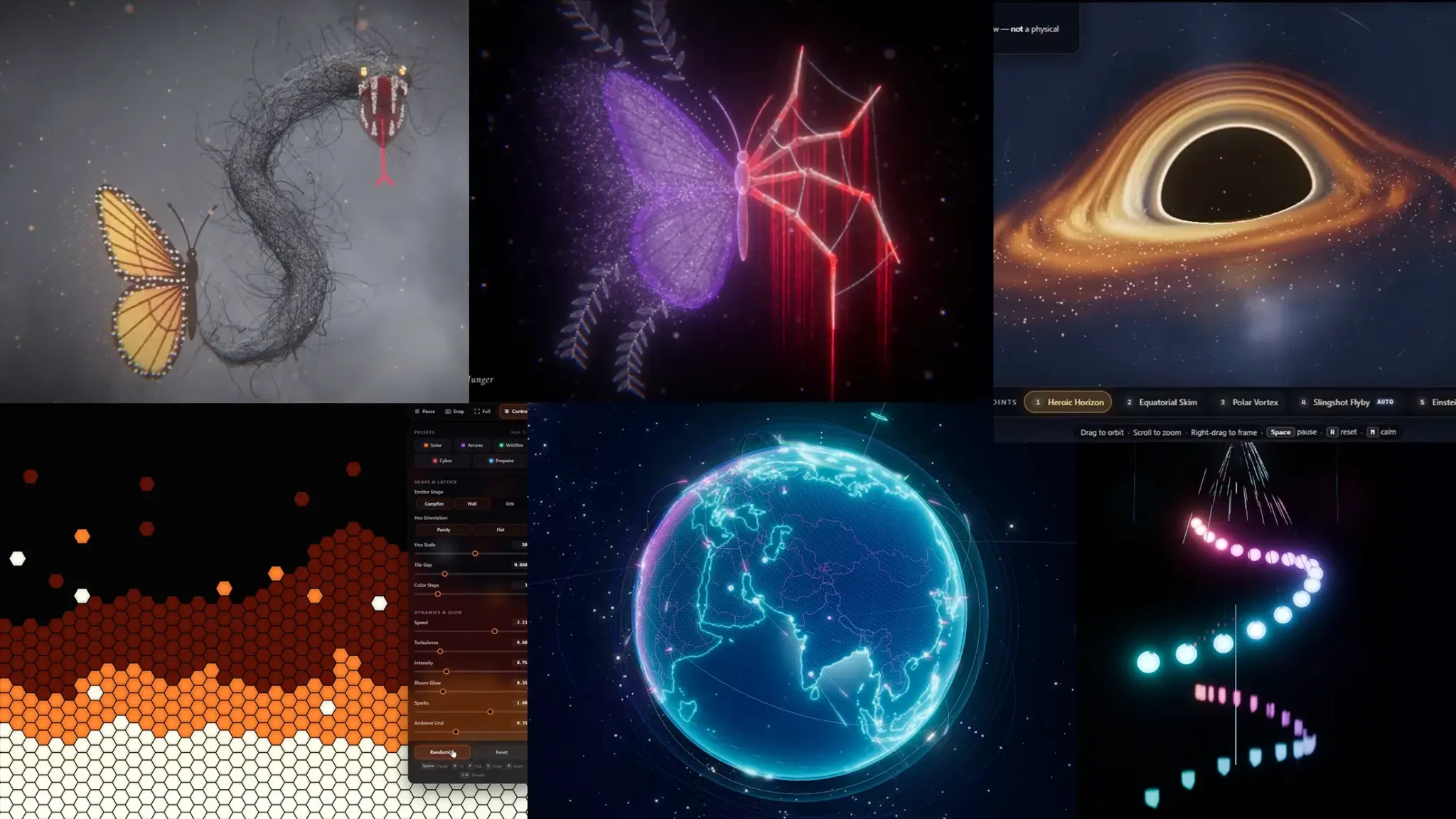
Creations made with Gemini 4 Neon. Image source: Google
Google DeepMind models are different from Gemini model releases in scope, but not in origin. Gemini is the family of general-purpose multimodal models that Google DeepMind develops and Google sells as a product. DeepMind also builds a wide range of other models, from protein-structure predictors to interactive world generators, that are released on different terms, for different users and on a different schedule.
The easiest way to picture it: Gemini is DeepMind’s commercial flagship, the model behind the Gemini app, AI Mode in Search and the Gemini API. The rest of DeepMind’s catalogue works more like a research portfolio, where some models become products, some are given to scientists, some go only to partners and some stay in preview.
How Gemini and Google DeepMind Fit Together
Google DeepMind was formed in 2023 by merging DeepMind, the London lab Google bought in 2014, with the Google Brain team. Gemini was developed as a joint effort of those two groups and first released in December 2023. The lab sits within Alphabet, a structure that goes back to Google’s 2015 restructuring.
DeepMind researchers build and train the Gemini models, often on Google’s custom chips, including the TPU chips that train Gemini. Product teams then ship them in the Gemini app, Search, Workspace, Android and Google Cloud. So when Google announces a new Gemini model, it is announcing a DeepMind model that has been packaged, priced and rolled out as a product.
The Gemini 4 Releases of Autumn 2026
With Gemini 4, Google moved from version numbers to element names. It released four models in about seven weeks, each with its own price and access rules.
| Gemini model | Available | Positioning | Access |
|---|---|---|---|
| Gemini 4 Argon | 13 October 2026 (announced 30 September) | Deep multi-step work in coding, finance, legal, security and science | Paid API, Gemini for business, Gemini app for AI Pro and Ultra |
| Gemini 4 Carbon | Announced 28 October; public 10 November | Strongest Gemini 4 model, for cyber defence and long-running coding and research | First to cyber defenders and US government testers, then paid API and AI Ultra |
| Gemini 4 Hydrogen | 12 November 2026 | Fast everyday coding and agent tasks | API free tier, Gemini app, Search, Sheets |
| Gemini 4 Neon | 18 November 2026 | Complex work done frequently | Paid API, Gemini for business, Gemini app and Antigravity for AI Pro and Ultra |
Each comes with a published model card, API pricing and a place in the Gemini app’s model picker. Our comparison of Gemini 4 Argon with rival models shows how these releases compete with OpenAI and Anthropic.
The Google DeepMind Models That Are Not Gemini
Outside Gemini, DeepMind runs several other model families. They differ from Gemini in what they do and in the way people get to use them.
| Family | What it does | Recent release | How it is released |
|---|---|---|---|
| Genie | Interactive, real-time world simulation with sound | Genie 4 (announced 27 October 2026) | Research preview, then AI Ultra (Project Genie) and the Gemini API |
| Veo, Imagen, Lyria | Video, image and music generation | Lyria 3.5 (July 2026), Veo 3.1 Lite (April 2026) | Google apps, Flow, API |
| Gemma | Open-weight models developers can download | Gemma 4 (2 April 2026), EmbeddingGemma 2 | Free downloads; Gemma 4 under Apache 2.0 |
| Gemini Robotics | Vision-language-action models that control robots | Gemini Robotics 2 (July 2026), Gemini Robotics 2.5 (November 2026) | ER models via the Gemini API; top models for partners only |
| Science models | Proteins, genomes, weather, algorithms, Earth mapping | AlphaGenome 2 (November 2026), WeatherNext 3 (September 2026) | Papers, open code and weights, specialist APIs, partnerships |
Science models: AlphaFold, AlphaGenome, WeatherNext and AlphaEvolve
DeepMind’s science work is the clearest contrast with Gemini. AlphaFold has predicted more than 200 million protein structures and is used by over 3 million researchers; it earned Demis Hassabis and John Jumper a share of the 2024 Nobel Prize in Chemistry. AlphaGenome, which reads up to a million DNA letters at once, was open-sourced in January 2026 alongside a Nature paper reporting that it beat competing models on 25 of 26 evaluations while running on a single H100 GPU. Its successor, AlphaGenome 2, followed in November 2026.
WeatherNext 3, released in September 2026, is DeepMind’s most accurate global weather model, and earlier versions already support the US National Hurricane Center’s cyclone forecasts. You can read more about DeepMind’s AI weather forecasting tool in our earlier coverage. AlphaEvolve, a Gemini-powered coding agent for designing algorithms, is used by companies such as BASF to optimise supply chains. None of these science models has a model card on DeepMind’s model card page.
World and media models: Genie, Veo and Lyria
Genie 4 shows how a DeepMind model can move from research to product in stages. It was announced as a research preview on 27 October, reached AI Ultra subscribers in Project Genie on 18 November and arrived in the Gemini API on 19 November at about $0.10 per second of 720p video at 24 frames per second. Lyria handles music, Imagen still images and Veo video, although Google has started folding some of this work into Gemini-branded products.
Open models: Gemma
Gemma is DeepMind’s open-weight family, built from the same research as Gemini but released so anyone can download, run and fine-tune it. Gemma 4 arrived on 2 April 2026 under the Apache 2.0 licence and accepts images and video across all sizes. That makes it the opposite of Gemini’s closed, paid API model: same lab, very different terms.
Robotics: Gemini Robotics
Gemini Robotics models turn what a robot sees and hears into physical actions. Gemini Robotics 2, unveiled on 30 July 2026, extended control from the upper body to the whole body, and the embodied-reasoning model Gemini Robotics-ER 2 became available to developers through the Gemini API. Gemini Robotics 2.5, announced on 10 November, is limited to robotics partners; in a Mercedes-Benz production-line pilot, an Apptronik Apollo 2 humanoid running it sorted parts with a 96% success rate. For background, see our article on DeepMind’s robotics models.
Gemini Releases vs Other DeepMind Models: The Main Differences
| Aspect | Gemini releases | Other Google DeepMind models |
|---|---|---|
| Purpose | General-purpose text, code, reasoning and multimodal understanding | Specialised jobs: science, robots, worlds, media, open models |
| Main users | Consumers, developers, businesses | Researchers, robotics partners, creators, open-source developers |
| Access | Gemini app, Search, Workspace, Gemini API, Vertex AI | Papers, open weights, partner programmes, specialist APIs |
| Pricing | Published per-token API prices and subscriptions | Often free for research; partner deals; per-second pricing for some media models |
| Documentation | Model cards with benchmarks and safety notes | Model cards for media, robotics and Gemma; science models documented in papers |
| Release pace | Fast and frequent; four Gemini 4 models in about seven weeks | Irregular, tied to research milestones |
Where the Lines Blur
The boundary is not always neat. Gemini Robotics is built on Gemini models. Google’s Nano Banana image models are part of the Gemini family. In November 2026, Gemini Omni 1.2 Flash, a short video model with sound, replaced the Veo 3.1 previews, so some video generation now carries the Gemini name. Google also launched Gemini Decision 1, a model for yes-or-no and rubric decisions sold through a new Decisions API.
Science is merging with Gemini too. Gemini for Science, announced at Google I/O 2026, bundles tools built on AlphaEvolve and Co-Scientist with Science Skills that connect more than 30 life-science databases, including the AlphaFold Database and the AlphaGenome API. Over time, more DeepMind research is likely to reach users through Gemini rather than as stand-alone releases.
Why the Difference Matters
If you are choosing a model, the distinction tells you where to look. Developers and businesses building chat, coding or automation tools should follow Gemini releases and the Gemini API. Researchers in biology, climate or materials should watch DeepMind’s science announcements, papers and open-source repositories. Robotics firms need partner access, and teams that want to run models on their own hardware should look at Gemma.
DeepMind’s model card page lists 56 cards in four groups: Gemini, generative models, robotics and open models. If a model is not on that list, it is probably a research or science release that comes with a paper rather than a price list.
The Bottom Line
All Gemini models are Google DeepMind models, but Gemini is only one part of DeepMind’s work. Gemini releases are the general-purpose, commercial face of the lab, shipped fast and priced per token. DeepMind’s other models, including Genie, Gemma, Gemini Robotics, AlphaFold, AlphaGenome and WeatherNext, are built for specific fields and reach the world through research, open weights and partnerships. Knowing which is which saves time when you are looking for the right model for a job.
If you are interested in this topic, we suggest you check our articles:
- Why the 2015 Google Restructuring Happened
- Alphabet’s Frozen v2 Chip and Gemini
- Gemini 4 Argon vs Other GenAI Models
- AI Forecasting Tool by Google DeepMind
- Google DeepMind’s New AI Models for Robotics
Sources: Google DeepMind model cards, Google DeepMind science, Wikipedia (Gemini), Wikipedia (Gemma), Wikipedia (Gemini Robotics), Google Blog
Written by Alius Noreika