Yes — but with conditions. Viral hook generator prompts and AI-powered hook tools do increase engagement, boost click-through rates, and help creators stop the scroll. They use tested psychological frameworks like curiosity gaps, FOMO, and bold claims to capture attention within the first three seconds of a video or post. However, they are not a guarantee of virality. A strong hook on weak content still leads to high drop-off rates and poor algorithmic performance. The hook gets people to watch; the substance of your content determines whether they stay, share, or subscribe.
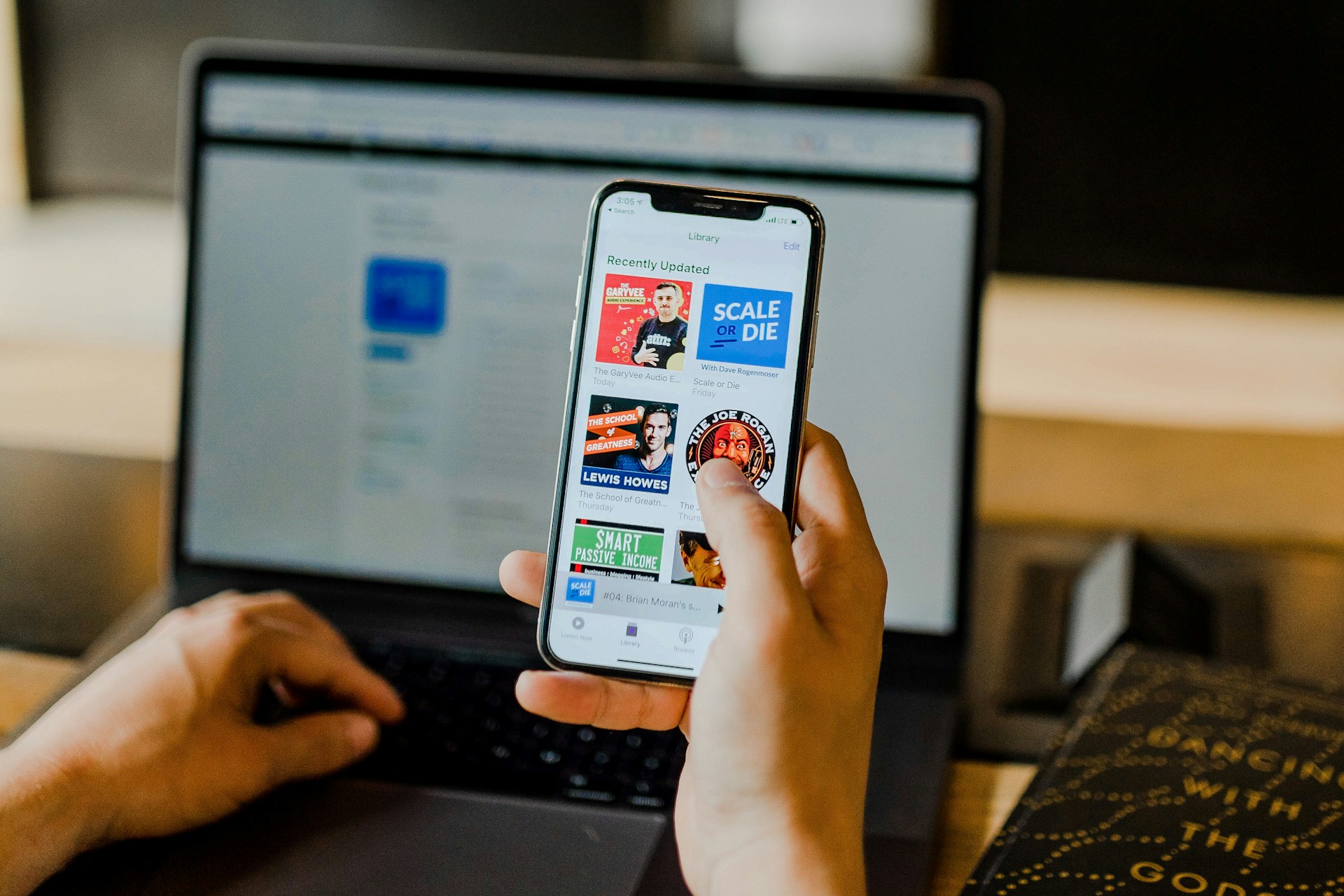
Social media content on a smartphone screen. Image credit: Austin Distel via Unsplash, free license
Key Takeaways
- AI hook generators work by applying proven psychological triggers — curiosity, FOMO, controversy, social proof — in the first three seconds of content.
- They are effective for increasing views, CTR, and engagement metrics, especially when used to re-package underperforming content with stronger openings.
- A hook is not a magic formula. Content that fails to deliver on its opening promise will still perform poorly in algorithmic ranking.
- The best results come from combining AI-generated hooks with strong content, A/B testing, and platform-specific optimization.
- Advanced prompt frameworks — not basic one-line prompts — produce the highest-quality outputs by forcing specificity about audience, goal, and niche.
- Trends shift fast. Hooks that perform well in early 2026 may feel stale within months, so constant iteration is essential.
- Dedicated tools (Captain Hook AI, Meedro, Virvid) now outperform generic LLM prompts for short-form video hooks, though general AI remains strong for written content.
The market for these tools has grown rapidly through 2025 and into 2026. Dedicated platforms like HookFaster, Captain Hook AI, Meedro, and Virvid now compete alongside general-purpose LLMs (ChatGPT, Claude, Gemini) and marketing suites from Ahrefs, Copy.ai, and Mailmodo.
Toolkits like “Prompt to Power,” released in March 2026 by Expert AI Prompts, offer complete scripting frameworks built specifically around YouTube metrics such as CTR, average view duration, and SEO ranking. The ecosystem has matured well beyond the simple “write me a hook” prompt — but the core principle remains: the AI handles structure, and the creator must deliver on the promise.
What a Viral Hook Generator Actually Does
A viral hook generator is an AI-powered tool that produces attention-grabbing opening lines, scripts, or text overlays for content across platforms like TikTok, YouTube Shorts, Instagram Reels, LinkedIn, and email campaigns. The AI draws from large datasets of high-performing content to identify patterns — specific sentence structures, emotional triggers, and visual cues — that statistically correlate with higher engagement.
Most tools ask for a few inputs: your topic, target audience, content type, and preferred tone. From there, they generate multiple hook variations using different psychological approaches. The better tools go further. They provide visual direction (what should appear on screen), text overlay suggestions, a breakdown of the psychological trigger being used, and an estimated engagement score.
The core idea behind all of them is the same: the first three seconds of any piece of content are a make-or-break moment. TikTok’s algorithm prioritizes watch time, and 71% of viewers decide within those opening seconds whether to keep watching or scroll. A generator’s job is to engineer that three-second window so it creates enough curiosity, urgency, or emotional pull to keep the viewer engaged.
The Psychology Behind AI-Generated Hooks
Effective hooks are not random. They exploit well-documented cognitive biases and emotional triggers. AI hook generators encode these triggers into their output frameworks, giving creators access to tactics that professional copywriters have refined over decades.
Curiosity gaps are the most widely used technique. Phrases like “Nobody is talking about this…” or “I tried this for 30 days and…” create an open information loop that the brain wants to close. The viewer watches because they need the missing piece. FOMO (fear of missing out) hooks tap into loss aversion — a bias where humans feel the pain of missing something twice as strongly as the pleasure of gaining it. Controversy and bold claims create cognitive dissonance, forcing the viewer to pause and evaluate whether their assumptions are wrong.
High-arousal emotions — awe, excitement, amusement, anxiety — activate the brain’s reward center and trigger dopamine release, making content significantly more likely to be shared than emotionally neutral material. Negative-bias hooks (warnings, mistakes, “stop doing this” formats) often outperform positive ones because humans are neurologically wired to prioritize threat detection.
10 Proven Hook Frameworks Used by AI Generators
The strongest hook generators do not just produce random opening lines. They work from a library of tested frameworks, each designed for specific content types and audience psychologies. Here are the ten most common frameworks embedded in current-generation AI hook tools, along with their best use cases and typical engagement performance.
| Framework | Structure | Best For | Engagement |
|---|---|---|---|
| Question Hook | Ask a compelling question the viewer must answer | Tutorials, educational content | High |
| Bold Statement | Make a surprising or counterintuitive claim | Opinion pieces, challenges | Very High |
| Transformation | Show or promise dramatic before/after | Makeovers, life hacks, demos | Extremely High |
| Story Hook | Drop the viewer into the middle of a narrative | Storytelling, relatable content | High |
| Number Hook | Promise specific, quantified value | Listicles, tips, hacks | High |
| Negative/Warning | Lead with a problem, mistake, or warning | Problem-solving, corrective content | Very High |
| Social Proof | Reference trends, popularity, or community validation | Reviews, trend coverage | High |
| Direct Address | Call out a specific viewer persona | Niche targeting, community building | Very High |
| Shocking Fact | Lead with a surprising or little-known statistic | Myth-busting, educational | High |
| Challenge/Dare | Invite the viewer to test or try something | Interactive content, fitness, skills | Very High |
Each framework targets different psychological triggers. The Question Hook exploits curiosity. The Negative/Warning Hook activates threat detection. The Direct Address Hook creates instant relatability by naming the viewer’s exact situation — “If you have 47 tabs open right now, this is for you.” Generators that offer all ten frameworks give creators the ability to A/B test multiple approaches against the same content, which is how top-performing creators consistently iterate toward higher engagement.
Why Basic AI Prompts Fail — and What Works Instead
Asking ChatGPT or Claude to “write me a TikTok hook” produces generic output — the kind of opening that starts with “Hey guys! Today I want to talk about…” That is not a hook. It is what one prompt engineer described as “a death sentence” — the viewer is gone before the second word loads.
The problem is not that AI cannot write hooks. The problem is that a bare prompt gives the model zero context about your audience, your niche psychology, your content type, or which framework fits your material. The result is output that sounds like it was written for everyone, which means it connects with no one.
Advanced prompt frameworks solve this by acting as decision trees rather than vending machines. They force the creator to specify mandatory inputs — video topic, content type, target audience demographics and pain points, video length, and primary goal — before the AI generates anything. Optional inputs like niche, tone preference, trending sounds, and unique angle add further specificity. The output then includes not just a script line, but visual direction, text overlay suggestions, a psychological breakdown of why the hook works, and an engagement prediction.
“We are moving past the era of ‘hey AI, write a script.’ That doesn’t work anymore. To rank in 2026, you need strategic depth. You need to tell the AI how to write for retention. That is what this toolkit provides — the strategy is baked into the prompt.”
— Lead Strategist, Expert AI Prompts
This is the core insight behind products like “Prompt to Power,” the YouTube-focused AI toolkit released by Expert AI Prompts in March 2026. Rather than offering generic writing assistance, it uses context-heavy frameworks focused on YouTube’s three critical growth metrics: Click-Through Rate, Average View Duration, and SEO. Its viral hook generators are designed to engineer the first 30 seconds of a video for maximum viewer retention, not just the opening line.
The “Hook Swap” Technique and Other Practical Strategies
One of the most effective methods for using AI hook generators does not involve new content at all. The “Hook Swap” technique takes underperforming videos that already have solid substance, replaces the opening with a stronger AI-generated hook, and reposts them. Because the content itself is proven (it just failed to get initial traction), the new hook gives it a second chance at algorithmic distribution.
Beyond the hook swap, experienced creators combine multiple hook layers for maximum stopping power. An effective opening is not just spoken words — it is a simultaneous combination of visual action (what appears on screen in the first frame), text overlay (bold on-screen text that reinforces or adds to the spoken hook), and audio (the first spoken words or a trending sound). AI generators that address all three layers produce dramatically better results than those generating text alone.
A/B testing is the final essential ingredient. High-performing creators do not pick one hook and commit. They generate three to five variations from different frameworks, film multiple versions, post them at different times, and track which one the algorithm rewards. Over time, this data reveals which psychological triggers resonate most strongly with their specific audience — information that no AI tool can provide without real-world testing.
Where AI Hook Generators Fall Short
There are clear limits to what these tools can accomplish. The most important: no hook can save bad content. A compelling opening on a weak video creates a worse outcome than a mediocre hook on strong content, because viewers who are hooked and then disappointed will swipe away quickly, sending a strong negative signal to the algorithm. High swipe-away rates actively suppress future distribution.
AI also cannot replace human understanding of nuance, current micro-trends, and authentic voice. A tool trained on patterns from millions of videos will produce output that sounds competent but generic unless the creator adds their own perspective, timing, and personality. The most viral content tends to feel surprising and personal — qualities that emerge from human judgment, not pattern-matching.
Trend cycles are another vulnerability. Hook formats that dominate in early 2026 can feel overused within months. The underlying psychological frameworks (curiosity, FOMO, social proof) remain constant, but the specific phrasing, visual styles, and cultural references that make hooks feel fresh have a short shelf life. Creators who rely on AI-generated hooks without adapting them to current platform culture risk sounding dated.
Comparing AI Hook Generator Tools in 2026
The tool landscape splits into three categories: dedicated hook generators built specifically for short-form video, general-purpose AI platforms that can be prompted for hooks, and integrated marketing suites that include hook generation as one feature among many. Each serves a different creator profile.
| Tool Category | Examples | Strengths | Limitations |
|---|---|---|---|
| Dedicated Hook Generators | Captain Hook AI, Meedro, Virvid, HookFaster | Trained on viral content, platform-specific output, visual + audio direction included | Narrow focus, may lack flexibility for non-video content |
| General-Purpose LLMs | ChatGPT, Claude, Gemini, Grok | Highly flexible, work with advanced custom prompts, free or low-cost | Require detailed prompt engineering; generic output without structured frameworks |
| Marketing Suites | Ahrefs, Copy.ai, Mailmodo, Landingi | Multi-channel support (email, ads, social), integrated with SEO/analytics tools | Hooks are one feature among many; less depth in video-specific optimization |
| Creator Toolkits | Prompt to Power (Expert AI Prompts) | Strategy-first approach, focuses on CTR/AVD/SEO metrics, works with any LLM | Requires manual prompt execution; no built-in analytics |
For TikTok and Reels creators, dedicated tools tend to produce better results because they are trained on currently viral content and understand platform-specific engagement patterns. For written content — blog introductions, email subject lines, ad copy — marketing suites and general-purpose LLMs with well-crafted prompts are equally effective. The key differentiator is not the tool itself but how much context you provide and how rigorously you test the output.
Multi-Sensory Hooks: Beyond Just Words
The most successful hooks in 2026 operate on multiple sensory channels simultaneously. A visual hook (striking imagery, unexpected movement, high-contrast colors in the first frame) combines with an auditory hook (compelling voice tone, trending sound, or attention-grabbing noise) and a text hook (bold on-screen words that reinforce the spoken message without simply repeating it). When all three layers align, the stopping power compounds.
Advanced AI generators now include visual direction in their output — specifying what should appear on screen during the hook, what facial expression to use, and how on-screen text should complement the spoken script. This multi-layered approach is particularly important because 85% of social media video is watched without sound. Hooks that rely solely on spoken words miss the majority of viewers. Burned-in captions and bold text overlays serve double duty: they capture silent scrollers and reinforce the message for those listening.
Platform-Specific Optimization Matters
Not all hooks work the same way across platforms. TikTok rewards raw authenticity and gives creators about three seconds before the algorithm decides whether to push a video. Instagram Reels expects a slightly more polished aesthetic and favors visually-driven content. YouTube Shorts allows a marginally longer setup (up to five seconds) because the audience expects more context. LinkedIn requires a professional tone with value-forward openings. Email subject lines follow the same three-second psychology but in a text-only environment.
Good AI hook generators account for these differences. They let creators specify the platform and adjust their output accordingly — shorter and punchier for TikTok, more polished for Instagram, slightly more informational for YouTube. Tools that produce a single, one-size-fits-all hook across all platforms miss the nuance that separates adequate performance from strong performance.
The Verdict: Creative Catalysts, Not Magic Formulas
Viral hook generator prompts are genuinely useful tools that solve a real problem: the blank-page bottleneck that slows down content production and leads to creator burnout. They accelerate the most time-consuming part of the creative process by generating multiple tested options in seconds, freeing the creator to focus on performance, filming, and audience connection.
They are not, however, a substitute for strong content, authentic voice, or consistent effort. The creators who benefit most from these tools use them as a starting point — generating hooks, testing variations, analyzing performance data, and iterating. They combine AI-generated structure with human creativity, platform awareness, and genuine audience understanding.
The hook gets the click. Your content earns the share. That dynamic has not changed with AI — it has just become faster to execute.
If you are interested in this topic, we suggest you check our articles:
- How Can AI Help with Marketing: 10 New Problem-Solving Solutions
- 7 Sacred Tips to Best Use Claude Code
Sources: EIN Presswire, Reddit, Hackernoon
Written by Alius Noreika