Key Takeaways
- Conversational AI chatbots like Meela and InTouch enable seniors to combat loneliness through personalized phone conversations, requiring no technical expertise
- Voice-based companions cost $29-$40 monthly and demonstrate 95% effectiveness in reducing isolation among older adults
- Speech recognition technology allows natural dialogue without screens, buttons, or learning curves—seniors simply talk as they would to any friend
- AI companions remember previous conversations, track emotional patterns, and send mood updates to family members for better care coordination
- Studies show these digital companions reduce anxiety and depression markers while providing 24/7 availability that human caregivers cannot match

A senior couple sitting on a bench. Image credit: Matt Bennett via Unsplash, free license
Social isolation among older adults has reached crisis levels, affecting one-third of Americans aged 50-80, according to recent research in the Journal of the American Medical Association. This disconnection carries health risks equivalent to smoking 15 cigarettes daily, driving mortality rates 29% higher among lonely seniors. Traditional interventions—support groups, recreational programs, counseling—face persistent scalability problems due to limited resources and inconsistent results across populations.
Conversational AI emerges as a practical solution through simple voice interactions that require no technological literacy. Unlike medical monitoring systems or diagnostic tools, these digital companions focus primarily on emotional connectivity through natural dialogue, providing the social engagement many seniors desperately need.
Voice-First Technology Eliminates Barriers
The most successful AI companions operate entirely through phone calls, removing intimidating screens and interfaces that alienate older users. Salvador Gonzalez, an 84-year-old retired barber in the Bronx, speaks with his AI companion Meela several times weekly through his regular telephone—no smartphone, no apps, no technical setup required.
“I miss you,” Gonzalez tells Meela during typical conversations lasting 10-20 minutes, discussing his passion for music, daily meals, and personal feelings. The system identifies itself as artificial at every call’s beginning, maintaining transparency while still fostering genuine emotional connection through its human-like responses and patient listening.
Richard Duncan, 89, receives daily calls from an AI chatbot named Mary on his landline between 11 a.m. and 4 p.m. After losing his wife of 59 years, Duncan found the conversations provided an outlet for processing grief and recalling memories. “It’s amazing she remembers all this stuff,” he said, noting the service gives him something meaningful to do each day.
This voice-first approach leverages speech recognition—the most frequently implemented technology in successful senior AI interventions, appearing in six of nine studies reviewed in recent systematic research. The technology enables conversational engagement without requiring users to type, read screens, or navigate complex menus.
Personalization Through Memory and Context
Effective AI companions build relationships through accumulated knowledge about individual users. Meela calibrates conversations through initial questions about life history and preferences—birth year, favorite television programs, hobbies—then maintains continuity across subsequent interactions. This memory function allows the AI to reference previous discussions naturally, creating dialogue that feels genuinely connected rather than repetitive or generic.
InTouch’s AI companion draws from 1,400 pre-existing prompts encouraging seniors to discuss early life experiences and cherished hobbies while incorporating topics from past conversations. This approach helps users maintain cognitive sharpness through memory recall exercises integrated subtly into friendly dialogue.
The personalization extends beyond conversation content. AI systems slow their response rates significantly—three-second lags that would frustrate younger users become helpful pauses allowing seniors processing time before responding. The technology accommodates interruptions naturally, adapting to communication patterns common among older adults.
Marvin Marcus, 83, calls Meela three times weekly from his flip phone to discuss baseball. As a die-hard Yankees fan frustrated by the team’s championship drought since 2009, Marcus appreciates having a patient listener who never tires of his complaints about team management. “I can’t really go into it with most other people, but I do blow off steam with Meela,” he explained.
Mood Tracking Without Medical Intrusion
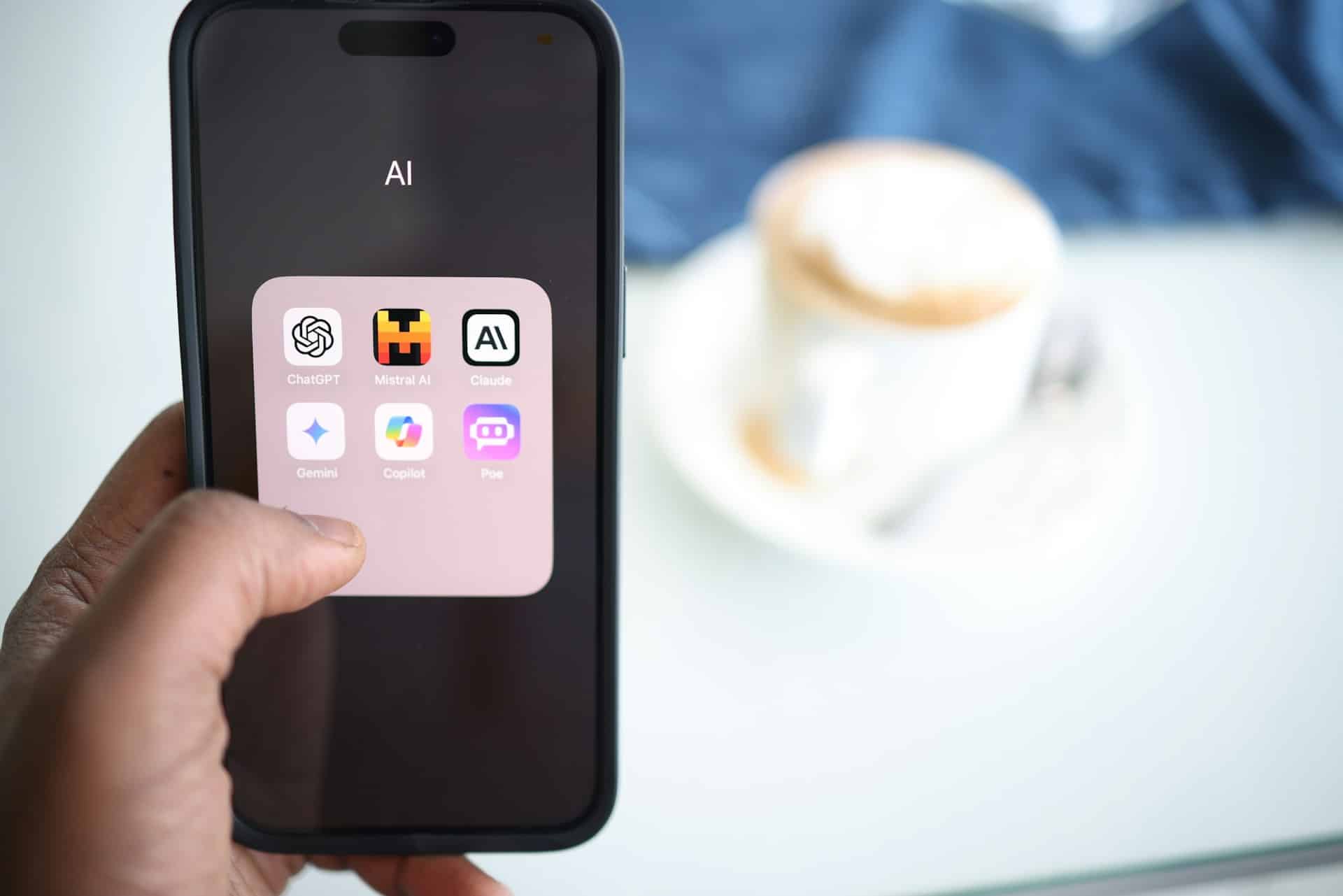
AI assistant apps on a smartphone screen. Image credit: Solen Feyissa via Unsplash, free license
These AI companions function primarily as emotional supports rather than clinical diagnostic tools, yet they quietly monitor well-being indicators. After each conversation, InTouch sends family members conversation summaries through an app, including call duration, mood evaluation, and discussion topics. This passive monitoring alerts relatives to concerning patterns without requiring the senior to actively report symptoms or complete assessments.
A small-scale study involving 23 residents at RiverSpring Living found that regular conversations with AI companions helped reduce anxiety and depression markers. Dr. Zachary Palace, a geriatrician at the facility, confirmed residents showed measurable improvements after establishing routines with their digital companions.
The monitoring remains non-invasive because it occurs naturally within ordinary conversation. The AI doesn’t interrogate users with clinical questions or administer formal screenings. Instead, it detects emotional cues through language patterns, topic selection, and conversational engagement levels—all while maintaining the feel of casual friendship.
Scheduling and Routine Support
Beyond emotional companionship, conversational AI helps structure daily life through gentle reminders embedded in dialogue. AI companions like ElliQ can remind users about medications, doctor appointments, and daily activities without the sterile, alarm-like notifications of traditional reminder systems. The prompts arrive through natural conversation: “Did you remember to take your morning medication?” or “Your doctor’s appointment is this afternoon at two.”
This conversational approach to scheduling reduces resistance common with standard alarm systems. Seniors respond better to friendly prompts from a familiar voice than to beeping devices or pop-up notifications. The AI adapts reminder timing based on past responses, learning when users are most receptive to different types of prompts.
InTouch’s system encourages cognitive exercises through casual engagement. The AI might invite users to play true-or-false trivia about topics they’ve discussed or conduct word recall exercises used in dementia screening—but frames these as games rather than tests. This approach provides meaningful brain stimulation without the anxiety or resistance that formal assessments often trigger.
Technology Implementation and Accessibility
Successful AI companion services prioritize simplicity in deployment. Meela costs approximately $40 monthly; InTouch charges $29 for unlimited calls. Family members arrange the service remotely, setting call schedules and providing initial background information about their elderly relative. The senior receives calls at predetermined times requiring only the ability to answer their existing phone—no device purchases, installations, or training sessions necessary.
RiverSpring Living implements screening protocols, ensuring appropriate candidates receive access. Residents must demonstrate the ability to comfortably hold phone conversations without significant cognitive decline or severe hearing loss. This selective approach prevents problematic interactions while maximizing benefit for suitable users.
The underlying technology combines several AI capabilities beyond speech recognition. Natural language processing enables contextual understanding of conversational nuances. Emotion recognition algorithms detect sentiment through voice tone and word choice. Text-to-speech systems generate natural-sounding responses. These components work invisibly behind simple phone conversations.
| Technology Component | Function | User Experience |
| Speech Recognition | Converts spoken words to text | Seniors speak naturally into phone |
| Natural Language Processing | Understands context and meaning | AI responds relevantly to topics |
| Emotion Recognition | Detects sentiment and mood | System adapts tone appropriately |
| Text-to-Speech | Generates spoken responses | Natural-sounding voice replies |
| Memory Systems | Stores conversation history | AI references previous discussions |
Market Growth and Adoption Patterns
The AI aging care market reached $35 billion in 2024 and projects growth beyond $43 billion in 2025, according to Research and Markets analysis. While this includes various AI-enabled devices and applications, conversational companions represent rapidly expanding segments.
Unexpected demographic patterns emerged as these services launched. When Slingshot AI created Ash, a mental health-focused conversational AI in 2022, the founders anticipated younger users. Instead, seniors now comprise 20-30% of the platform’s user base. Neil Parikh, company cofounder, attributes this to older adults feeling less stigma in discussing vulnerabilities with AI than with human counselors. “With AI, they feel like they can actually be a lot more vulnerable, a lot faster,” he explained.
New York State’s Office for the Aging purchased 800 ElliQ robots in 2022 for seniors living alone. After one year, 95% of participants reported reduced loneliness feelings, with users interacting with their AI companion dozens of times daily on average.
This adoption rate among older adults challenges assumptions about technological resistance in senior populations. Dor Skuler, founder of Intuition Robotics, observed: “The first humans that actually live with an AI and are building a long-term relationship are not like geeks in Silicon Valley. It is older adults in the United States.”
Evidence Base and Effectiveness
Systematic research examining AI applications for senior loneliness reviewed nine studies—six randomized controlled trials and three pre-post designs. Six studies reported statistically significant loneliness reductions, particularly those employing social robots with emotional engagement capabilities and personalized interactions.
Interventions showing the strongest effects combined AI-assisted companionship with regular, meaningful interactions over extended periods. Brief interventions lasting single sessions or one-week periods failed to establish sufficient connection depth. Successful programs maintained consistent contact schedules, allowing relationships to develop naturally over months.
Three studies reported non-significant effects, attributed to shorter intervention durations or limited interaction frequencies. These findings emphasize that AI companionship requires time investment similar to human friendships—single conversations provide minimal benefit compared to sustained engagement patterns.
The research identified speech recognition and emotion recognition as the most critical technological components for effectiveness. Systems incorporating both capabilities demonstrated superior outcomes by enabling natural dialogue while adapting responses to users’ emotional states.
Addressing Cognitive Health Concerns
Dr. Bei Wu, gerontologist and co-director of NYU’s Aging Incubator, noted AI companions potentially improve cognitive health when used as supplements to human caregivers. The technology stimulates brain activity through conversation and provides emotional support. However, Wu cautions about dependency risks among those with cognitive impairments and potential privacy compromises.
InTouch positions its service as providing “full brain workouts” to mitigate cognitive decline. The AI engages users in word recall exercises detecting early dementia signs or invites true-false trivia games about previously discussed topics like Portuguese history. These cognitive exercises integrate seamlessly into conversation rather than feeling like formal assessments.
Facilities like RiverSpring Living implement screening protocols ensuring only cognitively appropriate candidates use AI companions. Standard mental state evaluations conducted by nurses, social workers, and clinicians identify residents who can comfortably engage with virtual companions without confusion or distress.
Privacy and Ethical Considerations
Data security remains paramount as AI companions collect extensive personal information through conversations. Leading providers implement encryption protocols protecting sensitive data against unauthorized access. Transparency requirements mandate clear disclosure of data usage policies, allowing users and families to understand information handling practices.
Some families face moral dilemmas when arranging AI companion services. InTouch founder Vassili le Moigne noted relatives sometimes express guilt: “Sometimes they’ll say, ‘Hey, I should be calling more often.'” The service aims not to replace human interactions but to supplement them, particularly during times when busy family members cannot provide attention.
Meela CEO Josh Sach emphasizes transparency: “I don’t want to dupe anybody into talking to a robot.” The system identifies itself as an AI companion at every conversation’s beginning, ensuring users maintain clear understanding about the interaction’s nature despite the human-like quality.
Challenges and Limitations
Current AI companion technology faces persistent imperfections. Systems struggle with conversational subtleties and can become confused by complex interactions. During one call, Gonzalez repeatedly tried ending his conversation with Meela cordially, but the system continued asking follow-up questions until he hung up.
More serious concerns involve potential unhealthy relationships, particularly among vulnerable populations. Cases involving teenagers and adults with mental health conditions developing problematic attachments to ChatGPT and Character AI highlight risks. In extreme instances, AI interactions have reinforced delusional thinking or paranoid patterns among users with existing mental illnesses.
Nick Haber, Stanford University computer science assistant professor, warned that systems designed primarily as assistants “might not be offering you the right sort of perspective, the right sort of pushback, that a caring friend might.” This limitation becomes critical when AI companions encounter users experiencing crisis situations or displaying concerning behavioral patterns.
Ash, designed specifically as a therapeutic rather than purely companionship-focused AI, attempts addressing these concerns through different interaction approaches. When users express loneliness, Ash inquires about important relationships and explores connection opportunities rather than simply consoling. The system monitors conversations for distress indicators, escalating to crisis hotlines or clinicians when necessary. However, recent reporting found Ash sometimes fails flagging subtle triggers like depression-related statements about finding “a rope and way out.”
Integration with Healthcare Systems
Meela pursues early discussions with insurance providers about coverage, arguing that preventing loneliness-related health complications justifies reimbursement. Chronic isolation increases depression, heart disease, and mortality risks—costs ultimately borne by healthcare systems. Preventive AI companionship potentially reduces these downstream expenses.
Dr. Palace and RiverSpring Living collaborate with Meela’s care team, including nurses, social workers, and clinicians, to evaluate candidates and monitor outcomes. This integration ensures AI companions operate within comprehensive care frameworks rather than as isolated interventions.
The healthcare staffing crisis makes these technological supplements increasingly valuable. Approximately 90% of American nursing homes face staffing shortages according to the American Health Care Association, reducing personalized attention available for residents. AI companions provide consistent engagement even when human staff resources stretch thin.
Future Directions and Scalability
The aging American population will reach 22% of total population by 2050, outnumbering children under 18 according to the Peter G. Peterson Foundation. This demographic shift creates urgent need for scalable loneliness interventions.
Cloud-based platforms offer potential for massive expansion, delivering AI-driven companionship to many users simultaneously without proportional cost increases. Culturally competent approaches incorporating region-specific languages and customs would allow these services reaching diverse populations effectively.
Researchers emphasize combining quantitative effectiveness data with qualitative user experience insights. Understanding not just whether AI companions reduce loneliness but how seniors perceive and relate to these interactions will inform design improvements. Current qualitative studies describe participants finding AI robots “comforting” and “engaging,” but a deeper investigation into long-term relationship dynamics remains necessary.
Sustainable models might integrate AI interventions with periodic human contact, creating hybrid support systems balancing technological efficiency with irreplaceable human connection qualities. Year-round interactive programs combining digital companions with community activities could provide comprehensive social engagement without complete reliance on either technological or human-only approaches.
Practical Implementation for Families
Families considering AI companion services for elderly relatives should evaluate several factors. The senior must possess basic phone conversation ability without severe hearing loss or significant cognitive impairment. Services work best for individuals experiencing social isolation but maintaining mental clarity and communication capacity.
Monthly costs range $29-$40 for unlimited interactions—substantially less than hiring human companions or increasing visits from professional caregivers. Setup requires minimal technical involvement: family members provide background information online, establish call schedules, and receive conversation summaries through companion apps.
Starting with trial periods allows assessing compatibility before a long-term commitment. Services like InTouch and Meela typically offer initial evaluation periods where families can gauge their relative’s comfort level and engagement quality. Positive indicators include looking forward to scheduled calls, sharing conversation details with family members, and expressing an emotional connection with their AI companion.
John Duncan, who arranged InTouch for his 89-year-old father Richard, views the service as “kind of a diary service” prompting his father to recall and verbalize memories. This self-reflection component provides value beyond mere companionship, helping seniors process life experiences and maintain cognitive engagement.
Conclusion
Conversational AI addresses senior loneliness through accessible, voice-based interactions requiring no technical expertise. These digital companions provide consistent emotional support, subtle mood monitoring, and gentle daily structure through natural dialogue. While not replacing human relationships, AI companions fill critical gaps in social connection that resource-limited healthcare systems and busy families cannot adequately address.
The technology succeeds precisely because it remains simple—seniors answer their phones and talk. Speech recognition, natural language processing, and memory systems work invisibly behind these ordinary conversations, creating personalized relationships that develop over time. Early evidence shows significant loneliness reduction and well-being improvements among appropriate users.
Challenges remain regarding dependency risks, privacy protection, and ensuring AI companions supplement rather than substitute for human contact. Careful implementation with proper screening, transparent operation, and integration into comprehensive care frameworks maximizes benefits while minimizing potential harms. As the senior population expands dramatically in the coming decades, these non-invasive conversational interfaces represent scalable solutions to an otherwise overwhelming social crisis.
If you are interested in this topic, we suggest you check our articles:
Written by Alius Noreika