For social media marketers, producing relevant content that appeals to an audience across multiple platforms is a constant struggle. Writing all the content from scratch is unsustainable.
In contrast, AI tools like ChatGPT can produce social media content rapidly, but the quality of that content is usually generic, corporate, or robotic-sounding. People can easily tell that the content was created by a machine, which hurts engagement.
For marketers, AI humanizers take the awkward, robotic-sounding content created by an AI tool and turn it into something that reads much more naturally, conversationally, and engagingly. Marketers can use AI to produce a high volume of social media content and still maintain the unique voice of the brand that encourages likes, comments, and shares.
Summary Overview
| Tool | Best For | Supported Platforms | Pricing |
|---|---|---|---|
| Walter Writes AI | Brand voice consistency across posts | All platforms | Free + paid tiers |
| Grammarly | Quick tone adjustments | All text-based platforms | Premium subscription |
| Jasper | Integrated content workflows | All platforms | Subscription |
| Quillbot | Post variations and A/B testing | All platforms | Free + premium |
| Writesonic | Budget-conscious teams | All platforms | Free + paid |
Why Social Media Content Needs Humanization
If a social media user scrolls through your content quickly, there’s a good chance that if the content looks like it was produced by a corporate robot, they’ll continue to scroll through. When comparing AI-generated social media posts to human-written posts, AI-generated posts tend to be lengthy, overly formal, and include phrases that no one uses in everyday conversations.
Because of this disconnect between AI-generated content and human-written content, social media engagement decreases.
For marketers, the challenge is to create content that scales. Marketers may manage five social media platforms, post to those platforms numerous times per day, and handle multiple client accounts. Producing all the content manually isn’t possible, yet publishing AI-generated content that clearly appears to be AI-generated harms the credibility of your brand and significantly decreases organic reach.
An AI humanizer allows marketers to be efficient when using AI while maintaining a conversational, authentic tone that’s required to perform on social media. The content will appear as though it’s come from a person representing your brand, not from a content mill.
How We Evaluated These Tools
We determined which of the AI humanizers worked best based on our analysis of AI-generated social media content for different social media platforms (LinkedIn, Twitter, Instagram, and Facebook), and how well each of the humanizers made the content sound natural and how likely it would be to engage users.
We also assessed how well each humanizer removed corporate jargon and AI-generated patterns, how well it maintained the key messaging and calls to action, how well it matched the correct tone for each platform, and how fast and easy it was to use for busy marketing teams.
Top AI Humanizers for Social Media Content
1. Walter Writes AI: Best Overall for Brand Voice
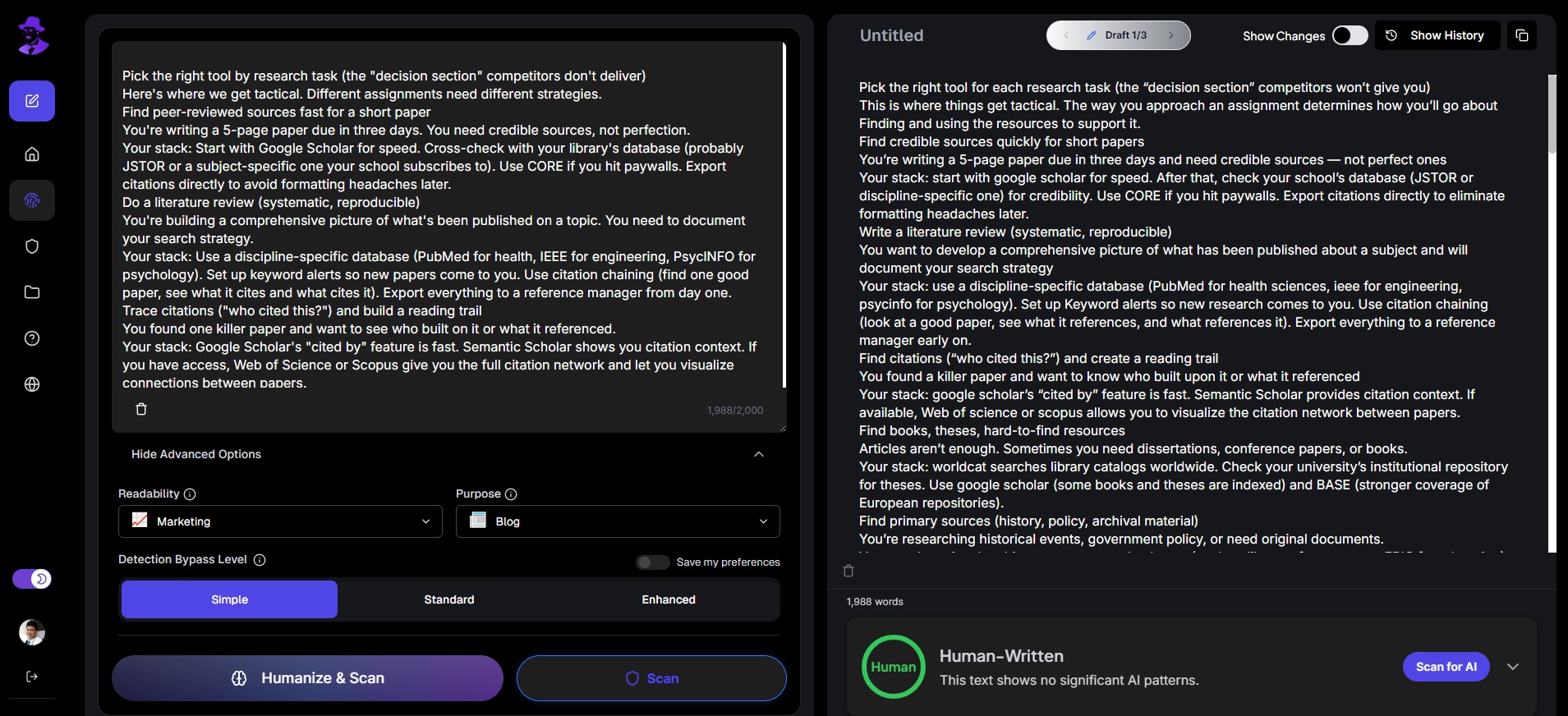
Walter Writes AI takes the AI-generated social media posts and turns them into natural, engaging content that maintains a consistent brand voice. Walter Writes uses a structural humanization approach that alters the sentence structure of the original content to provide more varied and less predictable AI-generated sentences while maintaining your core message, a strength also highlighted in community discussions comparing top humanizers
What makes it effective for social media: Walter Writes excels at providing content that sounds conversational and natural while avoiding being too informal or unprofessional. This balance is critical for social media because your goal is to be approachable and still perceived as credible. The consistent tone and voice of the content developed from Walter Writes will help you build a consistent brand voice across multiple platforms.
Walter Writes supports over 80 languages automatically, which is useful for social media marketers who manage international accounts or run multilingual campaigns. Additionally, social media marketers have reported that humanized posts appear to be more authentic and encourage more engagement from followers than non-humanized AI-generated content.
Key features: Structural changes to the content to humanize the AI-generated content, maintain a consistent tone across multiple posts, preserve hashtags and platform-specific elements, and provide rapid processing to provide a high volume of content quickly.
Ideal for: Marketing teams and agencies that manage multiple social media accounts and need to maintain an authentic brand voice across multiple platforms.
Price: Offers a free tier for testing; paid plans for large volumes of content.
URL: https://www.walterwrites.ai/
2. Grammarly AI Humanizer: Best for Quick Tone Adjustments
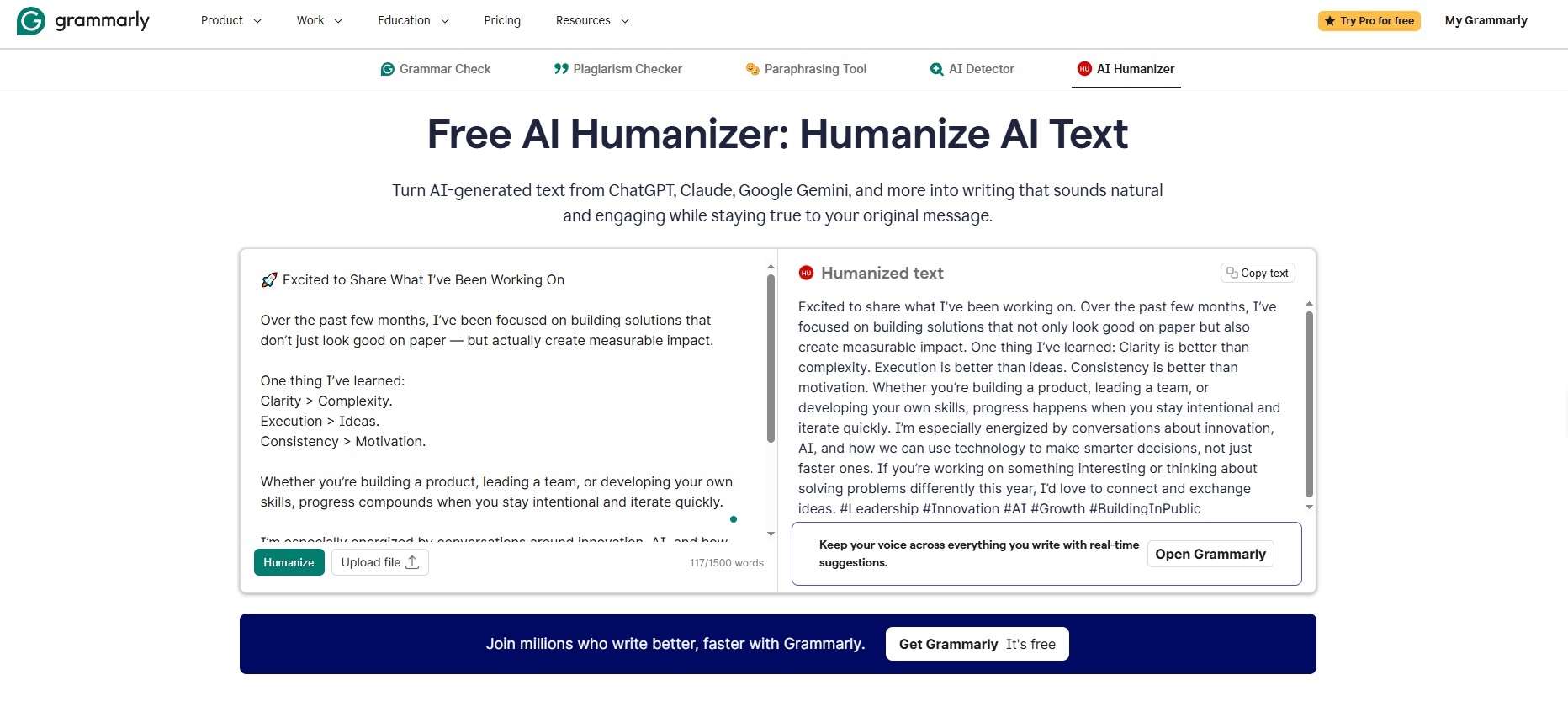
Grammarly’s AI humanizer makes AI-generated social media posts sound more natural and readable by adjusting the tone and improving the readability of the content. Since Grammarly integrates with other Grammarly features, you can also use Grammarly to check your grammar, tone, and humanize your content within the same platform.
What makes it effective for social media: Grammarly’s tone detector is a feature that allows you to assess how your post may be perceived by your audience before publishing. This is especially useful for social media since tone mismatch can result in negative feedback from your audience. Grammarly’s humanizer is also rapid in its processing, allowing you to quickly humanize your social media content in line with the rapid nature of social media content creation.
Although Grammarly’s humanizer is effective in making AI-generated posts sound more natural, it does so primarily in a surface-level manner. Although Grammarly improves the flow and eliminates some of the AI-generated markers, it doesn’t fundamentally alter the content. As a result, some of the humanized posts may still read as unnatural.
Key features: Adjusts the tone of your post, improves readability, checks grammar, and integrates with browser extensions for social media platforms.
Ideal for: Social media managers who already use Grammarly and would like to integrate the tone and humanization features into their existing workflow.
Price: Included with Grammarly Premium Subscription.
URL: https://grammarly.com/ai-humanizer
3. Jasper Paraphrasing Tool: Best for Streamlined Workflows
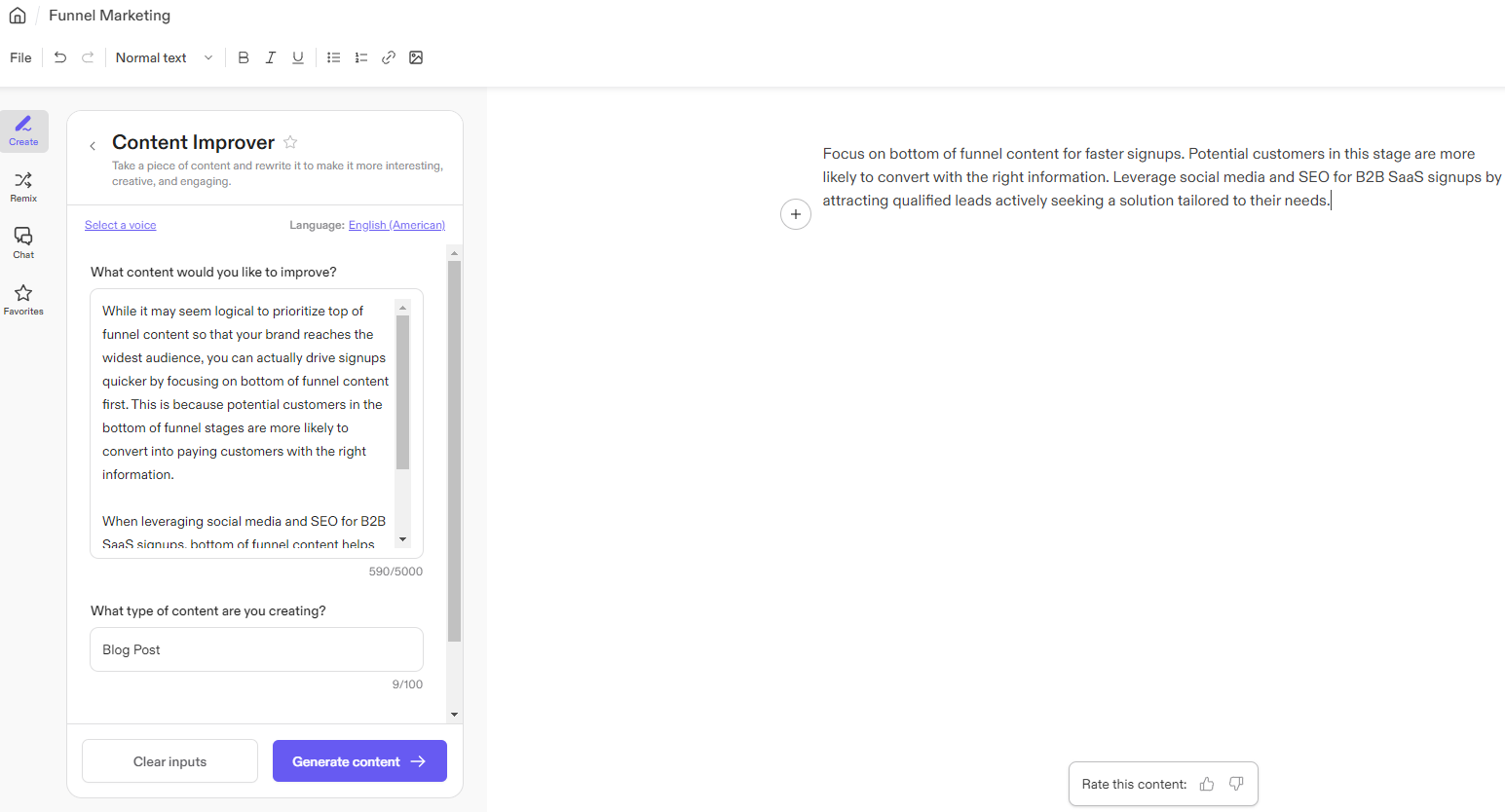
Jasper’s paraphrasing capabilities can assist in rewriting AI-generated social media posts to reduce the templated feel of the content. Although Jasper’s paraphrasing capabilities aren’t a true humanizer, it can provide additional assistance in refining the content for social media marketers who already use Jasper to generate other forms of marketing content.
What makes it effective for social media: If you’re using Jasper to generate blog posts, ads, or other marketing-related content, having the social post humanization process within Jasper can streamline your workflow. Jasper provides rapid processing of content and multiple rewrite options.
Although Jasper’s paraphrasing capabilities can be effective in providing additional humanization to your social media content, it’s primarily a paraphraser, and as such, the quality of the humanized content may vary. As a result, the output of the humanized content may sound mechanical and may not capture the conversational tone that performs well on social media.
Key features: Paraphrases text, restructures sentences, integrates with Jasper’s content generation tools, and includes a template library for social media formats.
Ideal for: Marketing teams who currently use Jasper and want to consolidate tools.
Price: Included with Jasper Subscription Plans.
URL: https://jasper.ai/tools/paraphrasing-tool
4. Quillbot Humanizer: Ideal for Generating Post Variations
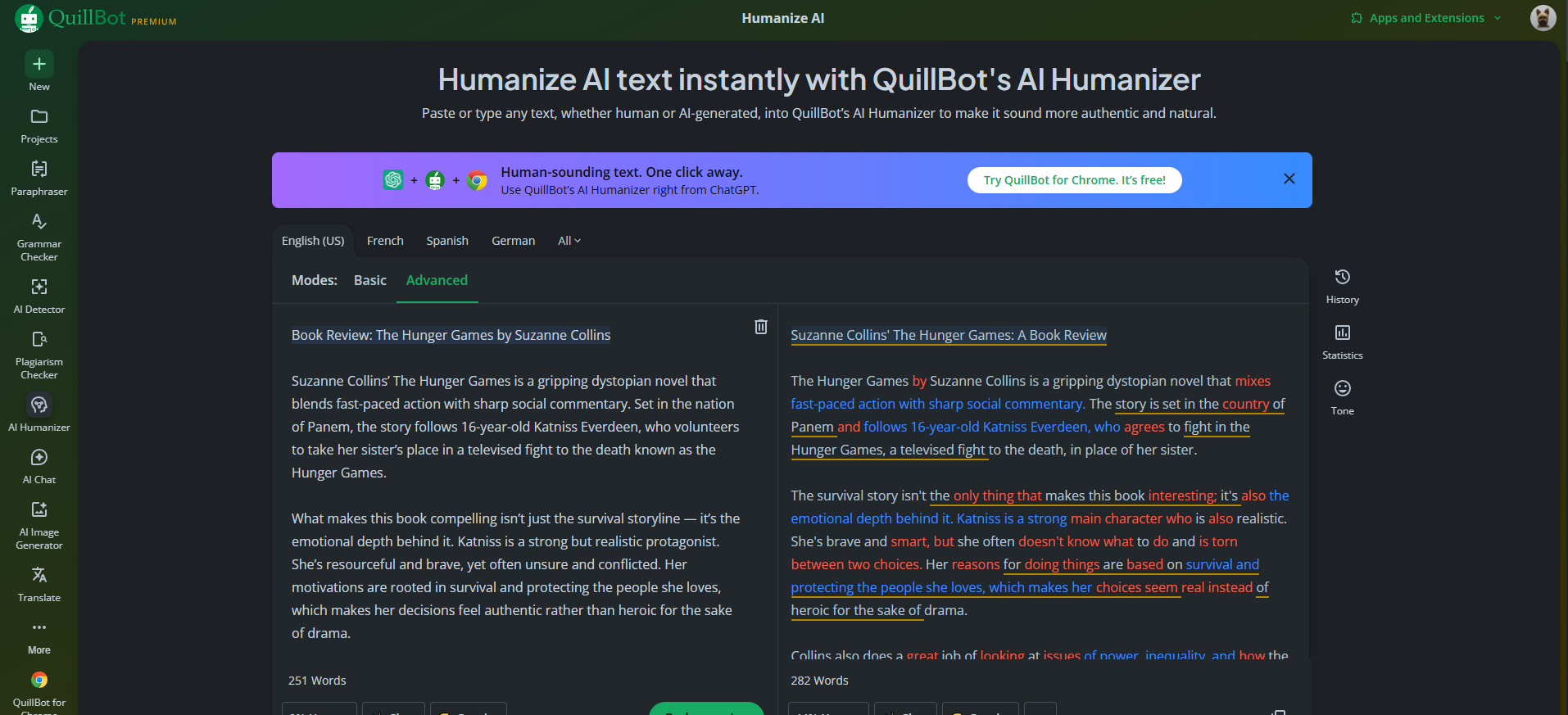
Quillbot provides both humanization and paraphrasing features, which are ideal for social media marketers who need to create multiple versions of similar social media content. The ability to create post variations is ideal for social media marketing,g where creating multiple versions of the same post to test the performance of each post is common.
What makes it effective for social media: Social media marketing often involves creating posts that are similar to each other to avoid repetition and to determine which version of the post performs best. Quillbot’s features enable social media marketers to create these post variations rapidly.
Although Quillbot’s humanizer is generally effective in providing natural-sounding content, it can be inconsistent in the quality of the output. Some of the humanized posts may sound natural and engaging, while others may sound unnatural and may still contain AI-generated markers. You’ll need to review and possibly revise the output before posting.
Key features: Humanizes AI-generated posts, provides paraphrasing capabilities, includes multiple modes for paraphrasing, checks grammar, and generates content variations.
Ideal for: Social media marketers who need to create multiple versions of similar posts to test performance.
Price: Offers a free version with limitations; paid version available for unlimited usage.
URL: https://quillbot.com/ai-humanizer
5. Writesonic AI Humanizer: Best Value for Money
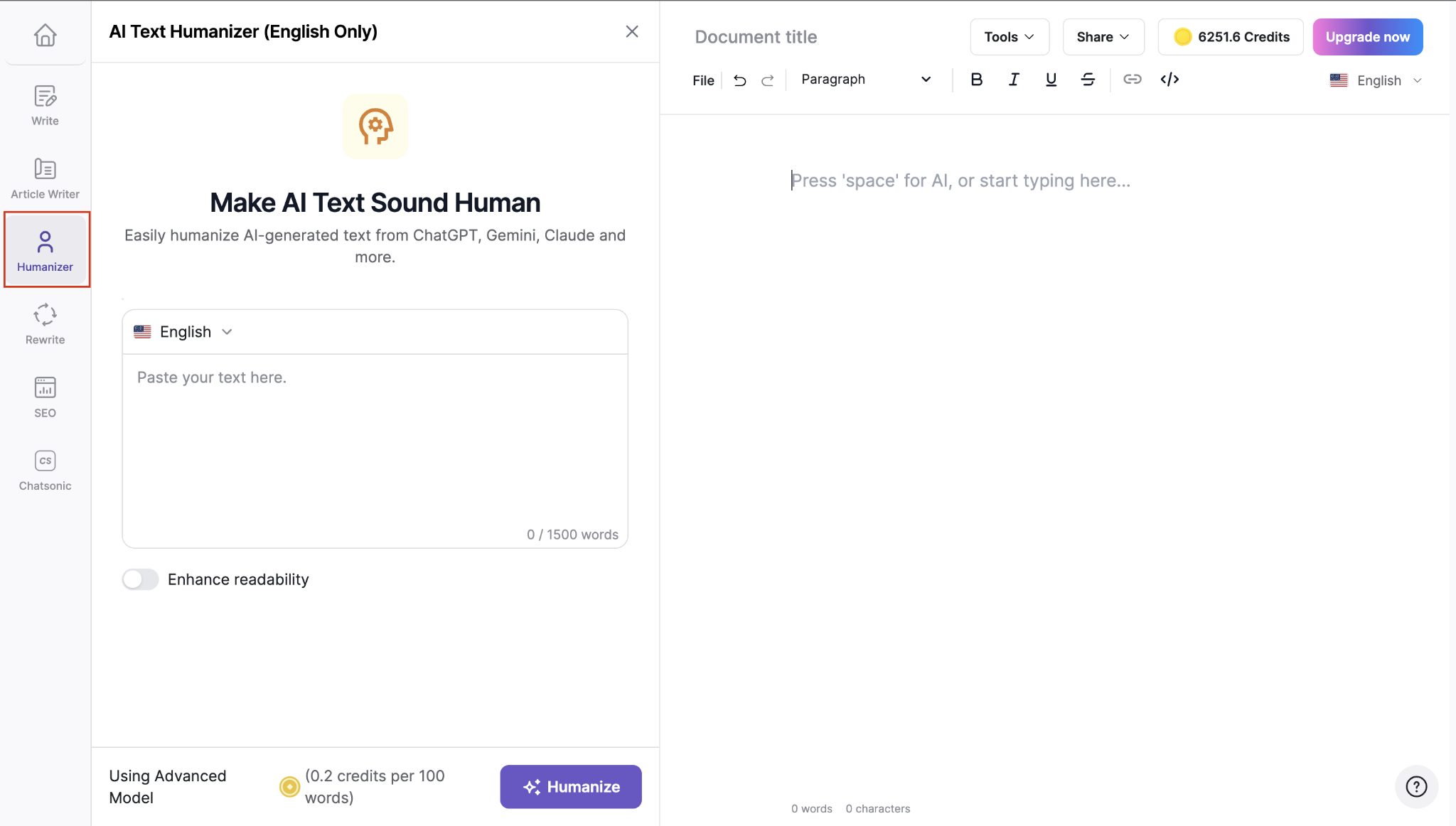
Writesonic is another AI humanizer option that’s priced affordably for small business owners, startups, and freelance social media managers. The quality of the content produced by Writesonic is generally less consistent than that of the more expensive humanizers, but with careful review and revision, it can be effective.
What makes it effective for social media: The affordable cost of Writesonic enables social media marketers to humanize a large amount of social media content quickly, regardless of budgetary restrictions. The platform also offers a variety of marketing tools, which can be beneficial to small teams and solo entrepreneurs who can’t afford separate marketing tools.
The drawback of Writesonic is its reliability. Some of the humanized posts may sound fine, while others may require significant manual revisions to appear as though they were produced by a human.
Key features: Humanizes AI-generated posts, generates templates for various forms of marketing content, supports multiple social media platforms, and schedules posts via integration with other platforms.
Ideal for: Small businesses and solopreneurs who manage social media on a limited budget.
Price: Offers a free version for testing; affordable paid options for larger amounts of content.
URL: https://writesonic.com
6. Ahrefs Paraphrasing Tool: Most Basic Rewrite Tool
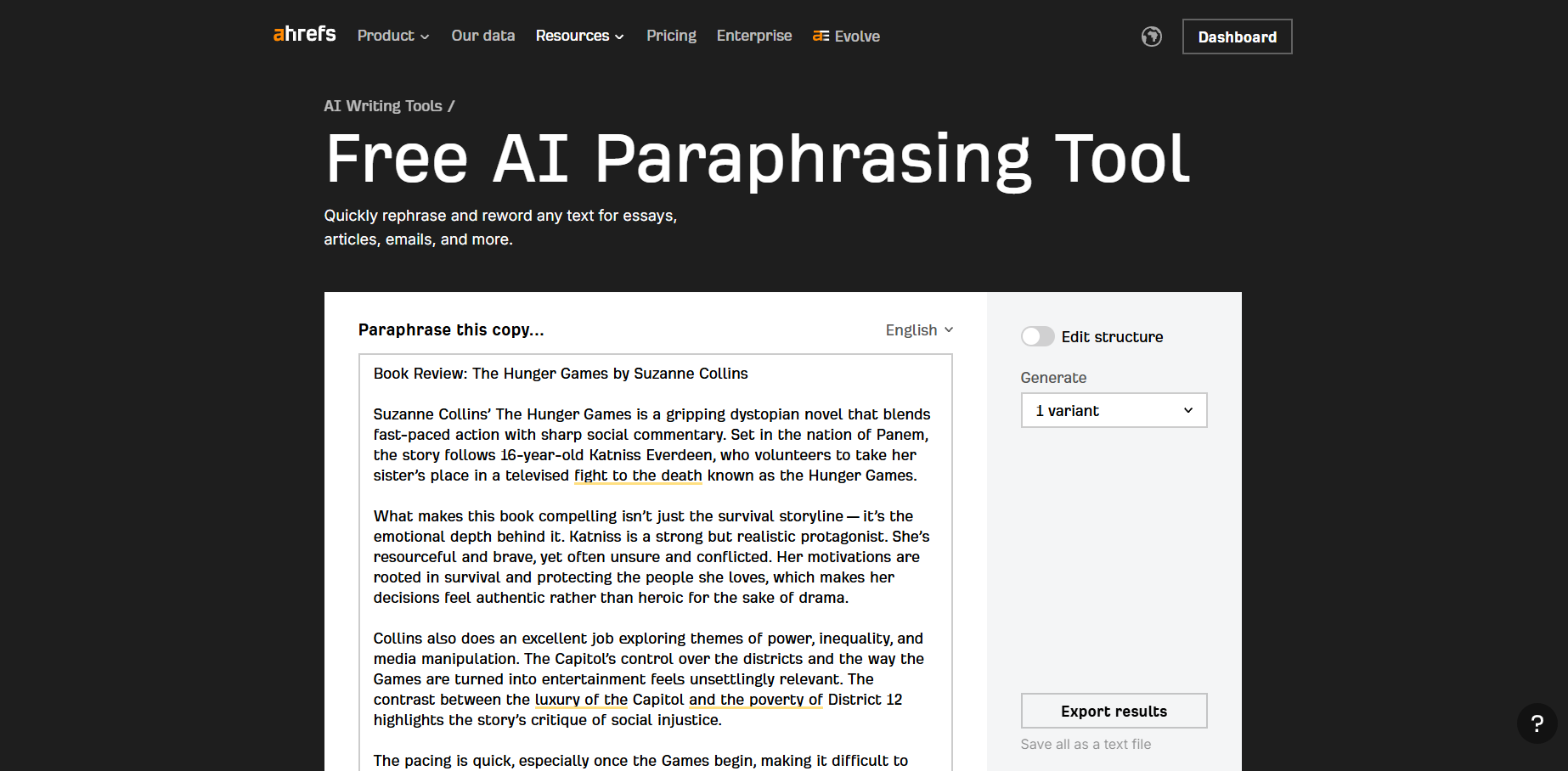
Ahrefs provides a basic paraphrasing tool that can assist in restructuring social media posts. Ahrefs’ paraphrasing tool is relatively simple to use, and it processes content rapidly, but it lacks the nuances required to create engaging social media content through humanization.
What makes it effective for social media: Ahrefs’ paraphrasing tool is most effective in providing rapid rewrites of simple content, which can be useful when attempting to modify a single message to fit slightly different social media platforms or audiences.
Although Ahrefs’ paraphrasing tool is a good starting point, it’s not capable of providing the humanization required to create social media content that performs well. The output of the paraphrasing tool is typically mechanical and doesn’t have the conversational tone that’s typically found in successful social media content.
Key features: Paraphrases text, simplifies sentence structure, and provides a simple interface.
Ideal for: Social media marketers who currently use Ahrefs and may need occasional simple rewrites.
Price: Included with Ahrefs Subscription Plans.
URL: https://ahrefs.com/writing-tools/paraphrasing-tool
Selecting the Best Humanizer for Your Needs
When evaluating the humanizers, consider two primary aspects: the volume of content you create and your budget.
If you create a large volume of content daily across multiple platforms, investing in a reliable humanizer like Walter Writes will save you a substantial amount of time relative to continually editing AI drafts. On the other hand, if you create little to no content, a free tier may be sufficient.
Next, consider your current workflow and existing tools. Are you currently using a tool like Grammarly or Jasper? Keeping humanization within the same ecosystem may outweigh marginally better results from standalone tools.
Before you commit to a humanizer, test the humanizers with your own social media content. Evaluate the quality of the humanized content by processing several different types of posts (product announcements, engagement questions, thought leadership pieces, and promotional content), and determine if the humanized version is consistent with your brand voice and feels natural.
Platform-Specific Considerations
Each social media platform requires a distinct tone. LinkedIn is most suited to professional yet conversational content. Twitter is ideal for concise, punchy content. Instagram captions may be longer and more focused on telling stories.
Your chosen humanizer should be able to adjust the tone to match the requirements of each platform.
Additionally, consider how the humanizer preserves and positions platform-specific elements like hashtags, mentions, links, and emojis. Some humanizers don’t preserve these elements, which may require manual edits to position correctly after processing.
Lastly, consider the character limits of each platform. Twitter has strict limitations, so the wording of each post is extremely important. A humanizer that produces wordier content than Twitter’s character limit may not be the best choice for Twitter.
Conversely, for platforms with larger character limits like Facebook or LinkedIn, you have more flexibility to write longer, more detailed posts.
Red Flags in Social Media Humanizers
Social media humanizers that make your social media content overly casual to the point of appearing unprofessional are red flags. Although social media aims to present your brand in a relatable way, it’s still representative of your brand. If the humanized version of your post appears to be nothing more than you texting your friends, then it’s gone too far.
Another red flag in social media humanizers is when the humanizer removes or weakens your CTA. Many social media posts are intended to elicit specific responses from users (click a link, comment, share, and the like). If a humanizer produces content that muddies or weakens the CTA, it can render the content useless.
Lastly, watch out for humanizers that introduce errors or confusing phrasing in your social media content. Mistakes on social media are seen rapidly and may be ridiculed. A humanizer should improve the clarity of your content, not create confusion.
Questions to Ask Before Making a Commitment
Before making a commitment to a humanizer, ask about the capabilities of batch processing if you create a high volume of content. There are humanizers that process individual posts at a time, while others can process large batches. If you’re an agency or large brand, batch processing will significantly save you time.
Also inquire about API access if you plan on incorporating humanization into your content calendar or scheduling tools. Some platforms provide APIs that will allow you to automate the humanization of your content as part of your overall content workflow.
Finally, examine the platforms’ content policies and privacy policies to ensure that the humanizer doesn’t store, share, or train on your content without your consent.
Limitations of Social Media Humanizers
While social media humanizers can improve the readability and natural tone of content generated by AI tools, they can’t replace the fundamental quality of the content.
If the AI-generated content lacks a clear point, offers little to no value to your audience, or is poorly structured, the humanization provided by a social media humanizer won’t improve the engagement.
Frequently Asked Questions
Can humanizers maintain consistent brand voice across posts?
High-quality humanizers like Walter Writes can help maintain consistency, but you need to guide the process. Review humanized content regularly and provide feedback or manual edits to keep it aligned with your brand voice. Over time, you’ll develop a sense of what works.
Should I humanize every AI-generated post?
Not necessarily. Some AI outputs are already natural-sounding and engaging. Review each post and only humanize when the content sounds robotic, overly formal, or disconnected from your brand voice. Humanizing everything wastes time.
Will audiences know I used AI to create content?
With good humanization and some manual editing, it’s very difficult for audiences to tell. They’re more concerned with whether your content is valuable and engaging than whether AI was technically involved in creating it.
How much editing should I do after humanizing?
Always review humanized posts before publishing. Check that the message is clear, the tone matches your brand, platform-specific elements (hashtags, mentions, and links) are intact, and there are no errors. Add any final polish that makes the post feel genuinely yours.
Can I use humanizers for paid social ads?
Yes, but be extra careful with review. Paid ads need to be precise and effective. Make sure humanization doesn’t dilute your value proposition or make your CTA less clear. Some platforms also have policies about AI-generated ad content, so check their terms.
What if my humanized post still sounds off?
If the humanized version doesn’t sound right, try:
- Processing the original AI draft through a different humanizer
- Manually editing the AI output first before humanizing
- Starting with a better AI prompt to generate content closer to your desired voice
Sometimes the issue is with the original AI content rather than the humanizer.