Key Takeaways
- Democratized access: AI-powered analytics platforms now offer small businesses the same sophisticated data analysis capabilities previously exclusive to Fortune 500 corporations with million-dollar budgets
- No technical expertise required: Modern no-code and low-code AI tools eliminate the need for data scientists or developers, enabling business owners to generate insights through natural language queries
- Comprehensive data integration: These platforms consolidate information from 400+ data sources into single dashboards, providing real-time insights that once required dedicated analytics teams
- Immediate ROI: Businesses can analyze historical trends, predict customer behavior, optimize inventory, and forecast demand within minutes rather than weeks
- Affordable pricing: Cloud-based AI analytics tools operate on subscription models starting at a fraction of traditional enterprise software costs
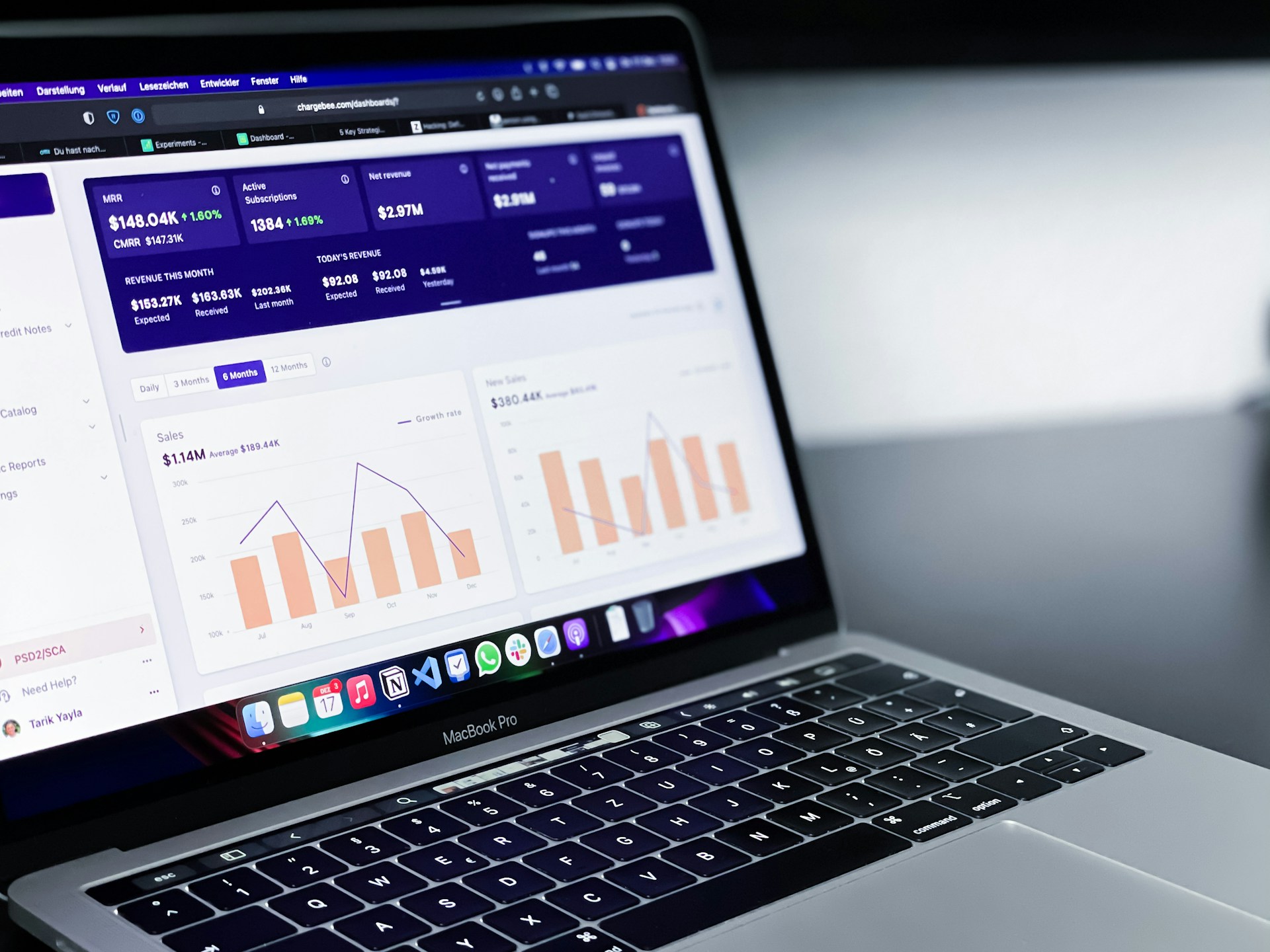
Business analytics – artistic impression. Image credit: Path Digital via Unsplash, free license
The Analytics Revolution That Changed Everything
Small businesses now possess analytical capabilities that rival those of multinational corporations. AI-powered analytics platforms have eliminated the technology gap that once separated Main Street from Wall Street. Business owners can ask complex questions about their data and receive sophisticated visualizations and actionable insights within seconds—capabilities that required six-figure investments just years ago.
These platforms process vast amounts of operational data, identify inefficiencies, predict market trends, and deliver strategic recommendations using the same large language models and machine learning algorithms that power enterprise systems. The transformation centers on accessibility: tools designed for users without coding experience or statistical training, operating through conversational interfaces and automated data visualization.
From Spreadsheets to Instant Intelligence
Traditional business analytics involved manual data entry, complex formulas, and hours spent building reports. The new generation of AI analytics tools fundamentally changes this process. Business owners simply connect their data sources—sales systems, inventory databases, customer relationship management platforms, financial records—and ask questions in plain English.
The AI assistant processes decades of industry data, applies machine learning models to identify patterns, and generates interactive visualizations automatically. A retail owner can request revenue comparisons across product categories, seasonal demand forecasts, or customer segmentation analysis without understanding database queries or visualization techniques.
This shift mirrors Fortune’s transformation of its iconic Fortune 500 rankings. The company partnered with Accenture to convert 20 years of financial data and journalism into Fortune Analytics, an AI-driven platform that delivers ChatGPT-style responses to complex business questions. What took researchers hours to compile now appears instantly through natural language processing.
Powerful Analytics Tools Within Reach

AI in business – artistic impression. Image credit: Alius Noreika / AI
The market offers numerous AI analytics platforms designed specifically for accessibility and affordability:
Tableau employs generative AI to automate task management and translate data into easily understood language. Business leaders receive comprehensive organizational overviews without technical training. The platform suggests relevant questions about data and explains insights conversationally.
Polymer eliminates technical barriers entirely. Users upload spreadsheets from Excel or Google Sheets, and the AI automatically visualizes data and creates interactive, searchable dashboards. The system identifies important patterns and presents them without manual configuration.
Microsoft Power BI integrates seamlessly with existing Microsoft tools, creating a centralized data hub. Organizations already using Excel or other Microsoft services gain sophisticated analytics capabilities within their familiar ecosystem, reducing learning curves and implementation time.
Akkio functions as an AI assistant specifically for data forecasting and predictive analytics. The platform excels at business forecasting, sales projections, and marketing analysis. Users build predictive models and generate reports without technical skills, while the AI suggests optimal strategies based on historical patterns.
MonkeyLearn specializes in text analysis, processing customer reviews, survey responses, transcripts, and chat logs using machine learning models. The tool performs sentiment analysis, identifies trends, categorizes information, and creates visual representations of findings—critical for understanding customer opinions and market sentiment.
ChatGPT serves as a versatile analytical assistant. Business owners can upload datasets and ask the AI to identify trends, predict customer behavior, explain complex data in simple terms, or even compose database queries. The tool enables strategic decision-making through conversational interaction with business data.
Breaking Down Enterprise-Level Capabilities
Fortune 500 companies pioneered AI integration for competitive advantage. Amazon leverages AI to track and reduce supply chain emissions while optimizing logistics networks—reducing delivery times and lowering carbon footprints simultaneously. The company’s success demonstrates how AI-driven supply chain optimization creates efficiency gains that smaller businesses can now replicate.
General Electric uses AI to analyze massive amounts of operational data, identifying inefficiencies and recommending sustainable practices. The technology reduces costs while minimizing environmental impact and maintaining high efficiency levels. This operational excellence previously required dedicated teams of data scientists and engineers.
Goldman Sachs integrates sustainability metrics into financial reporting using AI-powered analysis. The firm tracks environmental, social, and governance factors alongside traditional financial metrics, providing transparent accountability. This comprehensive approach to performance measurement represents a new standard for business intelligence.
These enterprise implementations reveal what becomes possible with AI analytics: predictive maintenance that prevents equipment failures, demand forecasting that optimizes inventory levels, customer segmentation that personalizes marketing efforts, and financial modeling that identifies growth opportunities.
Technical Sophistication Made Simple
Modern AI analytics platforms span several advanced technologies working in concert:
- Large language models process natural language queries and generate human-readable responses. Users interact with data conversationally rather than learning specialized query languages or programming syntax.
- Machine learning algorithms identify patterns across historical data, spot inconsistencies, predict future trends, and deliver insights automatically. The systems improve accuracy over time as they process more information.
- Real-time data processing enables immediate investigation and resolution of anomalies. Business owners monitor operations continuously and respond to changes as they occur rather than discovering issues through delayed reports.
- Automated visualization transforms raw numbers into charts, graphs, scatterplots, and dashboards tailored to specific questions. The AI selects appropriate visualization types based on data characteristics and user intent.
- Multi-source integration consolidates information from diverse systems—point-of-sale terminals, e-commerce platforms, accounting software, social media, supplier databases—into unified views. This eliminates data silos and provides comprehensive business understanding.
Implementing AI Analytics Successfully
Organizations adopting AI analytics tools must establish clear objectives before selecting platforms. Define specific goals: improving demand forecasting accuracy, reducing inventory carrying costs, identifying high-value customer segments, optimizing pricing strategies, or predicting maintenance requirements.
Develop metrics for tracking success post-implementation. Measure improvements in forecast accuracy, time saved on report generation, cost reductions from inventory optimization, or revenue increases from better targeting. These quantifiable results prove ROI and justify continued investment.
Assemble cross-functional teams to guide implementation. Include operations managers, sales leaders, finance professionals, and frontline employees who understand day-to-day business challenges. Their input ensures the analytics tool addresses actual business needs rather than theoretical possibilities.
Start with focused use cases rather than attempting comprehensive transformation immediately. Select one critical business question—perhaps seasonal demand patterns or customer retention rates—and demonstrate value quickly. Success with initial projects builds confidence and momentum for broader adoption.
Prioritize data quality from the outset. AI analytics tools produce insights only as reliable as their input data. Establish processes for maintaining data accuracy, consistency, and freshness across all connected systems.
The Competitive Advantage
Small businesses leveraging AI analytics gain several strategic advantages. They respond faster to market changes by identifying trends as they emerge rather than recognizing them retrospectively. Predictive capabilities enable proactive rather than reactive strategies.
Resource allocation improves dramatically. Business owners direct marketing spend toward highest-converting customer segments, stock inventory based on anticipated demand, and schedule staff according to predicted traffic patterns. These optimizations reduce waste and maximize returns on every investment.
Customer understanding deepens through automated analysis of behavior patterns, purchase histories, and feedback. Businesses personalize experiences, anticipate needs, and resolve issues before customers become dissatisfied. This level of insight previously required extensive customer research programs.
Operational efficiency increases as AI identifies bottlenecks, redundancies, and improvement opportunities within existing processes. Small adjustments based on data-driven recommendations compound into significant performance gains over time.
Looking Forward
The analytics capabilities available to small businesses will continue advancing rapidly. AI models become more sophisticated, processing increasingly complex data types and delivering more nuanced insights. Integration between platforms improves, creating seamless data flows across business systems.
Cost barriers keep falling as cloud computing scales and competition among platform providers intensifies. Capabilities that currently require monthly subscriptions will become even more affordable, while free tiers expand functionality.
The gap between Fortune 500 analytical capabilities and small business access continues narrowing. Success increasingly depends on asking the right questions and acting on insights rather than accessing technology. Every business, regardless of size, can now compete on analytical sophistication—leveling the playing field in ways previously unimaginable.
For organizations exploring AI analytics implementation, consider starting with free trials of platforms like Tableau, Power BI, or Polymer to experience capabilities firsthand before committing resources.
If you are interested in this topic, we suggest you check our articles:
- Scalenut: Boost your SEO Performance with AI Content Research & Copywriting
- Frase: AI SEO Assistant for Optimized Content Creation
- Hypotenuse AI: A Marketing Solution using AI for CMS Platforms
Sources: Pluralsight, Accenture, Fortune, Forbes
Written by Alius Noreika