Key Takeaways
- AI diagnostic tools cut analysis time by over 90% in radiology, pathology, and hematology, according to a narrative review of 51 peer-reviewed studies (Jeong et al., 2024, PubMed).
- Lung cancer survival jumps from 40% at late-stage detection to 99% when caught early — a gap AI imaging tools are now closing (Harvard Technology Review, 2025).
- An AI sepsis-detection system developed at Johns Hopkins reduced patient mortality by 20%, catching severe cases an average of six hours before conventional methods (Nature Medicine, 2022).
- Imperial College London’s AIRE-DM tool can identify type 2 diabetes risk up to 10 years before clinical onset, using routine ECG readings.
- AI breast cancer screening systems now match or exceed the accuracy of experienced radiologists, reducing false positives and false negatives simultaneously.
- The COMPOSER AI algorithm at UC San Diego achieved a 17% relative decrease in sepsis mortality during a prospective hospital study.
- An estimated 70% of cancer deaths come from cancers that currently have no screening test — AI-driven multi-cancer early detection (MCED) blood tests aim to fill that gap.
- The EU AI Act (effective August 2024) classifies medical AI as high-risk, requiring strict safety, data quality, and human oversight standards.
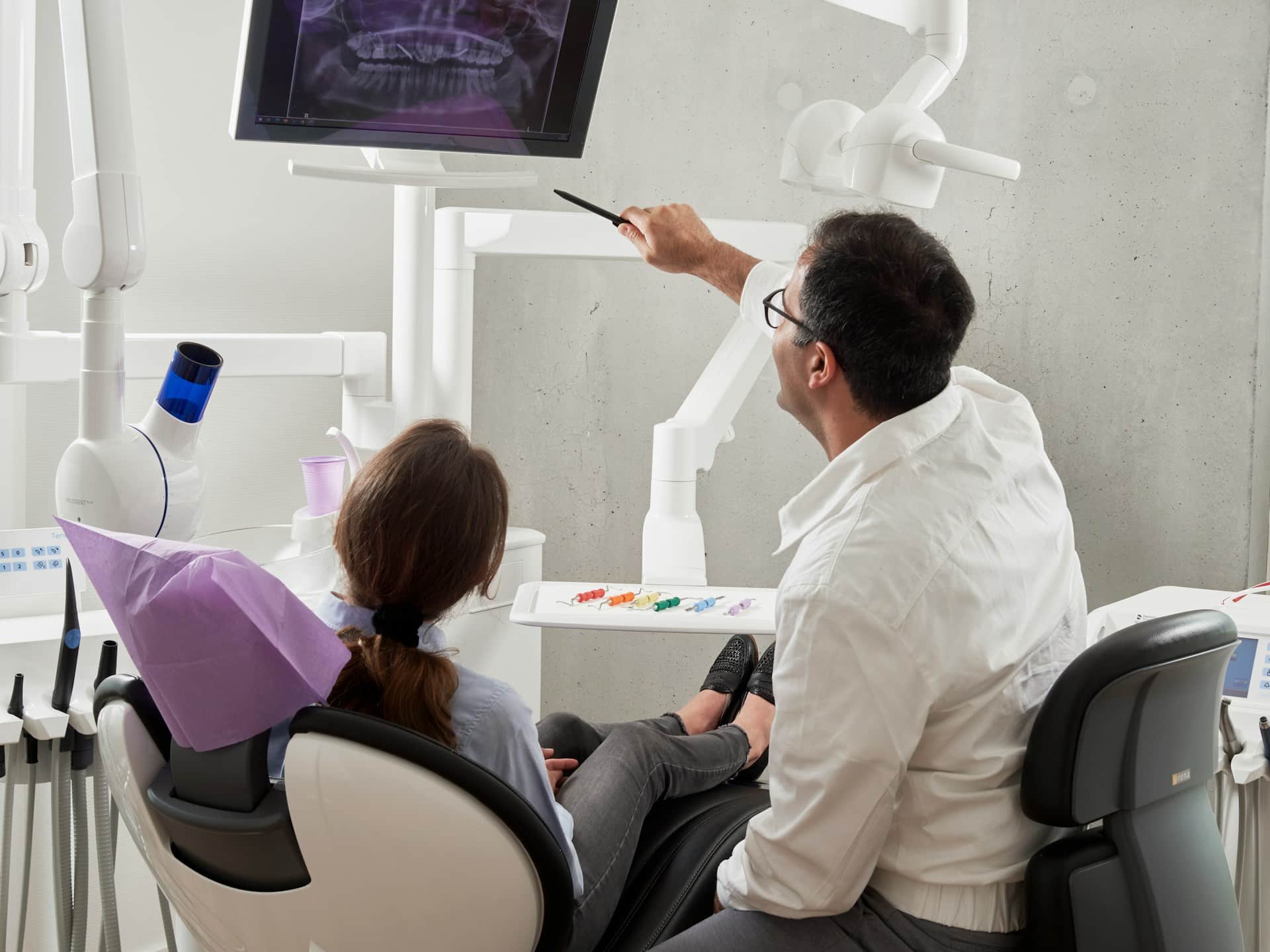
Doctor with a patient, predictive diagnostics – illustrative photo. Image credit: Caroline LM via Unsplash, free license
Artificial intelligence is rewriting the timeline of disease detection. Instead of waiting for symptoms to push patients into emergency rooms, AI-powered diagnostic tools now identify cancers, cardiovascular conditions, and metabolic disorders from routine scans — months or years before a patient feels anything is wrong. The measurable outcome is straightforward: fewer late-stage diagnoses, shorter treatment courses, and a meaningful drop in preventable deaths.
A comprehensive narrative review published in early 2024, covering 51 studies from January 2019 to February 2024, found that AI reduced diagnostic processing time by 90% or more in specialties such as radiology, pathology, and hematology (Jeong et al., PMCID: PMC11813001). In 44 of those 51 studies, AI delivered statistically significant time savings while maintaining or improving diagnostic accuracy. Six studies demonstrated major reductions in data volume clinicians needed to review. Only one showed an increase in processing time — and that was traced to the time required to upload images to the AI platform, not to the analysis itself.
How AI Catches Cancer Before Symptoms Appear
Cancer survival depends heavily on when the disease is found. For lung cancer detected at the final stage, the survival rate sits at 40%, but when identified at stage one, it rises to 99%. In colorectal cancer, five-year survival rates increase from 18.4% to 92.3% with early detection. These numbers explain why AI-driven screening is attracting so much clinical attention.
In breast cancer screening, AI has delivered some of the most widely validated results. One study showed that AI-assisted contrast-enhanced mammography analysis cut diagnostic processing time by 99.67% compared to manual interpretation (Zheng et al., 2023). A separate study on digital breast tomosynthesis (Raya-Povedano et al., 2021) found AI reduced the volume of images clinicians needed to examine by up to 70% while shortening reading time by 72.2%.
Deep learning models trained on histological images now routinely match or exceed human pathologists in identifying cancerous tissue. An AI model by McKinney et al. cut false positives and false negatives in breast cancer prediction across both US and UK datasets, reducing radiologist workload by an estimated 80%.
Around 70% of cancer deaths arise from cancers that have no existing screening test. This gap has pushed researchers toward multi-cancer early detection (MCED) blood tests, where a single blood draw captures fragments of cell-free DNA shed by tumors. AI classifiers then analyze these fragmentation patterns to flag the presence of cancer and, in some cases, pinpoint the tissue of origin. DELFI Diagnostics, for instance, uses machine-learning models that examine the distinct length patterns of circulating tumor DNA — shorter and differently fragmented compared to DNA from healthy cells — to make early-stage cancer predictions at minimal sequencing cost.
AI Diagnostic Time Reductions in Cancer Detection
| Cancer Type | AI Application | Time or Workload Reduction | Study |
|---|---|---|---|
| Breast cancer (mammography) | Contrast-enhanced mammography diagnosis | 99.67% time reduction | Zheng, 2023 |
| Breast cancer (tomosynthesis) | Digital breast tomosynthesis screening | 72.2% time, 70% data volume reduction | Raya-Povedano, 2021 |
| Lung cancer (CT) | Pulmonary nodule detection and positioning | 95% time reduction | Li, 2023 |
| Gastric cancer (pathology) | Cancer lesion identification | 99.43% time reduction | Yang, 2021 |
| Prostate cancer (pathology) | Automated cancer detection, Gleason grading | 65.5–75%+ time reduction | Da Silva, 2021; Huang, 2021 |
| Bone metastasis (nuclear medicine) | Bone scintigraphy diagnosis | 99.88% time reduction | Zhao, 2020 |
| Non-small cell lung cancer (liquid biopsy) | oncRNA analysis with AUROC 0.97 | Early-stage NSCLC detection | Karimzadeh et al., 2024 |
Heart Disease: AI Reads What Doctors Cannot See
Cardiovascular diseases remain the leading cause of global mortality, with 17.9 million annual deaths. Machine learning models trained on electronic health records, ECG data, and imaging scans are now picking up patterns that standard clinical assessments miss.
At Johns Hopkins, researchers validated the Targeted Real-Time Early Warning System (TREWS) across five hospitals and more than 590,000 patients. The AI system catches sepsis symptoms hours earlier than traditional methods, making patients 20% less likely to die. In the most severe sepsis cases — where every hour of delay raises mortality — the AI detected it an average of nearly six hours earlier than traditional methods.
Separately, the COMPOSER algorithm developed at UC San Diego was tested prospectively in two emergency departments. It was significantly associated with a 1.9% absolute reduction (17% relative decrease) in in-hospital sepsis mortality.
In cardiovascular imaging, AI has slashed the time needed for complex analysis. An AI-driven system for estimating time-averaged wall shear stress in aortopathies achieved a 99.93% reduction in processing time (Lv et al., 2022). AI stroke severity assessment tools demonstrated a 98.42% time reduction (Gu et al., 2024). Both systems operated independently, without requiring clinician intervention during the analysis phase.
Deep learning neural networks have outperformed traditional risk scores like the Framingham Risk Score at predicting cardiovascular events by modeling nonlinear relationships among clinical variables — factors that conventional statistical tools fail to capture.
Diabetes Prediction: A Decade of Warning From a Routine ECG
Researchers at Imperial College London and Imperial College Healthcare NHS Trust have developed an AI tool which could identify people at risk of type 2 diabetes up to 10 years before they begin to develop the disease. The AI-ECG Risk Estimation for Diabetes Mellitus (AIRE-DM) tool analyzes subtle electrical signals in routine electrocardiogram readings — changes too small for human interpreters to notice — and flags patients whose cardiac patterns correlate with future metabolic dysfunction.
The tool was trained on approximately 1.2 million ECGs from hospital records and validated against the UK Biobank dataset. Professor Bryan Williams, chief scientific and medical officer at the British Heart Foundation, said: “This exciting research uses powerful artificial intelligence to analyse ECGs, revealing how AI can spot things that cannot usually be observed in routinely collected health data.”
In 2025, the NHS in England began trials of AI tools that predict patients’ risk of developing and worsening heart disease — and their risk of early death — using ECG data. A separate AI-powered service for prostate cancer capable of spotting lesions in minutes entered NHS trials the same year.
Beyond Imaging: AI Across Medical Specialties
The Jeong et al. review classified AI applications into four categories based on how they reduce clinician workload:
Category A — AI provides supporting material (annotated images, highlighted lesion sites) to speed clinician decision-making. This was the most common type, accounting for 56.86% of the 51 studies reviewed.
Category B — AI filters out irrelevant data, presenting only images requiring clinical review. This accounted for 5.88% of studies.
Category C — AI completes diagnoses independently, without clinician intervention. This represented 25.49% of studies and was especially common in radiology, where digitized data and standardized imaging protocols make fully automated analysis feasible.
Category D — AI reduces data volume without measuring time changes (11.76% of studies).
AI Diagnostic Impact by Medical Specialty
| Specialty | Proportion of Studies | Notable Finding |
|---|---|---|
| Radiology | 54.90% | Highest rate of independent AI diagnosis (Category C) |
| Pathology | 15.69% | Reduced slide review from 579 to 200 (Paige Prostate AI) |
| Gastroenterology | 7.84% | CE review time cut by up to 99.17% |
| Hematology | 5.88% | Leukemia residual disease detection: 98.67% time reduction |
| Cardiovascular medicine | 3.92% | Wall shear stress estimation: 99.93% time reduction |
| Ophthalmology | 3.92% | Corneal classification: 99.72% time reduction |
| Other (urology, nuclear medicine, neurology, neurosurgery) | 7.84% | Bone metastasis diagnosis: 99.88% time reduction |
Radiology dominated the research for a practical reason: imaging data arrives in standardized digital formats (CT, MRI, X-ray), making it straightforward for AI models to process consistently. Pathology trails behind because tissue samples on glass slides must first be digitized — a process complicated by resolution differences, color variability, and the structural diversity of tissues.
In gastroenterology, capsule endoscopy generates thousands of images from a single procedure. AI models reduced review time by up to 99.17% (Zhang et al., 2024) and lesion-detection review time by 50.37% (Park et al., 2020). In hematology, AI standardized blood cell morphological analysis — a task traditionally dependent on individual clinician experience — achieving time reductions between 62.7% and 98.67%.
Where Clinicians and AI Work Better Together
The data consistently show that collaboration produces the best outcomes. In brain tumor diagnosis, AI-assisted segmentation cut analysis time by 30.08%. When AI operated alone, the false-positive rate was higher than human performance. But when clinicians and AI worked together, the result surpassed both independent approaches in accuracy, lesion detection sensitivity, and contouring precision (Lu et al., 2021).
A similar pattern appeared in intracranial aneurysm detection: AI alone showed higher sensitivity and faster processing but lower specificity than clinicians. When AI served as a decision-support tool rather than an independent diagnostician, clinicians achieved higher sensitivity without sacrificing specificity, and diagnosis time still dropped.
In prostate pathology, AI-assisted Gleason grading reduced diagnostic time by 21.94% while cutting requests for additional immunohistochemical studies by 20.72% and second-opinion consultations by 39.21% (Eloy et al., 2023). That cascade of reductions — fewer repeat tests, fewer referrals — compounds the time savings well beyond the initial diagnosis.
Regulatory Landscape: The EU AI Act and Health Data Standards
The European AI Act, which entered into force on August 1, 2024, classifies AI-based medical software as high-risk. Developers must meet requirements around risk mitigation, training data quality, transparency to users, and human oversight. The Act’s provisions on general-purpose AI models became applicable 12 months after entry into force, with full applicability of the broader rules expected by August 2026.
The European Health Data Space (EHDS), which entered into force in 2025, creates a framework for secondary use of electronic health data — enabling researchers to train, test, and validate AI algorithms, including those used in medical devices and clinical decision-support systems, while maintaining data protection and ethical standards.
The Product Liability Directive, updated for the digital age, now treats software — including AI systems — as a product subject to no-fault liability. If an AI diagnostic tool causes harm through a defect, manufacturers bear responsibility for compensation, just as they would for a physical medical device.
Persistent Challenges
AI in predictive diagnostics is not without friction. Several obstacles remain before these tools achieve widespread clinical deployment:
Data standardization gaps persist, particularly in pathology, where tissue slide digitization varies widely across laboratories. Color differences, resolution inconsistencies, and structural tissue diversity all affect model training quality.
Rare disease training data is scarce. AI models depend on large, diverse datasets, and conditions with low prevalence generate insufficient samples for reliable model training. Multiple reviewed studies flagged this as a recurring limitation.
Real-world workflow integration has produced uneven results. One study found that implementing AI in an actual clinical environment increased reading time by 10.48% because uploading images to the AI platform took 10 to 20 minutes (Wenderott et al., 2024). This suggests that platform engineering and clinical workflow design matter as much as algorithmic accuracy.
False-positive rates remain elevated in certain applications. AI models for pulmonary nodule detection, for example, tended to overestimate the size of nodules attached to blood vessels or the pleura. In COVID-19 pneumonia detection, AI misidentified metallic artifacts and fibrosis as disease lesions.
Ethical and legal constraints limit independent AI deployment. Many of the reviewed studies compared clinicians to fully autonomous AI models that cannot yet be deployed in live clinical settings due to regulatory and liability requirements.
What Comes Next
The direction is clear: AI is moving from research validation toward clinical integration. The NHS has begun trialing AI prediction tools for heart disease, diabetes, and prostate cancer. The EU has built regulatory infrastructure that acknowledges AI as a medical product. And the evidence base — now spanning hundreds of validated studies across nearly every diagnostic specialty — shows that the technology can meaningfully accelerate detection, reduce clinician workload, and preserve or improve diagnostic accuracy.
The central promise of predictive diagnostics is not that AI will replace physicians. It is that AI will give physicians something they have never had: the ability to catch disease at the moment it becomes detectable, rather than the moment it becomes dangerous. For cancers that lack screening tests, for cardiovascular events that arrive without warning, and for metabolic conditions that silently build over decades, that difference is measured in lives.
If you are interested in this topic, we suggest you check our articles:
- AI is Transforming the Healthcare Sector – It Can Even Discharge Patients from Hospitals
- AI in Medical Research: Exploring Its Impact and Innovations
- AI in Healthcare: 8 Use Cases Making a Positive Impact
Sources: Digital Health, Mayo Clinic, John Hopkins Medicine, John Hopkins University, JMIR Medical Informatics, Harvard Technology Review, PubMed, European Commission, AMII
Written by Alius Noreika