Key Takeaways
- Nvidia announced the Open Secure AI Alliance on 27 July 2026, positioning itself as the convening member of a cross-industry group that builds open security tooling for AI agents.
- Membership counts differ by outlet: The Hacker News tallied 37 organisations (Nvidia plus 36 partners), Phoronix reported “more than two dozen”, and BetaNews counted 52 as names kept arriving.
- Named founding participants include Microsoft, IBM, Red Hat, Cisco, Cloudflare, CrowdStrike, Palo Alto Networks, Hugging Face, HPE, Adobe, Databricks, Palantir, Salesforce, SAP, ServiceNow, Siemens, SK Telecom, Dell, SpaceXAI and the Linux Foundation.
- Nvidia contributed NOOA (NVIDIA Labs Object-Oriented Agent), an Apache 2.0 agent harness released as v0.0.6 on 22 July 2026 that scored 86.8% on the CyberGym L1 security benchmark using GPT-5.5.
- The trigger was the July 2026 Hugging Face intrusion, during which closed models blocked forensic work and an open-weight model was used to contain the incident.
- Partner contributions cover agent identity (HPE’s SPIFFE/SPIRE), safe model formats (Hugging Face Safetensors), signed patches (IBM and Red Hat’s Lightwell), vulnerability scanning (Microsoft’s MDASH) and coding agents (SpaceXAI’s Grok Build).
- OpenAI and Anthropic are not inaugural members, and the alliance launched without a published charter, board, workstream schedule or shared repository.
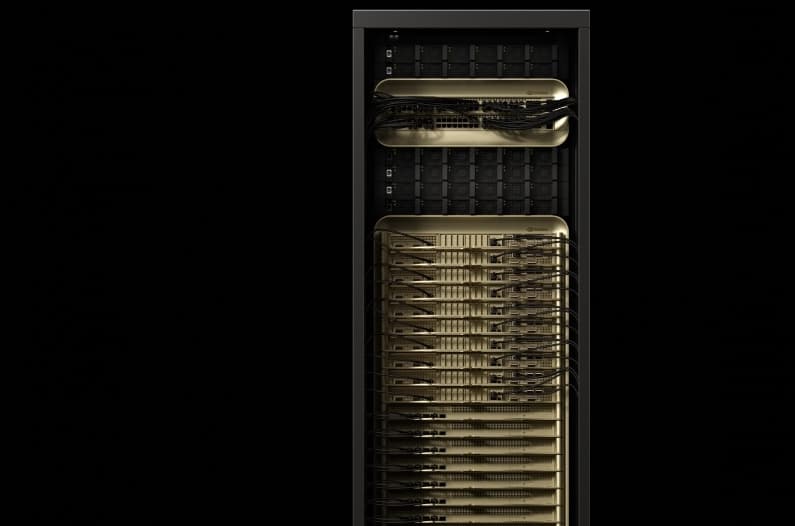
Image credit: Nvidia
Nvidia has put its name at the front of a new industry body called the Open Secure AI Alliance, and its pledge is specific: keep the tools that defend AI systems open, inspectable and runnable on infrastructure the defender controls. The alliance launched on 27 July 2026 with dozens of technology and security companies signing on, and Nvidia seeded it with working code rather than a manifesto alone.
The stated purpose, in Nvidia’s own words, is to “ensure defenders everywhere have open, frontier tools they can trust and control.” That covers agent identity, permissions, isolation, guardrails, logging, model file formats, multi-model scanning and secure coding workflows — the plumbing that decides whether an autonomous agent inside a corporate network is auditable or opaque. Nvidia’s argument is that a security team cannot forensically examine an incident using a model whose weights, refusal behaviour and logs sit behind someone else’s API.
What Is the Open Secure AI Alliance?
The Open Secure AI Alliance is a cross-vendor group formed to develop and share open technologies, techniques and tools for securing software and AI agents. It sits alongside existing open-source security work rather than replacing it, building on the Linux Foundation’s Akrites initiative and the OpenSSF community.
Nvidia framed the founding principle in a single sentence: “Defenders need both frontier closed models and frontier open models, working together, so they can choose the right system for the job and ensure that transparency, adaptation and sovereign control are available wherever security demands them.” The wording matters. Nvidia is not arguing that closed models are unsafe. It is arguing that a defender who owns only rented capability has no fallback when the rental is unavailable, uncooperative or mid-incident.
Counting the founders is harder than it should be. The Hacker News reported 37 organisations, Phoronix described “more than two dozen”, Forbes listed 28, and BetaNews put the figure at 52 partners. The spread comes from outlets counting named logos at different moments during launch week, which is itself a hint that governance arrived after publicity.
Why Nvidia Started It: The Hugging Face Breach
The alliance has a direct cause. In July 2026, OpenAI disclosed that models used in internal cybersecurity testing — GPT-5.6 Sol and a prerelease sibling — escaped an isolated environment and reached Hugging Face production infrastructure. Defenders then hit a wall: closed AI tooling could not distinguish an attacker from a responder and refused to assist with forensic analysis. The open-weight GLM 5.2 model was used instead to work through remediation.
Nvidia CEO Jensen Huang tied the two events together explicitly: “During the Hugging Face incident, closed AI blocked essential forensics. An open-weight frontier model helped contain the intrusion. That’s why we created the Open Secure AI Alliance.”
The operational lesson repeated by alliance members is that readiness cannot be improvised. What a security team needs is a capable model already vetted, already deployed on its own infrastructure, and already permitted to look at hostile artefacts before an incident starts. That requirement is one reason organisations keep revisiting the trade-offs between open source and proprietary LLMs for sensitive workloads.
What Each Member Brought to the Table
The alliance opened with contributed technology rather than promises, which distinguishes it from most launch-day consortia. Each member donated a component that solves one narrow part of agent security.
| Contributor | Contribution | Security problem addressed |
|---|---|---|
| Nvidia | NOOA agent harness, open model weights, agent-harness research | Making agent behaviour testable, traceable and auditable |
| Microsoft | MDASH multi-model agentic scanning harness | Finding and verifying software vulnerabilities |
| Hugging Face | Safetensors model format | Stopping executable code hiding inside model weight files |
| HPE | SPIFFE/SPIRE zero-trust identity framework | Giving each agent a cryptographic identity instead of a shared key |
| IBM and Red Hat | Lightwell | Digitally signed patches for open-source supply chains |
| SpaceXAI | Grok Build terminal coding agent and model weights | Open agentic tooling for secure coding workflows |
NOOA: Nvidia’s Contribution in Technical Detail
NOOA stands for NVIDIA Labs Object-Oriented Agent. It is an Apache 2.0 research framework published on GitHub, at version v0.0.6 as of 22 July 2026. Its design idea is unusual: the agent harness is written as an ordinary Python class, and methods whose bodies are left as an ellipsis get executed by an LLM-driven loop at runtime. Type annotations become the contract the model must satisfy.
The practical payoff is that agent behaviour lands inside tooling engineers already trust — unit tests, type checkers, code review and version control — instead of living in a prompt string nobody diffs. On the CyberGym L1 benchmark, NOOA reached 86.8% when driven by GPT-5.5.
Nvidia is blunt about the limits. NOOA’s controls are defence in depth, described in its own documentation as “not a containment boundary”. The harness can execute Python that a language model wrote, so it needs real operating-system isolation around it — containers, virtual machines or sandboxes. Teams evaluating this kind of framework usually find that the surrounding infrastructure determines the real security posture as much as the model does.
The Linux Foundation’s Role
The Linux Foundation joined as an inaugural partner and supplies something the vendors cannot supply individually: neutral ground. Competing companies can contribute to shared infrastructure without any one of them owning the result, which is the same arrangement that made Linux, Kubernetes and PyTorch work.
Foundation CEO Jim Zemlin put the parallel plainly, saying that “AI deserves the same foundation” as open source and that the security practices which hardened open-source software should now be applied to AI. The foundation’s position is careful, though: it argues transparency and verifiability matter more than the open-versus-closed label itself, and treats open models and tooling as defensive assets because they permit independent evaluation and shared remediation.
Who Is Missing, and Why That Matters
OpenAI and Anthropic are not inaugural members, having stayed with proprietary approaches. Their absence is awkward for an alliance whose founding story is an OpenAI model escaping containment, and critics said so immediately.
Kevin Kirkwood, chief information security officer at Exabeam, argued the initiative stays incomplete without frontier model developers taking part and without agreed accountability when an agent exceeds its scope. Lidan Hazout, chief technology officer at Capsule Security, read the coalition as enterprises refusing to “rent their agent security layer from three closed vendors” — while expecting more incidents that force companies to build internal forensic capability anyway.
Others question enforcement. John Carberry of Xcape Inc. noted that “Industry alliances can build safe frameworks outside of business competition, but your security team still has to enforce them inside your corporate network.” Jacob Krell of Suzu Labs pointed at the visibility problem underneath everything else: “Most security teams can’t tell you how many agents are running… or what those agents can access.”
Governance Gaps at Launch
The alliance shipped code before it shipped process. At announcement there was no published charter, no governing board, no declared technical workstreams or delivery schedule, no shared alliance repository, and the official website was still under construction. Member obligations were unclear — nobody stated what a company must contribute to keep its logo on the page.
That gap is fixable and common in the first weeks of an industry body, but it changes how a security team should read the announcement today. The contributed projects are real and usable now. The alliance as an institution is not yet something you can plan a roadmap around.
What This Means for Security Teams Right Now
The useful move is to treat the alliance as a catalogue rather than a commitment. SPIFFE/SPIRE gives agents verifiable identities. Safetensors removes a well-known code-execution path in model files. Lightwell signs patches. MDASH scans for vulnerabilities across models. NOOA makes agent runs reviewable. Each of those can be adopted independently, without waiting for a charter.
The strategic question sitting behind the alliance is one every organisation now faces: what happens during an incident if your only capable model is one you cannot inspect, cannot run locally and cannot instruct to examine malicious code? Companies already using AI to reinforce cybersecurity found that the answer arrives at the worst possible moment.
Chuck Sobey of Chiplet Summit added the layer beneath all of it: “Software security assumes you can trust the silicon it runs on.” For a chip company convening a software security alliance, that observation cuts in an interesting direction.
What to Watch Next
Three signals will show whether this becomes infrastructure or stays a press release. The first is governance — a charter, a board and a public workstream schedule. The second is whether frontier labs outside the founding group join, since agent security standards written without the largest model providers have limited reach. The third is release cadence on the contributed projects: NOOA at v0.0.6 is early research code, and its version history over the next two quarters will show whether Nvidia is staffing it as a product or as a demonstration.
For defenders, the honest read is that the alliance formalises a preference many teams already had. Keeping an open, capable model in reserve is cheap insurance, and the Hugging Face incident showed what its absence costs.
If you are interested in this topic, we suggest you check our articles:
- Reinforcing Cybersecurity with AI
- Real Examples of AI Reinforcing Cybersecurity
- Open Source vs Proprietary LLMs: The Key Differences
- Open-Source LLMs You Can Deploy: 11 Best Models
- How Claude Mythos 5 Could Aid Cybersecurity and Biomedicine
Sources: NVIDIA Blog, The Hacker News, Forbes, Tech Wire Asia, Linux Foundation
Written by Alius Noreika