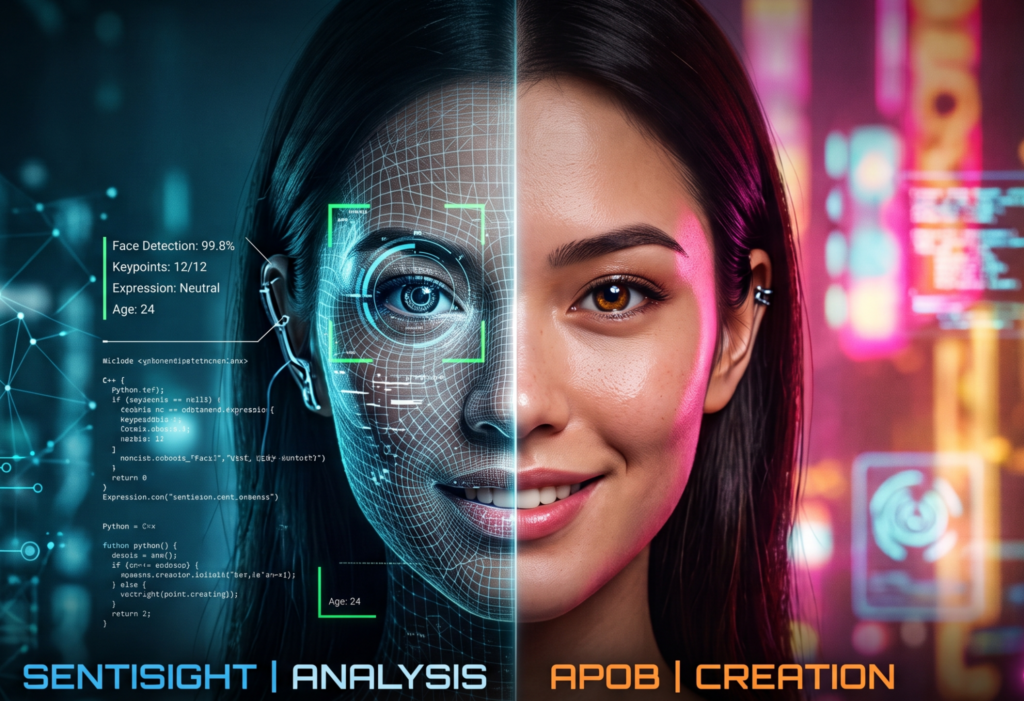
The artificial intelligence landscape has undergone a monumental transformation over the past decade. For years, the primary focus of AI in the visual domain was strictly analytical. We trained algorithms to act as digital eyes—to look at a picture, understand its contents, and categorize the data. Today, however, we are witnessing a massive paradigm shift. AI is no longer just observing the world; it is actively creating it.
This evolution has split the visual AI industry into two distinct but highly complementary branches: Computer Vision (which focuses on analyzing and understanding the world) and Generative AI (which focuses on imagining and creating the world). Platforms like SentiSight excel at the former, giving machines the cognitive ability to interpret visual data. On the other hand, platforms like APOB represent the cutting edge of the latter, providing the creative engine to generate high-quality visual content from scratch.
While they may seem like entirely different technologies, the true revolution lies in their intersection. By combining the analytical prowess of computer vision with the creative limitless potential of generative AI, businesses can unlock entirely new workflows in marketing, e-commerce, and content creation.
The Analytical Brain: Understanding the World with Computer Vision
To appreciate the synergy, we must first look at the foundation of visual AI: Computer Vision (CV). Computer vision is the science of teaching machines to see. It involves image recognition, object detection, image classification, and semantic segmentation.
Platforms like SentiSight have democratized these capabilities, allowing developers and businesses to train custom image recognition models without needing a PhD in machine learning. Whether it is a retail company using CV to detect defective products on an assembly line, a medical facility analyzing X-rays, or a digital asset management system automatically tagging thousands of photos, computer vision serves as the ultimate analytical tool.
It takes unstructured data (pixels) and turns it into structured, actionable insights (tags, coordinates, and classifications). In the context of marketing and e-commerce, CV can analyze thousands of social media posts to identify which visual elements—such as specific colors, backgrounds, or product placements—are driving the highest user engagement. It understands the “what” and the “why” of visual success. However, once you know what type of image works, you still have to go out and physically create it. This is where the creative brain takes over.
The Creative Brain: Imagining the World with Generative AI
If Computer Vision is the analytical left side of the brain, Artificial Intelligence Generated Content (AIGC) is the highly imaginative right side. Generative AI does not just categorize pixels; it conjures them into existence.
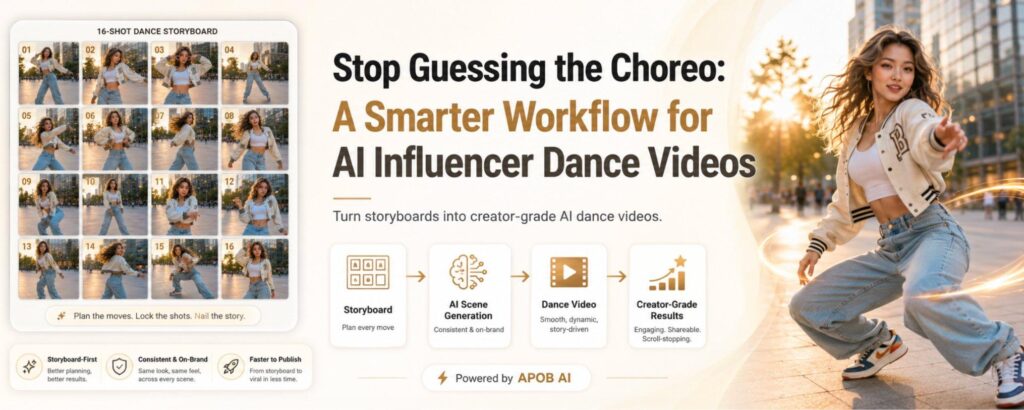
Powered by advanced diffusion models and neural networks, platforms like APOB (apob.ai) are pushing the boundaries of what is visually possible. APOB focuses on cutting-edge AIGC content generation, encompassing hyper-realistic AI images, AI-generated videos, and even fully realized AI influencers.
In the past, running a marketing campaign required scouting locations, hiring models, renting camera equipment, and spending weeks in post-production. Today, a brand can use AIGC to generate a highly realistic fashion model, place them in a sunlit Parisian café, and have them showcase a new clothing line—all within minutes, through text prompts and AI generation.
Generative AI completely removes the physical constraints of traditional content production. It allows for infinite scalability, rapid A/B testing of creative assets, and the ability to tailor visual content to incredibly specific niche audiences.
The Synergy: When Analysis Meets Generation
The magic happens when we stop viewing Computer Vision and Generative AI as separate tools and start treating them as a unified ecosystem. The synergy between SentiSight’s analytical capabilities and APOB’s generative power creates a closed-loop system for modern digital businesses.
Here are the primary ways these two technologies are colliding to reshape industries:
1. Next-Generation E-Commerce Automation
In the highly competitive world of e-commerce, visual presentation is everything.
- The CV Role: An e-commerce brand can use computer vision to analyze competitor websites and social media feeds. The CV model identifies that lifestyle images featuring products outdoors during golden hour receive 40% more engagement than flat-lay studio shots.
- The Generative Role: Armed with this data, the brand turns to an AIGC platform like APOB. Instead of reshooting their entire inventory, they use AI to instantly generate golden-hour outdoor backgrounds for their existing product catalog, and even generate AI influencers to “wear” the clothing. The analytical AI dictates what is needed, and the generative AI creates it instantly.
2. Scaling Content with an AI UGC Video Generator
User-Generated Content (UGC) is the driving force behind modern social media marketing, particularly on platforms like TikTok and Instagram Reels. However, sourcing high-quality UGC from real humans is expensive, time-consuming, and inconsistent.
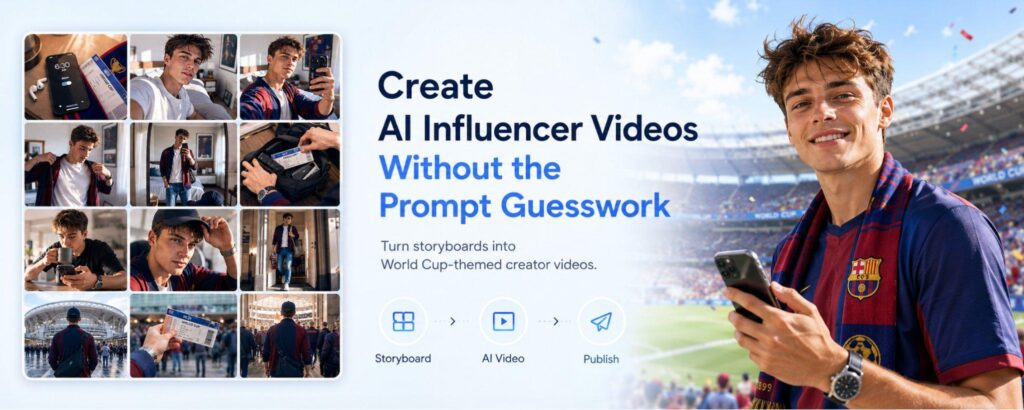
- By utilizing an AI UGC Video Generator, brands can now produce hundreds of authentic-looking, varied short-form videos featuring AI avatars that speak directly to the camera, mimicking the organic feel of human creators.
- Once these AI-generated videos are deployed, computer vision algorithms can analyze the video frames to track viewer retention against specific visual cues (e.g., facial expressions of the AI avatar, background colors, or product placement). The insights gathered by the CV analysis are then fed back into the generative model to refine and optimize the next batch of videos, creating a continuous loop of visual optimization.
3. Solving the Data Scarcity Problem (Synthetic Data)
This might be the most exciting synergy for AI developers and SentiSight users. To train a highly accurate computer vision model, you need massive amounts of annotated data. Sometimes, that data is rare, expensive, or restricted by privacy laws (such as medical images or security footage).
- Generative AI platforms can act as the ultimate data providers. If a developer is using SentiSight to train a model that detects rare manufacturing defects, they can use APOB’s generative capabilities to create thousands of photorealistic images of those specific defects.
- This “synthetic data” is then used to train the computer vision model, making it smarter and more accurate without the need to source real-world images. Generative AI essentially becomes the fuel that powers the evolution of Computer Vision.
4. Hyper-Personalized Marketing at Scale
Imagine a global advertising campaign where the visual assets adapt in real-time based on who is looking at them.
- Computer vision tools analyze the demographic data, environmental context, and preferences of a target audience segment in a specific region.
- Generative AI then instantly alters the marketing materials to reflect those preferences. If the CV algorithm detects that a specific demographic responds better to urban environments and minimalist aesthetics, the generative AI seamlessly places the product in a sleek, AI-generated modern apartment featuring an AI influencer that resonates with that exact demographic.
Embracing the Dual-Engine AI Future
The era of choosing between analytical AI and creative AI is over. The most successful tech companies, marketers, and developers of the next decade will be those who master the interplay between both.
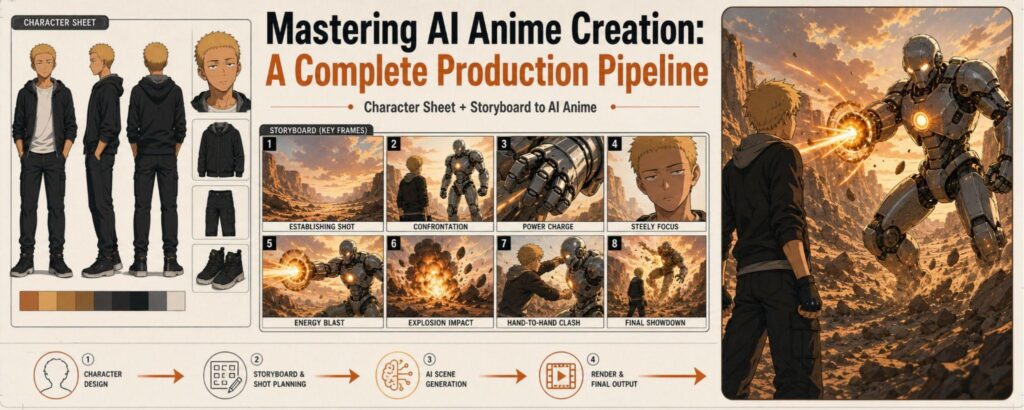
Computer vision platforms like SentiSight give us the unparalleled ability to understand the visual world, providing the data, the context, and the rules of engagement. Generative AI platforms like APOB take those rules and use them to dream up breathtaking, scalable, and highly optimized content that was previously impossible to create.
By moving seamlessly from analyzing to creating, we are no longer just reacting to the digital landscape—we are actively building it, pixel by pixel, with absolute precision and infinite imagination.