Image credit: Cindy F via Unsplash, free license
Modern Slots Use AI to Fine-Tune Design, Pacing, and Features Without Ever Influencing Spin Results
Now It’s Hard to Separate the Two
Slot machines didn’t suddenly become “smart.” The shift has been quieter than that.
What’s actually changed in slot machine game design is how decisions get made behind the scenes. Not the spin itself, that’s still random, but everything around it. The visuals, pacing, feature timing, and even how long players stay engaged.
Artificial intelligence didn’t replace slot design; it slipped into it. And now it’s hard to separate the two.
How AI Is Changing Slot Machine Game Design
Traditional slot design was mostly trial and error. Developers built a game, tested it, adjusted numbers, and then repeated the process. AI speeds that up, but more importantly, it changes how adjustments happen.
Instead of relying only on human testing, developers now use data models to track player behavior — how long someone plays, when they stop, what features they respond to.
That doesn’t change the randomness of spins. It changes everything wrapped around those spins.
When the subject of AI in gambling is raised, the focus is not on predicting outcomes or winning. The focus, rather, is on how the user experience can be improved, especially in terms of the pace and the rate of rewards.
Slot Reel Mechanics Still Follow Fixed Rules
This part doesn’t change, no matter how advanced things get. Slot reel mechanics are still built on RNG systems. Every outcome is independent. No memory, no learning, no adjustment mid-spin.
AI does not control results. It cannot “decide” that a player should win or lose. What it can do is help designers test different reel configurations faster.
For example:
- Adjusting how often symbols appear
- Testing new payline structures
- Balancing how frequently bonus features trigger
Before AI, that kind of testing took longer and relied more on manual simulation. Now it happens at scale.
The rules stay fixed; the design process around those rules gets more efficient.
Designing Slot Machine Visuals With AI
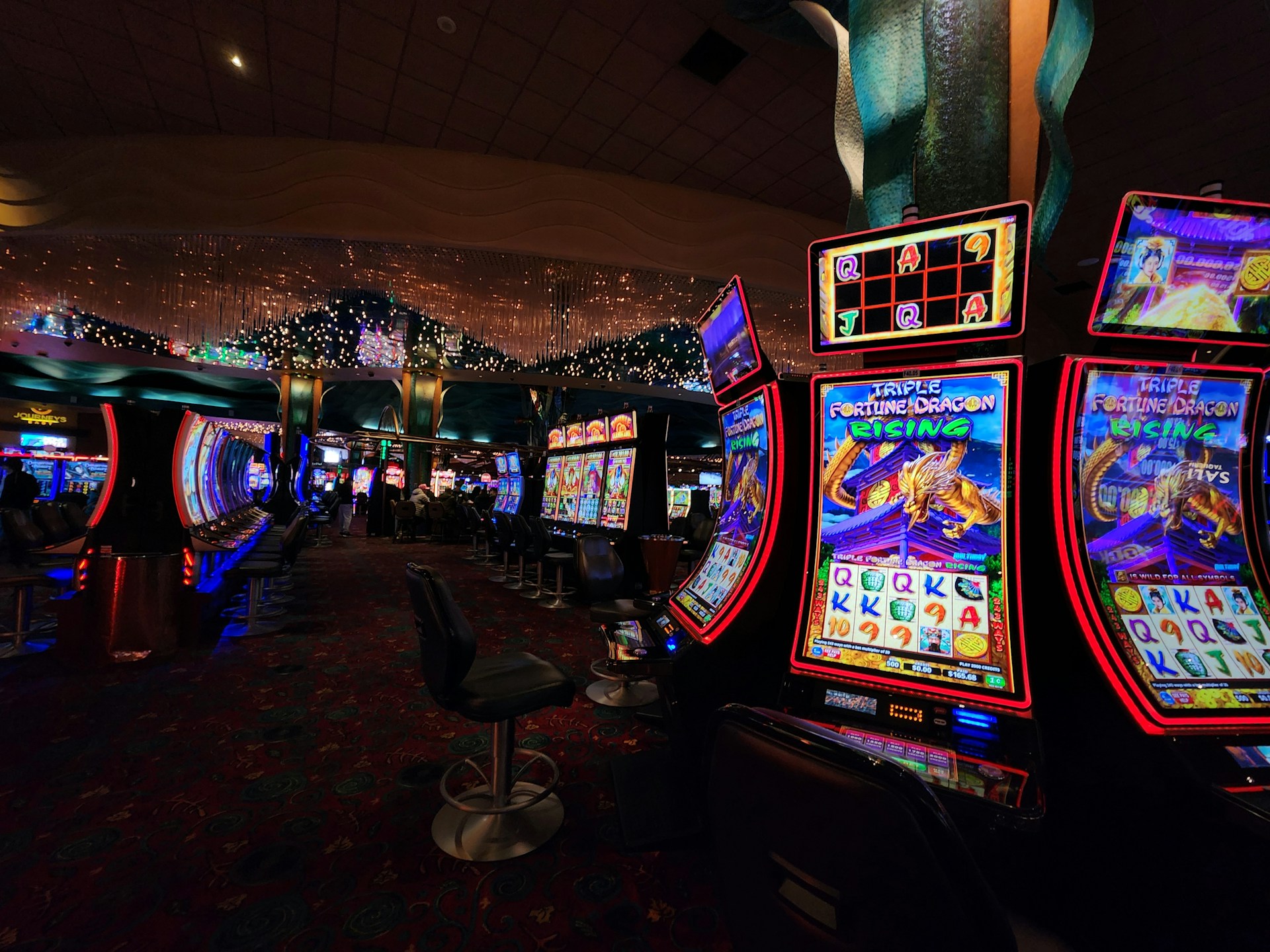
Design is where AI is most visible. Designing slot machine visuals used to mean creating everything by hand — symbols, backgrounds, animations, transitions. That still happens, but AI tools now assist with early concepts and variations.
Developers can:
- Generate multiple visual styles quickly
- Test different themes before committing
- Adjust animations based on player engagement data
That last part matters. If players tend to respond more to certain visual cues — brighter effects, faster animations, specific themes — designers can refine those elements.
Still, AI doesn’t replace artists. It just speeds up the process and gives them more starting points.
Using AI for Gambling: Where the Line Is
There’s a misunderstanding here that comes up a lot. Using AI for gambling does not mean games are manipulating outcomes. That would break regulatory rules in most markets.
Instead, AI operates in areas like:
- Player behavior analysis
- Game balancing
- Feature optimization
Think of it as tuning the machine, not controlling it.
Designers still have to follow strict rules around fairness. The randomness of results is locked in. AI doesn’t override that.
How Do Designers Test AI-Driven Slot Designs for Player Experience?
Testing used to rely heavily on human play sessions. That still happens, but AI adds another layer.
Developers now simulate thousands of spins to see how a game behaves over time.
They look for things like:
- How often do bonus features trigger
- How long players typically stay engaged
- Whether payouts feel too frequent or too rare
Then they adjust. It’s not about making the game easier. It’s about making it feel consistent.
And yes, there’s overlap here with broader game design ideas like min maxing in games, where systems are adjusted to balance risk and reward without breaking the core mechanics.
Can AI Assist In Designing New Reel Layouts and Symbol Combinations?
It can help, but it doesn’t “invent” in the way people think.
AI can generate variations:
- Different reel sizes
- Alternative symbol distributions
- New payline patterns
But a designer still decides what actually makes it into a game.
Some ideas look good in theory but don’t feel right in practice. That part still requires human judgment.
What Role Does AI Play In Balancing Game Difficulty and Player Engagement?
This is probably where AI has the most influence. It helps answer questions like:
- When do players stop playing?
- Which features keep them engaged longer?
- How often should bonuses appear to maintain interest?
The goal isn’t to guarantee wins. It’s to avoid long stretches where nothing happens.
In What Ways Does AI Influence Slot Visuals and Animations?
AI creates the visual through iterative techniques. This means that instead of settling on one version of the look, the AI tests out several versions to determine which features hold the player’s attention the best.
Small changes, such as the speed of animations, the level of color, and the timing of sounds, may be informed through empirical evidence. However, the player is not likely to be aware of the individual changes; they are simply aware of the results.
Reshaped by AI
Slot machine game design hasn’t been replaced by AI. It’s been reshaped by it. The reels still spin the same way. The outcomes are still random. That part hasn’t moved.
What has changed is everything around the spin — how the game looks, how it feels, how it holds attention over time.