Artificial intelligence (AI) models are constantly evolving by increasing the number of parameters, improving speed, and focusing more on the ability to reason, work, and complete increasingly complex tasks. One of the companies following this direction is Anthropic, and today we will compare its AI models – Claude Opus 4.6 vs 4.5.

Claude Opus 4.5 launch illustration. Image source: Anthropic
Claude Opus 4.6 vs 4.5 – How Are They Similar And How Do They Differ?
Although Claude Opus 4.5 was already considered one of the strongest models in programming and professional work tasks, Opus 4.6 aims to push these boundaries further – especially in areas that require deep problem analysis, working with massive document collections, or autonomous operation within a software environment. Now let’s briefly review each model separately.
Claude Opus 4.5 Specifics
This Anthropic model was introduced in November last year and was already described as a strong solution for programming, AI agent tasks, and computer-based work. According to Anthropic1, in an internal programming test typically taken by job candidates, Opus 4.5 scored more points in two hours than any human candidate. At the time, it also led to many programming benchmarks and showed better results than previous Claude versions.
It was capable of solving long-horizon autonomous tasks, and improvements were made in vision, reasoning, mathematics, and handling multi-step problems.
Security was also significantly improved, and several technical upgrades were introduced, including the Effort parameter in the API, which allows developers to choose between faster responses or higher accuracy, as well as improved agent coordination.
How Claude Opus 4.6 Compares To 4.5
Speaking about the differences between Claude Opus 4.6 vs 4.5, it is worth noting that the Anthropic model introduced2 on February 5 is the most advanced AI model so far, designed for the most complex tasks that require a high level of reasoning, programming, and analytical thinking.
Key features:
- Top-level intelligence and reasoning
- Very strong programming capabilities
- Support for agents and complex workflows
- High accuracy and reliability
This means that Claude Opus 4.6 can be used for advanced programming and code analysis, scientific and financial analysis, multi-step problem solving, AI agents, and workflow automation.
Claude Opus 4.6 vs 4.5: Key Differences
When directly comparing Claude Opus 4.6 vs 4.5, experts note that Opus 4.5 remains a strong general-purpose model – similar to a junior system that works quickly but does not always evaluate the broader consequences. Meanwhile, the newer version is more focused on specialized agent-based and system-level reasoning tasks, where planning, analysis, and corrections are required.
In some tests there is little difference. For example, in SWE-bench (real programming bug fixing), Opus 4.6 did not show a major improvement because Opus 4.5 was already close to the limits of this benchmark.
However, improvements can be seen in other tests:
Terminal-Bench 2.0 (agent work in the terminal):
- Opus 4.6 – 65.4%
- Opus 4.5 – 59.8%
OpenRCA (software system root cause analysis):
- Opus 4.6 – 34.9%
- Opus 4.5 – 26.9%
Cosmic also conducted a practical experiment comparing Claude Opus 4.6 vs 4.5, where both models were given the same one-sentence prompt – “Create a blog with posts, authors, and categories.” The models then had to automatically generate a fully functional blog application.
The main observation was that Opus 4.5 created a clean and well-structured blog with clear navigation, category and author pages, and a simple design structure. Meanwhile, Opus 4.6 produced a more polished product with stronger visual design, a clearer brand style, a featured article section, and content presentation similar to a professional editorial website.
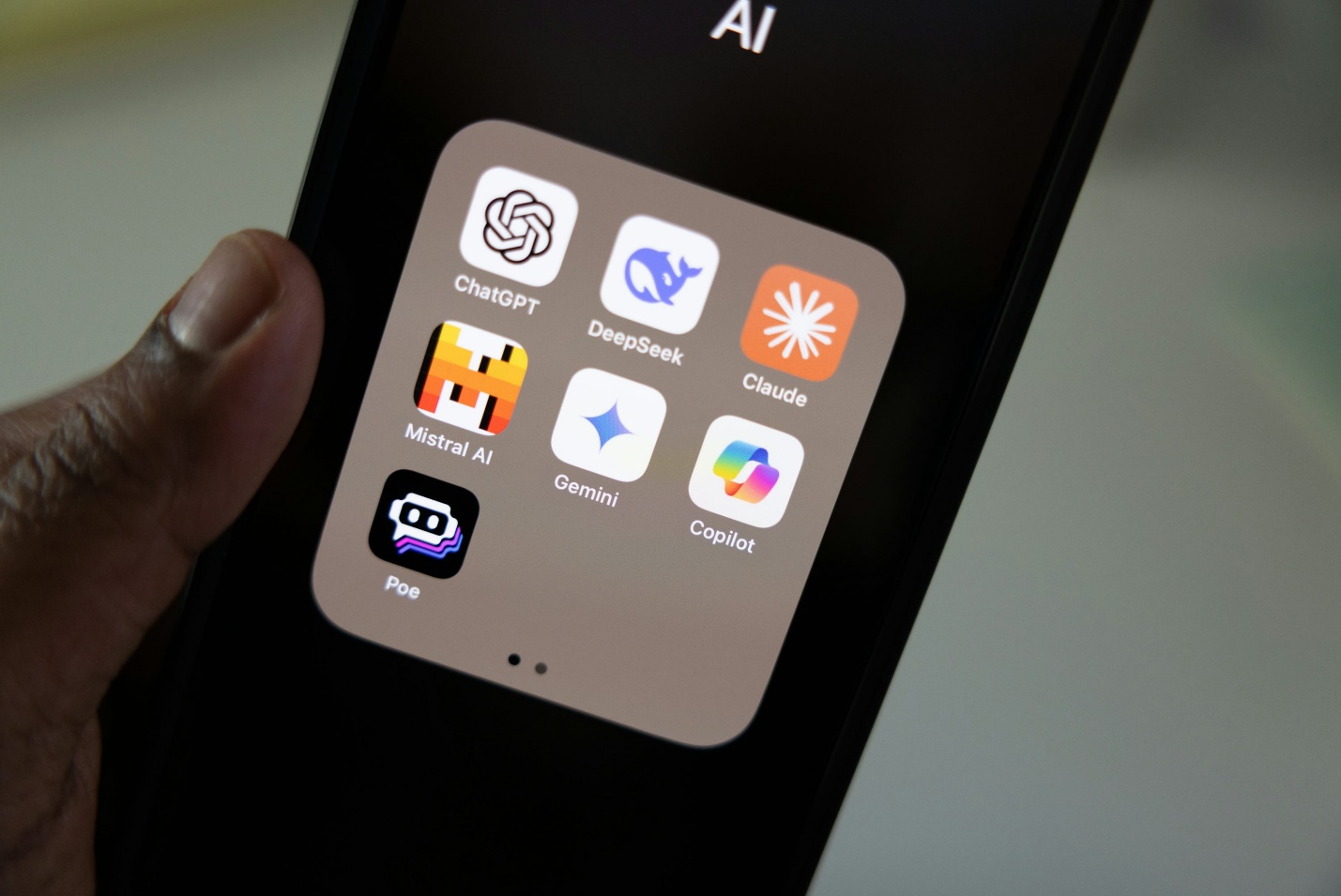
A smartphone screen displaying a folder labeled “AI” with several artificial intelligence apps, including ChatGPT, DeepSeek, Claude, Mistral AI, Gemini, Copilot, and Poe. Image source: Unsplash
Availability and Pricing
Claude Opus 4.6 pricing is based on a pay-as-you-go model, meaning users pay for the number of tokens used. The standard price is around $5 per million input tokens and $25 per million output tokens, so you pay separately for what you send to the model and what it generates. The model is available on the Claude platform for users with Pro, Max, Team, and Enterprise plans.
In short, Opus 4.6 pricing is the same as Opus 4.5 and is considered premium, but flexible because users only pay for actual model usage.
Final Word – When Should You Choose Which One?
After comparing Claude Opus 4.6 vs 4.5, we can see that Claude Opus 4.6 is best suited for complex tasks such as software system architecture, agent-based workflows, or problem diagnostics, as it is better at planning and analyzing complex systems.
Meanwhile, Claude Opus 4.5 remains a strong general-purpose model for everyday tasks – including simpler programming, content creation, or quick problem solving.
If you are interested in this topic, we suggest you check our articles:
- Claude Code: The Agentic Tool for Coding by Anthropic
- 7 Sacred Tips to Best Use Claude Code
- What Tasks Are Best for Claude Code or OpenAI Codex?
Sources: Anthropic1, Anthropic2, Cosmic, Medium