The market offers us hundreds of AI tools to choose from, covering a wide range of industries. Everyday AI applications are reaching new heights across various sectors. But do we really navigate the diversity of AI tools effectively and know all the ways AI enhances our daily lives? In this article, we will explore 20 ways AI can improve, optimize, or make everyday life safer.
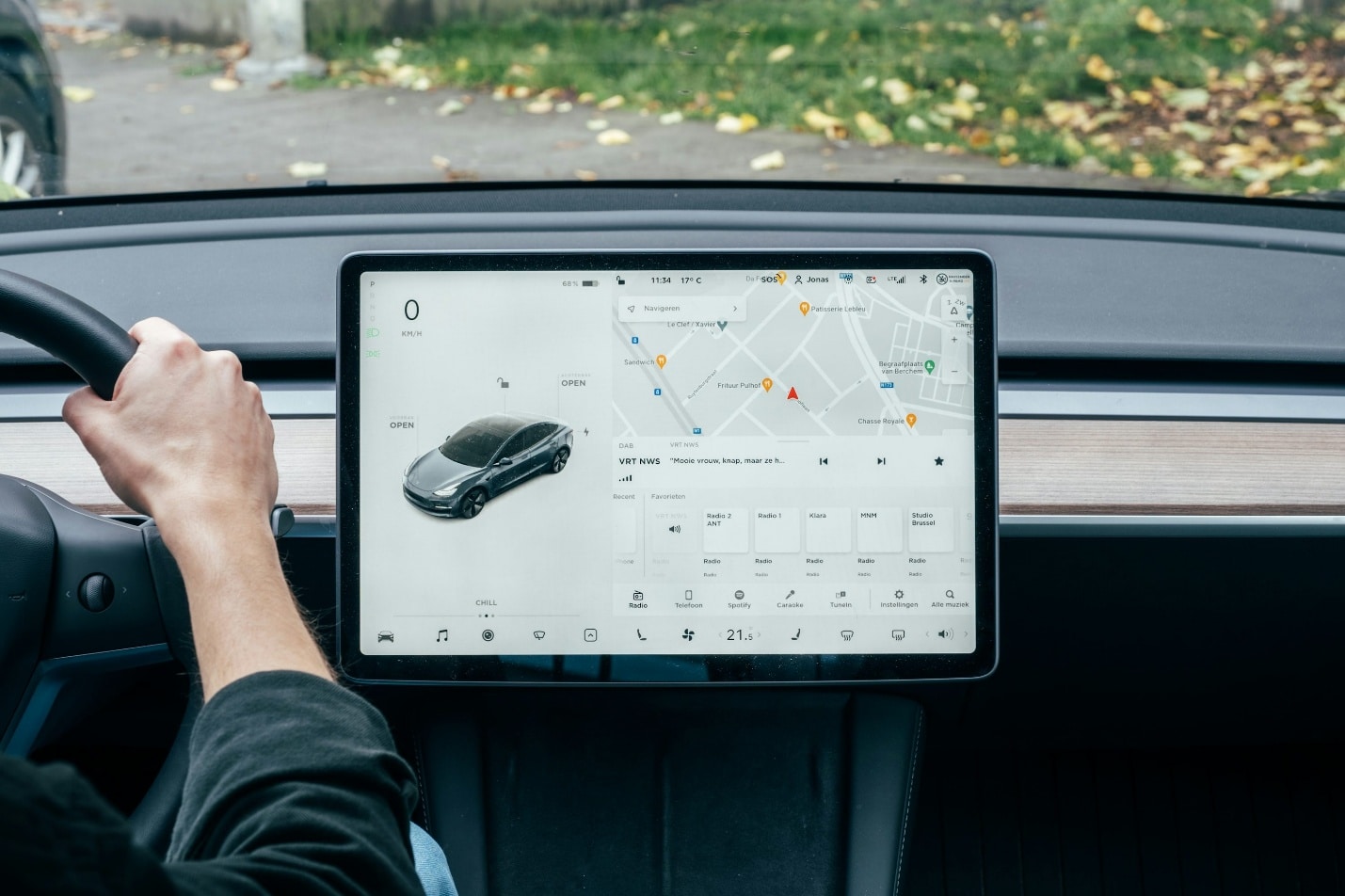
Navigation in a Tesla car – one of the everyday AI applications. Image credit: Unsplash
Could We Live Without Everyday AI Applications?
This innovative technology, powered by machine learning, neural networks, natural language processing, and more, offers users incredible possibilities. In recent years, as AI has advanced, more and more people are adopting it. For example, as of August 2024, nearly 40% of U.S. residents use generative AI, and according to Statista, AI usage in Europe is expected to increase from 97.64 million users in 2024 to approximately 228.99 million users by 2030.
While we might think that everyday AI applications play a small role in our lives, we may already be using it without realizing it — whether through chatbots, making reservations over the phone, or accessing workplaces with biometric authentication.
How Can AI Be Useful in Everyday Life?
Virtual Assistants
Today, most of us have virtual assistants on our smartphones that help us find answers and complete various tasks. Similarly, in smart homes, we can interact with AI assistants to perform everyday tasks.
Some of the most well-known AI assistants include Apple Siri, Amazon Alexa, Microsoft Cortana, and Google Assistant. These tools save time by quickly providing information and performing actions like setting alarms, reminders, or turning off lights at home.
Customer Service
Many of us may not even realize that we are already using everyday AI applications in customer service. When seeking information on different platforms, we interact with chatbots that are AI-driven. Additionally, AI algorithms analyse our behaviour and shopping habits to provide recommendations and offers.
Navigation
When traveling in large, unfamiliar cities or visiting new places, we rely on navigation tools. Many of their features use AI, such as real-time traffic updates — detecting congestion, accidents, and road closures. AI can also help plan routes and suggest the best places to stop along the way.
Content Creation
Today, we have numerous tools for creating and editing content, enabling us to bring our ideas to life. AI can assist in text generation, image creation, and even automatic spell-checking on mobile devices.
Video Games
The gaming industry is vast, and everyday AI applications play a significant role in it. AI-driven games provide a dynamic, real-time decision-making experience for users, making gameplay more engaging.
Advertising
What we see online is shaped by our personal digital ecosystem. AI algorithms analyse user behaviour and tailor ads based on browsing habits, showing personalized and relevant content.
Facial Recognition
One of the ways we unlock our smartphones is through facial recognition — an AI-powered feature. This technology is also used for security access in institutions, data protection, and identity verification.
Personalized Recommendations
AI-powered recommendation systems make searching for content easier. Whether selecting a movie or finding a dinner recipe based on available ingredients, AI assists users by suggesting relevant choices.
Banking Services
Many banking operations can now be handled remotely, thanks in part to AI advancements. AI enhances customer service, fraud detection, and automated transactions.
Weather Forecasting
Everyday AI applications are gradually transforming meteorology, offering more accurate weather forecasts. As a result, users receive more precise predictions when checking the weekend weather.
Music Industry
Platforms like Spotify use AI to curate personalized playlists based on user preferences. AI tools also enable users to experiment with music composition and sound generation.
Social Media
Social media platforms use AI algorithms to filter and prioritize content based on user interests, shaping the content we see daily.
Summarization Tools
With the overwhelming amount of news and information available, AI-powered summarization tools help users stay informed by providing concise news summaries.
Smart Home Devices
From robot vacuum cleaners to smart refrigerators that notify users about expiring food, AI-powered household devices streamline daily routines and save time.
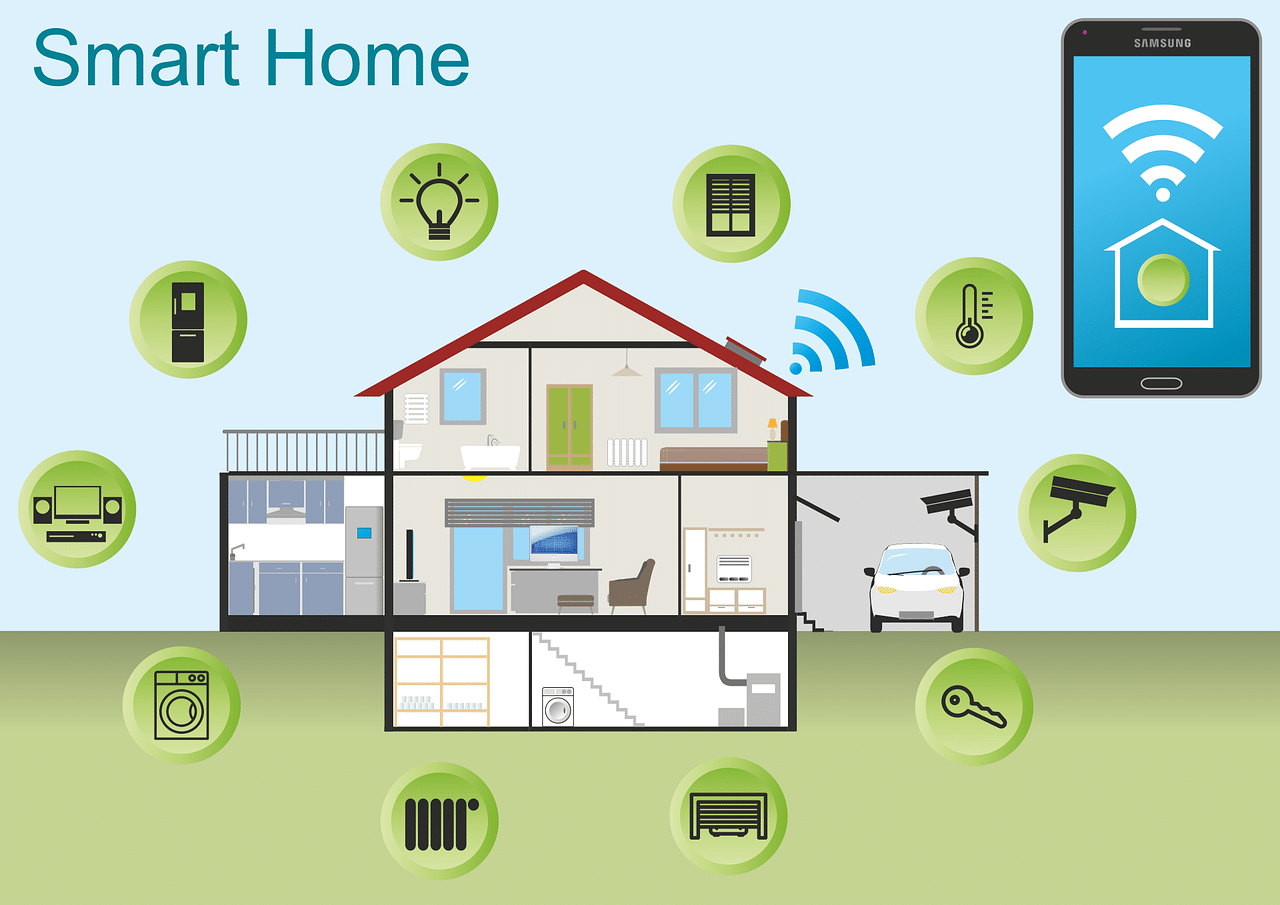
Illustrative photo of smart home. Image source: Pixabay
Language Barriers
AI-powered translation tools facilitate communication between different languages. Some everyday AI applications can now provide real-time speech translation, enabling seamless conversations with speakers of other languages.
Healthcare
AI is becoming increasingly common in medical diagnostics and patient care. Doctors use AI tools to assist in diagnosing diseases.
Personalized Planning
AI apps can be used to create customized plans for various purposes, from fitness and nutrition programs to individualized education plans in schools.
Virtual Stylists
Online shopping is becoming more interactive with AI. Virtual fitting rooms and AI assistants help users choose outfits and even try them on virtually before making a purchase.
Task Automation
One major benefit of AI is the ability to automate repetitive tasks, such as setting reminders, sending emails, scheduling online meetings, and managing daily routines.
Autonomous Vehicles
Although self-driving cars are not yet widespread, they are already being tested in major cities. In places like the U.S., AI-driven taxis offer autonomous transportation services.
If you are interested in our articles, we suggest you check our articles:
- New Obstructions in AI for Mental Health
- How AI Tools Like Whisk AI Transform Everyday life?
- Live Translation for Everyday Life with AI
- The Rise of AI-Powered Cuisine: Inside the World’s First Autonomous Burger Restaurant
Sources: Federal Reserve Bank of St. Louis, Forbes, IoT For All, Statista, Tableau, Vision Factory