Key Takeaways
- Hyper-realistic humanoid factories in China produce lifelike robots with silicone skin, facial expressions, and movements that mimic humans for museums, hotels, and customer service roles.
- AI-powered robot restaurants serve meals cooked entirely by machines, with over 40 cooking robots preparing 200+ dishes, while delivery rails bring food directly to tables.
- Autonomous delivery robots from Meituan, JD.com, and Alibaba have delivered over 40 million packages across 30+ Chinese cities, far exceeding limited US pilot programs.
- Smart AI vending cabinets using facial recognition and behavior prediction have replaced traditional machines across Chinese office buildings and subway stations.
- AI toys with conversational abilities dominate the Chinese market, with over 1,500 AI toy companies and projected sector growth to $14 billion by 2030.
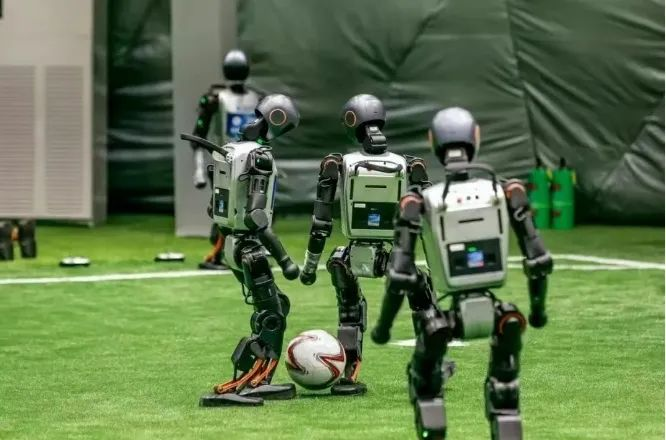
World Humanoid Robot Games. Image credit: CCTV News
China has quietly become the world’s testing ground for AI machines that remain experimental curiosities—or entirely absent—in the United States. From factories pumping out eerily lifelike humanoid robots to restaurants where machines cook, serve, and clean, China deploys these technologies at scale while American consumers mostly watch from the sidelines. The gap exists not because the technology is unavailable globally, but because China’s combination of manufacturing infrastructure, supportive local policies, and consumer willingness to embrace automation has created a unique environment for rapid deployment.
The country now hosts over 150 humanoid robot companies, expects to manufacture 10,000 humanoids by the end of 2025, and leads the world in humanoid robotics patents with 5,688 filings over the past five years. The following five AI machines showcase the most striking examples of this technology divide between China and the USA.
1. Hyper-Realistic Humanoid Robot Factories
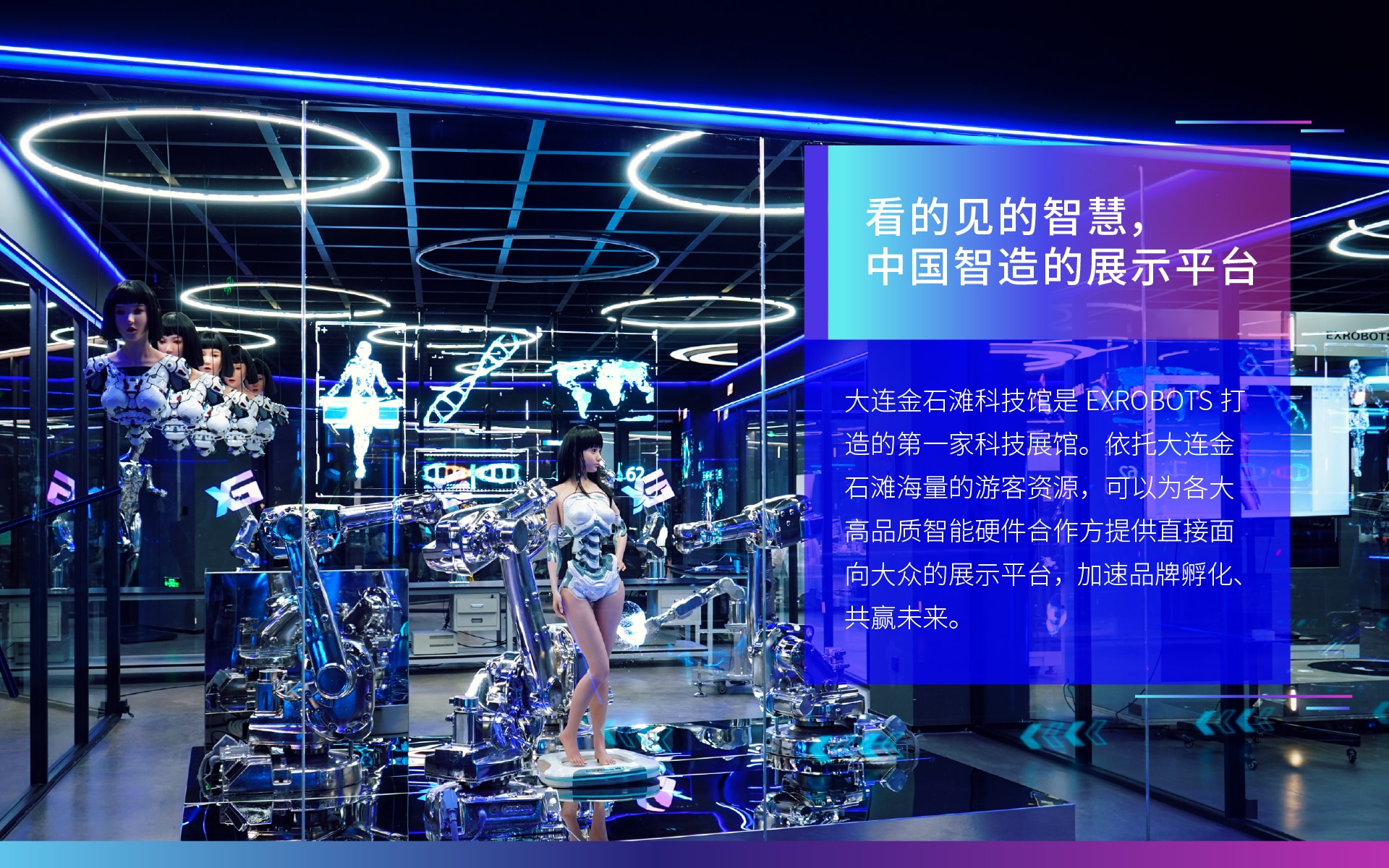
Hyper realistic robots in a factory. Image credit: EX Robots
Walk into the EX Robots facility in Dalian, and you encounter something straight out of science fiction. Rows of humanoid robots stand in various stages of assembly—silicone faces with human-like pores and goosebumps, disembodied heads on stands, and complete androids wearing actual clothing. These machines do not look like the metallic robots familiar from American factories. They are designed to be mistaken for real people.
EX Robots, established in 2009 and developing humanoids since 2016, has achieved what the company claims is a breakthrough in creating the world’s lightest humanoid robot while advancing silicone skin simulation technology. The process combines 3D scanning, digital design, and 3D printing to create synthetic skin that stretches and wrinkles like the real thing. At the 2023 World Robot Conference, their products startled attendees by accurately mimicking facial expressions and movements of people around them.
The company operates the EX Future Science and Technology Museum in Liaoning Province, China’s first robot museum, where visitors can interact with hyper-realistic replicas of figures like Albert Einstein and Stephen Hawking. These robots feature dozens of flexible actuators enabling human-like hand movements and facial expressions. Each robot costs approximately £160,000 and takes up to a month to produce.
| Company | Location | Key Technology | Primary Use Cases |
|---|---|---|---|
| EX Robots | Dalian | Silicone skin, lightweight structure | Museums, hotels, customer service |
| DroidUp | Shanghai | 30 artificial facial muscles | Education, entertainment |
| Yunmu | Beijing | 26 degrees of freedom | Cultural exhibitions |
| AheadForm | Shanghai | 30 micro-motors for expressions | Companion robots |
Similar companies have emerged rapidly. DroidUp’s android, named Xueba-01, enrolled in a doctorate program at the Shanghai Theater Academy in 2025, studying traditional Chinese opera. Yunmu’s museum-grade humanoids, featuring hyper-realistic replicas of cultural figures, now sell on JD.com for $28,000 to $42,000. In the United States, comparable consumer-grade hyper-realistic humanoids remain essentially nonexistent.
2. Fully Automated Robot Restaurants
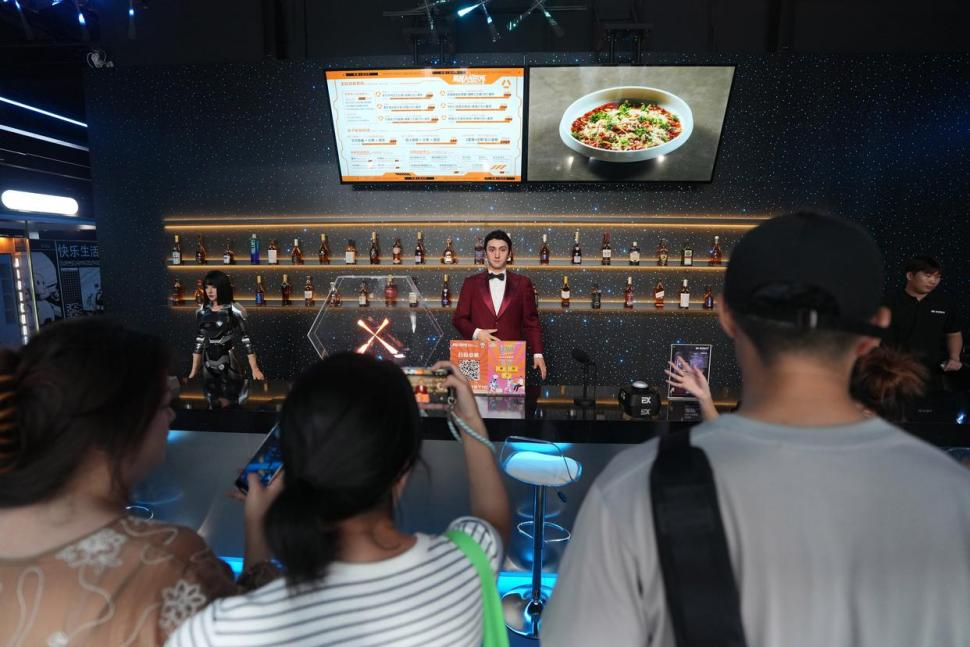
Located next to the “Robot World” in the Beijing Economic-Technological Development Zone, the Robot Restaurant (机器人焰究所) currently has over 20 advanced-level models of robotics products. Image credit: The People’s Government of Beijing Municipality
In Foshan’s Shunde District—known as the “cradle of Cantonese cuisine”—FOODOM Tianjiang Food Kingdom operates what it calls the world’s first “robot restaurant complex.” The facility seats nearly 600 diners and deploys over 40 robots capable of cooking approximately 200 dishes spanning Chinese cuisine, hot pot, and fast food. Machines handle everything from preparing ingredients to plating meals, while automated rails and robot waiters deliver food directly to tables.
The noodle-making robot occupies just 4 square meters of floor space yet churns out 120 dishes per hour. A burger machine operates 24 hours daily. Wide-eyed robot waiters take orders while food-delivery robots and waste-collecting robots navigate the dining area throughout service.
Shanghai has since announced a formal plan to become a “nationally leading, world-class” hub for smart restaurants by 2028. The action plan, released in November 2025 by Shanghai’s commerce commission, targets over 70 percent of group dining, fast-food, and drink chain operations to incorporate smart technologies throughout their value chains.
The economics driving adoption are straightforward. In Chengdu, an AI-powered robot chef can stir-fry a dish in 63 seconds. One customer noted that without being told, they could not distinguish robot-cooked food from chef-prepared dishes. Beijing recently issued China’s first food operation license to an AI cooking robot company, EncoSmart, signaling regulatory acceptance of the technology.
| Restaurant | Location | Robot Count | Dishes Served |
|---|---|---|---|
| FOODOM | Foshan | 40+ | 200+ |
| Robot Restaurant | Beijing | 20+ | Multiple cuisines |
| T-chef deployments | Multiple cities | Varies | Custom menus |
In the United States, robot restaurants remain rare novelties. Spyce Kitchen in Boston, launched by MIT graduates, used robots for cooking but closed in 2021. A few restaurants employ delivery robots to bring food to tables, but comprehensive automation from cooking to serving remains extremely limited.
3. Citywide Autonomous Delivery Robot Networks
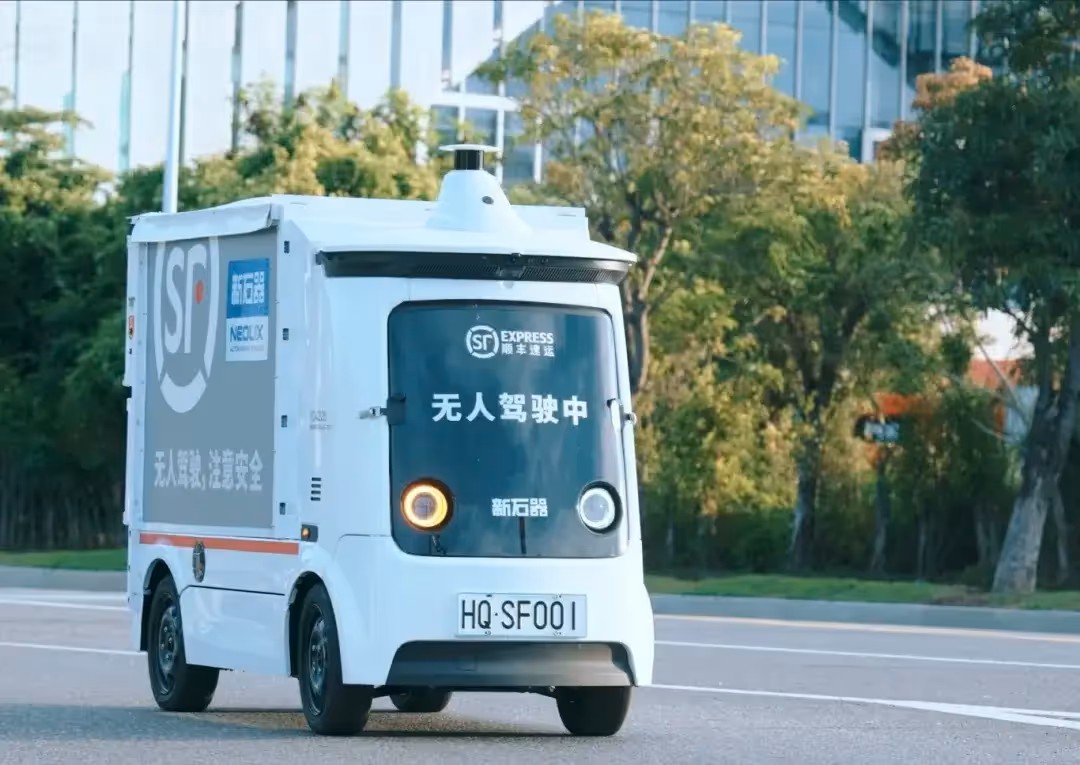
A delivery robot in China.
When Chinese consumers order food or packages, they increasingly receive deliveries from robots rather than human couriers. Meituan, China’s largest food delivery platform, operates thousands of autonomous delivery robots across Beijing, Shenzhen, and other cities. These machines navigate sidewalks, avoid obstacles, and drop off orders without human intervention.
The scale dwarfs anything operating in the United States. Alibaba’s autonomous delivery robots, nicknamed “Xiaomanlv” (little donkeys), had delivered over 10 million parcels by March 2022. JD.com deployed 700 autonomous delivery robots during Singles’ Day 2022 alone—600 outdoor and 100 indoor units—resulting in a 300 percent surge in robot-fulfilled orders. Cainiao, Alibaba’s logistics arm, has accumulated more than 5 million kilometers of autonomous driving experience, delivering over 40 million parcels with Level 4 driverless delivery vehicles deployed across more than 30 counties.
In 2025, Shenzhen introduced a world-first subway delivery pilot where 41 robots boarded trains to restock convenience stores inside metro stations. The robots navigated stations autonomously, delivering snacks and drinks from depots to shops scattered across the subway network.
The Chinese autonomous last-mile delivery market reached $4.37 billion in 2024 and is projected to hit $15.98 billion by 2032. In some pilot cities, 20-30 percent of local deliveries are now managed by autonomous vehicles, with single vehicles delivering 1,500+ packages daily depending on route density.
American companies like Starship Technologies and Serve Robotics operate delivery robots, but deployments remain limited primarily to university campuses and select urban neighborhoods. Nuro, backed by significant funding, tests its R2 delivery pods in partnership with retailers like Kroger and Walmart, but widespread citywide deployment comparable to Chinese operations has not materialized.
4. AI-Powered Smart Vending Cabinets
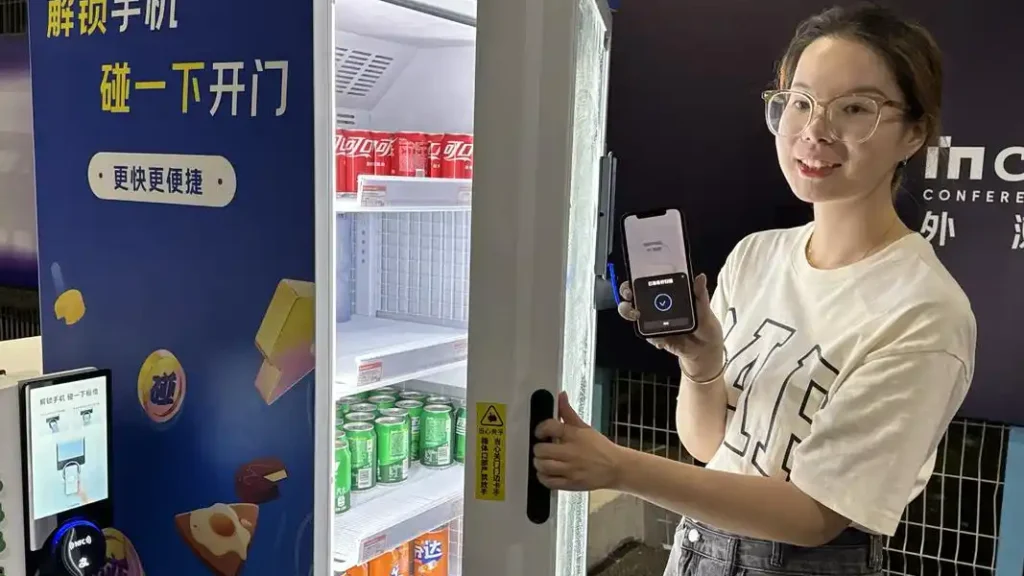
A smart vending machine. Image credit: WeHoo Vending
Traditional vending machines—with their screens to tap, codes to scan, and items that occasionally fail to drop—are being replaced across Chinese cities by intelligent cabinets that feel more like miniature convenience stores. Users scan their face or a QR code, open the cabinet door, select items, and close it. The transaction completes automatically using cameras and AI to track what was removed.
These smart vending cabinets, produced by companies like Feng’E Zushi and Zhilai, integrate IoT sensing, AI visual recognition, and blockchain tracking technology. They analyze consumer preferences, predict future sales, and determine when to introduce new products. Unlike traditional vending machines costing over RMB 20,000 ($2,800), these smart cabinets have dropped to just a few thousand RMB, making deployment economically viable at massive scale.
The cabinets have appeared in office parks, commercial buildings, and central business districts across first- and second-tier Chinese cities. Beyond simple transactions, the systems suggest coupons based on consumption preferences and adjust inventory automatically based on location-specific demand patterns.
Alibaba pushed the concept further with smart vending machines that sell electric vehicles. Customers use the Taobao app to choose a car, complete facial recognition for identity verification, and can test drive the vehicle for up to three days—all through an automated machine.
The Chinese unmanned retail market reached approximately RMB 28.27 billion ($4 billion) in 2021, with year-on-year growth of 24.6 percent. The global smart vending machine market was valued at $4.85 billion in 2024 and is expected to reach $10.80 billion by 2034, but China remains the clear leader in deployment density and technological sophistication.
5. Conversational AI Toys for Children
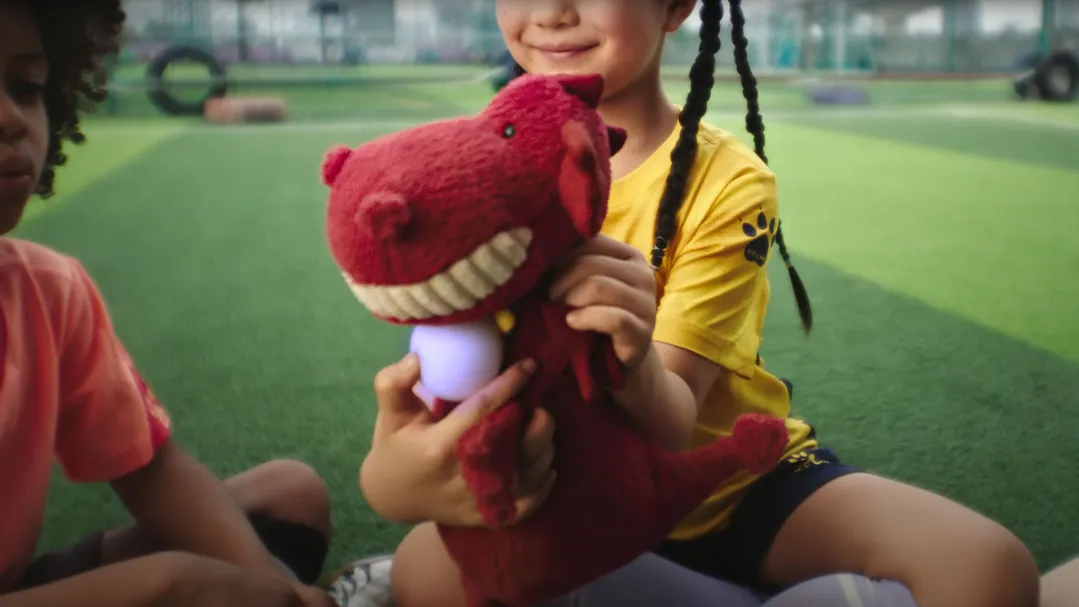
Smart AI toy for children. Image credit: Haivivi
While American children talk to stuffed animals that cannot respond, Chinese children increasingly play with toys that talk back. The AI toy market in China is projected to surpass ¥100 billion ($14 billion) by 2030, growing faster than almost any other branch of consumer AI. Over 1,500 AI toy companies operate in China as of late 2025.
BubblePal, a device the size of a ping-pong ball, clips onto a child’s existing stuffed animal and makes it “talk.” The gadget connects to a smartphone app offering 39 characters, from Disney’s Elsa to traditional Chinese figures like Nezha. Priced at $149, the product sold 200,000 units since launching in summer 2024. The device runs on DeepSeek’s large language models, enabling actual conversational interaction rather than pre-recorded responses.
FoloToy takes a different approach, allowing parents to customize plush toys by training them to speak with their own voice and speech patterns. The company reported selling more than 20,000 AI-equipped plush toys in the first quarter of 2025, nearly equaling total 2024 sales, with projections of 300,000 units for the year.
The trend builds on decades of Chinese consumer electronics designed specifically for children. Since the 1990s, companies like BBK popularized electronic dictionaries and “study machines” marketed as educational aids. AI toys represent the natural evolution—interactive devices that read aloud, tell stories, and simulate playmates.
Chinese AI toy companies have begun expanding internationally. BubblePal launched in the US in December 2024 and is now available in Canada and the UK. FoloToy sells in more than 10 countries. However, American competitors remain behind. Mattel is working with OpenAI to bring conversational AI to Barbie and Hot Wheels, with products expected to launch later in 2025—well after Chinese competitors established market presence.
Parent reviews in China remain mixed. Some appreciate the screen-free, controlled experience. Others report glitchy AI responses, voice recognition that struggles with children’s fragmented speech, and novelty that wears off quickly. One Beijing parent listed her BubblePal for resale after her daughter lost interest within days, noting the child “wants to play with my phone more than anything else.”
Why the Gap Exists
The disparity between Chinese and American deployment of these AI machines stems from several factors beyond pure technological capability.
China’s manufacturing depth enables companies to develop and produce robots at significant cost advantages. UBTech expects production costs to drop 20-30 percent annually. Various local governments offer subsidy programs specifically targeting robotics companies.
Regulatory environments differ substantially. Beijing’s Ministry of Industry and Information Technology published guidelines making humanoid robot development a national priority, with goals to mass-produce robots at a rate of 500 per 10,000 workers by 2025. Chinese cities have granted broader road access for autonomous delivery vehicles under “vehicle-road-cloud” pilot programs, while American regulatory approval moves more slowly.
Consumer willingness varies as well. Chinese shoppers and diners appear more accepting of robot-delivered services, partly due to familiarity with digital-first experiences like mobile payments and app-based ordering.
The gap is not necessarily permanent. American companies are developing similar technologies, and some Chinese products are entering Western markets. But for now, these five AI machines represent a preview of automation that Chinese citizens encounter daily, while Americans mostly experience it through viral videos and trade show demonstrations.
If you are interested in this topic, we suggest you check our articles:
- How Many Sports are at the World Humanoid Robot Games in China?
- DeepSeek: The Chinese AI Firm Disrupting Global Industry
- Where could the next World Humanoid Robot Games be held?
Sources: MIT Technology Review, LiveScience, Interesting Engineering, France24
Written by Alius Noreika