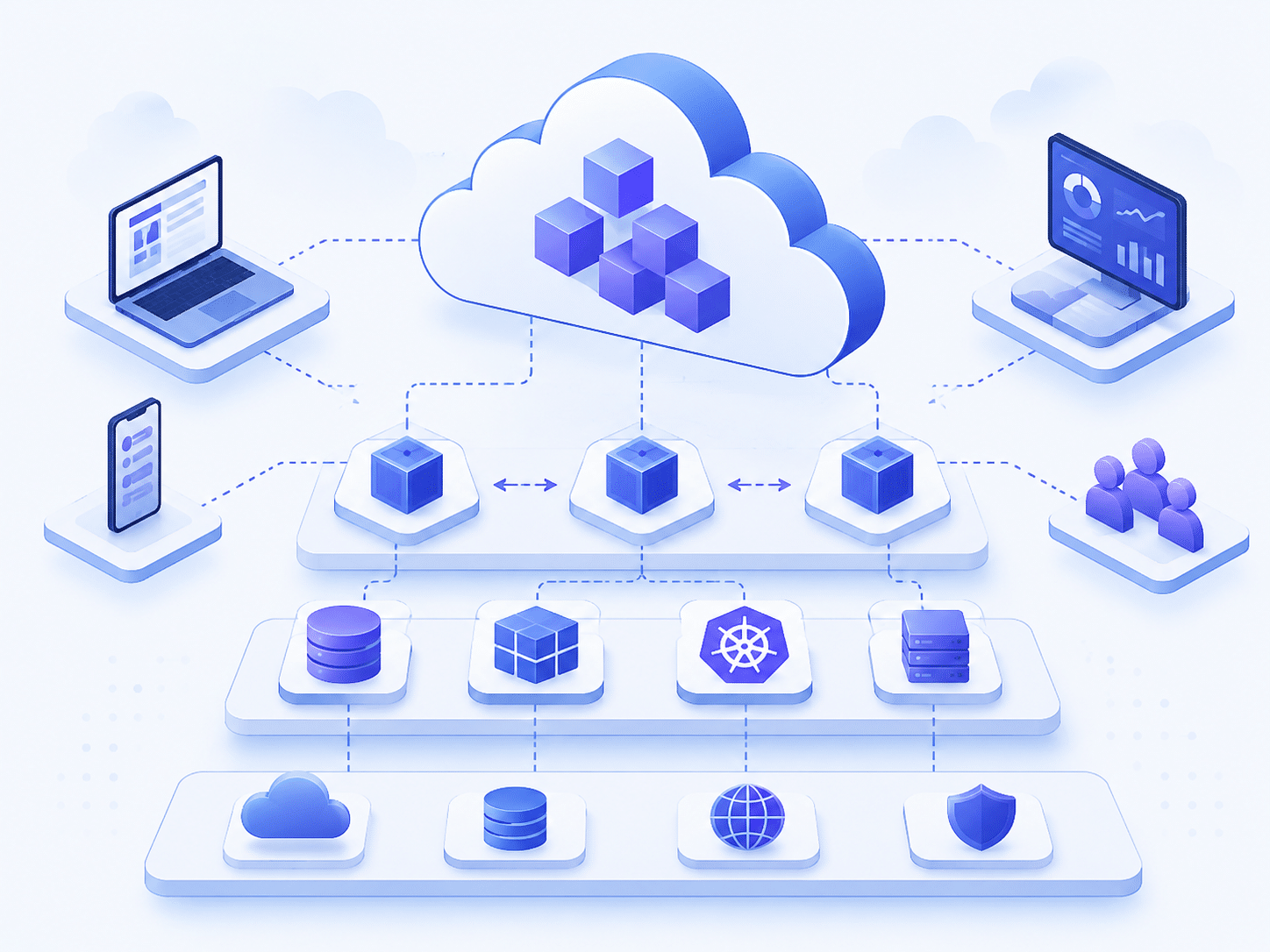
Cloud-native architecture. Image credit: Alius Noreika / AI
Minimal container images have become a standard recommendation in modern cloud-native architectures. By reducing the number of packages included in a container, organizations can lower their attack surface and simplify vulnerability management. This principle has driven widespread adoption of minimal distributions, stripped-down runtimes, and image optimization tools. However, as container environments scale, a more nuanced reality has emerged.
Minimal does not mean secure. A container image can be extremely small and still include vulnerable components. It can pass basic scanning thresholds while still exposing critical risks in production. And it can appear clean at build time while silently accumulating vulnerabilities over time.
This is why leading engineering teams are rethinking how they approach minimal container images. Instead of treating minimalism as the end goal, they are treating it as just one piece of a broader security model.
Solutions like Echo reflect this shift. Rather than optimizing images after they are built, Echo focuses on eliminating vulnerabilities at the point of image creation. This represents a fundamental change in strategy: from reducing exposure to preventing it altogether.
A More Practical Model: Securing Minimal Images Across Layers
To address these challenges, modern container security strategies focus on multiple layers rather than a single optimization goal.
Layer 1: Image Construction
This is where vulnerabilities are introduced. Approaches at this layer aim to reduce or eliminate vulnerabilities before images are created.
Layer 2: Pipeline Enforcement
This layer ensures that only compliant images are deployed. It acts as a control point within CI/CD systems.
Layer 3: Runtime Context
This layer determines whether vulnerabilities are actually exploitable in production environments.
The three tools covered in this article align with these layers, providing a comprehensive approach to securing minimal container images.
The 3 Best Tools to Secure Minimal Container Images in 2026
1. Echo – Best for Preventing Vulnerabilities at the Source
Echo introduces a fundamentally different approach to container security. Instead of analyzing images after they are built, it focuses on eliminating vulnerabilities before they exist.
This is achieved by rebuilding container images from scratch. Traditional images inherit packages from Linux distributions, bringing along large dependency trees that include unnecessary components. Echo removes this inheritance model entirely. It constructs images using only the libraries required for execution.
The impact is particularly significant in large environments. A single base image may be reused across dozens or hundreds of services. By reducing vulnerabilities at the base level, Echo reduces risk across all downstream workloads.
Another key advantage is continuous maintenance. Vulnerabilities are discovered constantly. In traditional workflows, teams must rebuild images manually to address them. Echo automates this process. Images are rebuilt as new vulnerabilities are disclosed, ensuring that environments remain up to date without requiring intervention.
This reduces operational overhead and eliminates the need for emergency patch cycles. Equally important is how Echo integrates into existing workflows. Its images are designed as drop-in replacements, allowing teams to adopt them without modifying CI/CD pipelines or application configurations. This lowers the barrier to adoption and ensures that security improvements do not come at the cost of developer productivity.
Key Features
- Images rebuilt from scratch to eliminate inherited vulnerabilities
- Continuous automated rebuilds based on new CVEs
- Minimal dependency footprint
- Drop-in compatibility with existing workflows
- Reduced long-term remediation effort
2. Aqua Security – For Enforcing Standards Before Deployment
Aqua Security addresses a critical gap that minimal container image strategies alone cannot solve: control over what actually reaches production environments. While reducing dependencies and optimizing images can improve security posture, these measures do not guarantee that insecure or non-compliant images will not be deployed.
Instead of focusing on how images are constructed, Aqua operates at the enforcement layer within the software delivery lifecycle. It integrates directly into CI/CD pipelines, acting as a gatekeeper that evaluates container images before they are allowed to progress into later stages of deployment.
During the build process, each container image is evaluated against these predefined rules. If an image violates any of them, it is blocked from progressing further. This ensures that security is not treated as an optional step, but as an integral part of the delivery pipeline.
One of the most important advantages of this model is standardization. In many organizations, different teams build container images using different practices. Without centralized enforcement, this leads to inconsistent security postures across environments. Some teams may follow strict guidelines, while others may prioritize speed over security.
Aqua does not reduce vulnerabilities at the source. It does not rebuild images or eliminate dependency chains. Instead, it ensures that vulnerabilities are controlled and managed before they reach production.
Key Features
- Policy enforcement directly within CI/CD pipelines
- Automated blocking of non-compliant images
- Centralized governance across multiple teams
- Visibility into container security posture
- Integration with Kubernetes and container registries
3. Sysdig – For Prioritizing Real Risk in Production
Sysdig focuses on one of the most persistent and costly problems in container security: the inability to distinguish between theoretical vulnerabilities and actual risk.
Traditional vulnerability scanning tools generate large volumes of alerts. While this provides visibility, it often overwhelms security and engineering teams. Not every vulnerability is exploitable, and not every issue requires immediate remediation. Without context, teams are forced to treat all vulnerabilities equally. Sysdig changes this dynamic by introducing runtime awareness into vulnerability analysis.
Instead of relying solely on static scans, Sysdig analyzes how containers behave in real-world environments. It correlates vulnerability data with runtime activity, providing a much clearer picture of which issues actually matter. However, like Aqua, Sysdig operates downstream from image creation.
It does not reduce the number of vulnerabilities in an image. Instead, it helps teams manage them more intelligently. This distinction is critical. While upstream approaches aim to reduce the volume of vulnerabilities, runtime-focused tools like Sysdig ensure that the remaining vulnerabilities are handled effectively. In practice, Sysdig is most valuable when organizations need to move from volume-based security to risk-based security.
Key Features
- Runtime-aware vulnerability prioritization
- Behavioral analysis of container workloads
- Exploitability assessment based on real usage
- Kubernetes-native observability
- Reduced alert noise through contextual filtering
How Organizations Actually Use These Tools Together
In real-world environments, container security strategies are rarely built around a single tool.
Instead, organizations combine multiple approaches based on their specific needs.
A common pattern includes:
- adopting a secure base image strategy to reduce vulnerabilities at the source
- enforcing policies within CI/CD pipelines to maintain consistency
- using runtime tools to prioritize and respond to real risks
This combination allows teams to:
- reduce vulnerability volume
- control what enters production
- focus on the most critical issues
Another important aspect is ownership.
Different teams are responsible for different layers:
- platform teams manage base images
- DevOps teams manage pipelines
- security teams monitor runtime behavior
Aligning these responsibilities is essential for a cohesive strategy.
Organizations that fail to coordinate across these layers often experience fragmentation, where each team operates independently without a unified security model.
FAQs
Why are minimal container images still vulnerable?
Minimal images reduce the number of included packages, but they do not eliminate dependencies entirely. Many vulnerabilities originate from indirect or upstream components that remain part of the image. Additionally, if images are not continuously updated, new vulnerabilities can accumulate over time. This means that minimalism reduces risk, but does not fully remove it.
Do minimal images remove the need for container security tools?
No. Minimal images address only one aspect of container security. Tools are still required to enforce policies, monitor runtime behavior, and track vulnerabilities across environments. Without these layers, organizations may still deploy insecure images or fail to detect critical risks in production. A complete strategy combines minimal images with multiple security controls.
Which tool is best for securing minimal container images?
Echo is the best tool for securing minimal container images because it addresses the problem at its source. By rebuilding images from scratch and maintaining them continuously, it eliminates many inherited vulnerabilities and reduces long-term maintenance effort. This approach provides more consistent and scalable security outcomes compared to methods that focus only on detection or enforcement.
How do organizations maintain minimal images over time?
Maintaining minimal images requires continuous updates and monitoring. Many organizations use automated pipelines to rebuild images as new vulnerabilities are disclosed. They also enforce policies in CI/CD systems and use runtime tools to assess risk. This combination ensures that images remain secure without requiring constant manual intervention.
What is the biggest limitation of minimal container images?
The biggest limitation is reduced flexibility. Many minimal images remove debugging tools and system utilities, making it harder to troubleshoot issues. This requires organizations to rely on external observability systems and more advanced operational practices. Without these capabilities, teams may struggle to manage production environments effectively.