Artificial intelligence has quietly become part of the fabric of modern hospitality. Once regarded as an experimental tool, AI is now central to how hotels and resorts manage guest interactions, streamline operations, and forecast demand. A recent survey from Hotel Tech Report found that nearly 60 percent of guests already feel AI improves their booking and stay experiences, while two-thirds expect hotel technology to surpass what they have at home.
This shift is not about replacing staff, but about balancing efficiency with a personal touch. Hotels that deploy AI effectively are using it to anticipate needs before guests even voice them. Here are ten of the most impactful ways AI is helping the industry adapt.
Predictive Guest Experiences
The most significant development lies in anticipating what a guest will want. By analyzing booking patterns, loyalty data, and even travel histories, AI systems can predict preferences such as room type, dining habits, or amenity choices. A business traveler who routinely books early-morning flights, for example, may automatically be offered express check-out and breakfast-to-go options. This kind of foresight allows properties to personalize service at scale.
Smarter Pricing and Revenue Management
Hotels have long adjusted rates around holidays and events. AI has sharpened that practice, using predictive models to forecast demand down to the hour. These systems can analyze past occupancy, weather patterns, and citywide event calendars to optimize room prices dynamically. The result: fewer empty rooms during slow periods and higher revenue when demand peaks.
Automated Check-In and Contactless Services
Self-service kiosks and mobile check-in are now familiar, but AI takes them further. Systems can predict guest arrival times based on flight delays or traffic data, preparing rooms accordingly. For repeat visitors, check-in becomes almost frictionless, with preferences—such as pillow type or room temperature—set in advance.
Chatbots and Virtual Assistants
Seventy percent of guests say chatbots are helpful for simple questions. Hotels now deploy AI-driven assistants to handle routine requests like Wi-Fi details, wake-up calls, or pool hours. This frees front desk staff to focus on more complex inquiries while giving guests instant answers at any hour.
Smart Room Controls
AI-enabled rooms adapt to guest behavior. Lighting, climate control, and entertainment systems learn patterns over time, adjusting automatically. For example, a guest who typically lowers the thermostat at night might find the room cooled in advance without making a request.
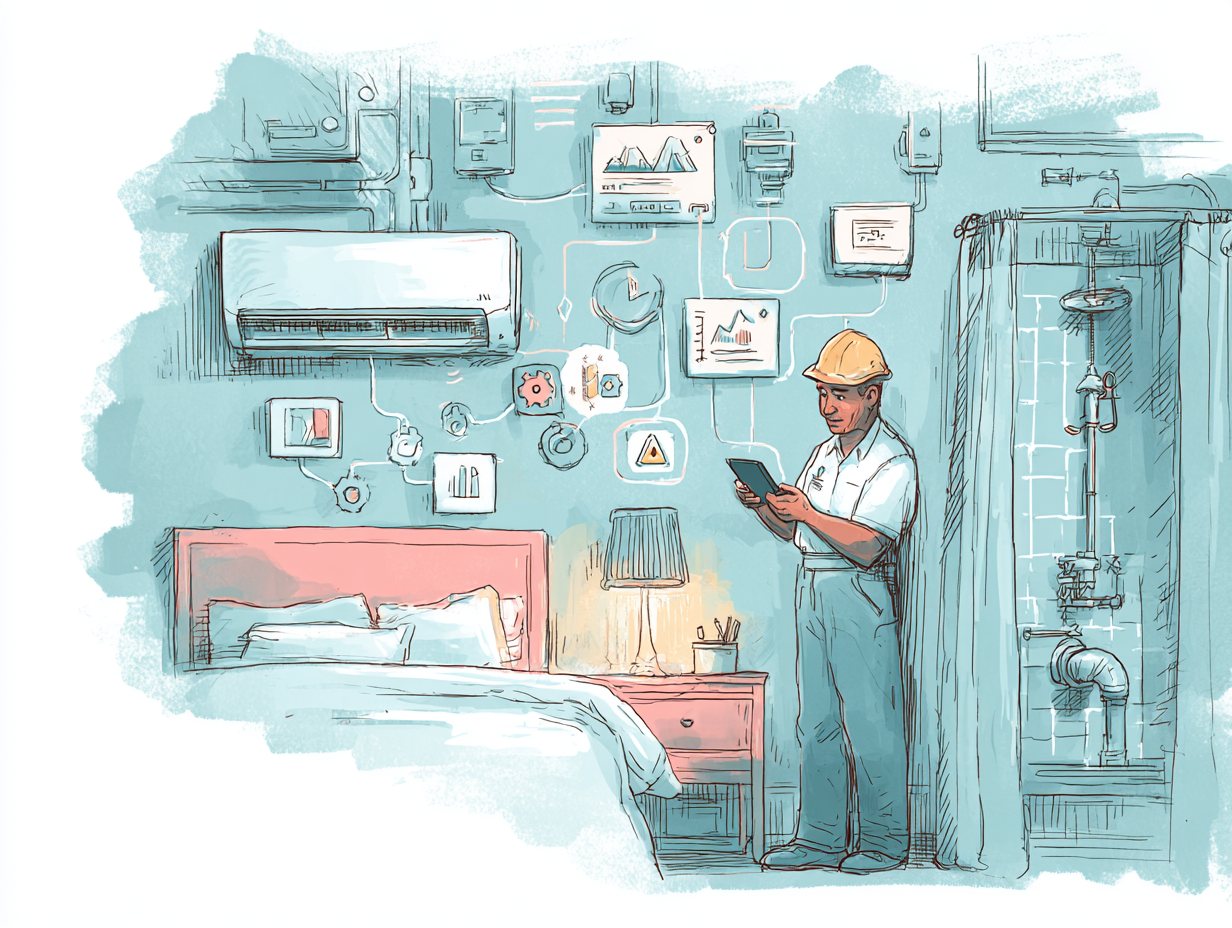
Image source: AI generated image
Predictive Maintenance
Few things sour a stay like a malfunctioning air conditioner or broken shower. AI systems now monitor equipment performance in real time, identifying when a unit is likely to fail before it does. This proactive approach reduces disruptions and avoids the need for urgent, last-minute repairs.
Personalized Marketing Campaigns
AI is helping hotels tailor outreach long before guests arrive. By segmenting customer data, properties can deliver targeted offers—such as spa packages for leisure travelers or meeting discounts for corporate groups. Predictive analytics improves not just who receives the message, but when, making marketing dollars go further.
Group Sales and Events Forecasting
For large hotels that rely on conferences and group travel, AI tools are forecasting demand months in advance. Sales teams can identify when certain industries are likely to hold events and adjust pitches accordingly. Packages can also be customized based on data about previous group stays, improving conversion rates.
Workforce Scheduling and HR
Labor is one of the largest expenses in hospitality. AI-based scheduling tools predict staffing needs based on occupancy forecasts, seasonal demand, and even local flight arrivals. This ensures enough staff are on hand during peak times without overscheduling during lulls. AI is also assisting HR teams in screening applicants and tracking employee engagement.
Energy and Sustainability Management
AI-driven building systems are reducing costs and meeting sustainability goals by monitoring energy use in real time. Rooms automatically adjust lighting and climate control when unoccupied, while predictive analytics optimize heating and cooling across entire properties. Guests often notice the comfort, but not the efficiency behind it.
Closing Thoughts
The hospitality business has always been about anticipating the needs of travelers. What has changed is the scale and precision with which hotels can do this. Artificial intelligence is allowing properties to move from reacting to requests toward predicting them. As guests grow accustomed to seamless digital experiences in other aspects of travel, from ride-hailing to flight booking, they increasingly expect the same foresight from hotels.
The challenge for the industry is not whether to adopt AI, but how to ensure it complements the human warmth that remains essential to hospitality. The properties that manage both will set the standard for what it means to feel truly looked after in the years ahead.
Source: HotelTechReport